
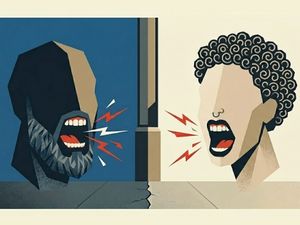
Tonight’s motion sparked intense conversation: ‘On balance, our society remains as prejudiced as ever.’ Before the main arguments began, a quick show of hands revealed strong support for the motion. Did the opposition manage to change any minds? Let’s dive into this fascinating prejudice debate.
The proposer in the prejudice debate: a survival mechanism
The proposing speaker opened the prejudice debate by exploring the very definition of the word. They cited the Oxford English Dictionary. Prejudice is a preconceived opinion, not based on reason or actual experience. Interestingly, they noted that this doesn’t always mean something negative.
They then explored human biology. They explained that humans rely heavily on two systems of thinking. System One handles our instincts and automatic responses. System Two manages our deep, logical thinking. According to the proposer, prejudice originates in System One. It operates as a basic survival mechanism. We guess and make snap judgements to save energy and stay safe.
However, the speaker quickly pivoted to prejudice’s ‘two ugly sisters’: racism and bigotry. They argued that these negative forms of bias are rampant today, particularly in the workplace. They suggested that modern inclusion initiatives sometimes result in exclusion. For instance, they claimed that white men face significant barriers in current job markets. Furthermore, they argued that the media and NGOs constantly highlight societal prejudice simply to secure funding. Ultimately, they concluded that prejudice is a permanent fixture of human nature. We should stop complaining about it and focus on boosting the economy instead.
The opposer in the prejudice debate: progress outweighs preference
Taking the floor, the opposing speaker offered a different perspective. They actually agreed that bias and discrimination live deep within our DNA. However, they framed many of our daily biases merely as personal preferences. They used their love for Italian food over Indian food as a lighthearted example.
The opposer argued that society has undoubtedly progressed. They pointed to the fact that the UK has seen multiple female Prime Ministers and leaders from diverse ethnic backgrounds. Furthermore, they highlighted crucial systemic changes. Society has implemented powerful legislation to combat individual biases. Laws like the Race Relations Act and the Disability Discrimination Act prove that we are fighting back. Consequently, they urged the audience to reject the motion. They argued that institutional progress far outweighs our individual flaws.
Voices from the floor during the prejudice debate: a divided audience
The floor opened, and the audience eagerly joined the prejudice debate. The first floor speaker strongly disagreed with the opposer. They pointed out that economic decline fuels right-wing anti-immigrant rhetoric. They noted a rising animosity towards specific groups and warned against tribalism.
Another attendee supported the motion by highlighting social media. They argued that platforms breed ego-driven prejudice. Furthermore, they criticised modern universities. They cited examples of students being reported to the police for off-the-cuff jokes and operas being cancelled over historical themes. They argued that common sense has vanished.
A third speaker took aim at institutional prejudice. They argued that while everyday people are less prejudiced today, our institutions have abandoned Enlightenment values. The speaker claimed that society now trades reason for identity politics. They stated that this new dogma prioritises feelings over objective facts.
Following this, another participant distinguished between internal prejudice and external discrimination. They argued that overt segregation has ended. However, tribalism and prejudice remain hidden safely within our minds. Therefore, they supported the motion.
Conversely, a history enthusiast challenged the word ‘ever’ in the motion. They compared modern times to Roman society. Romans wore specific togas strictly based on their social status. They argued that humanity has experienced a massive, undeniable reduction in prejudice over the centuries.
Floor speeches continued
A theatre worker shared their daily experiences in customer service. They admitted to making rapid judgements about customers based on their behaviour. However, they argued that globalisation and the internet have drastically reduced true societal prejudice. They shared positive stories of diverse groups mingling happily at cultural events.
Another speaker highlighted the complexities of modern bias. They discussed the rise of anti-Semitism and the frequent conflation of religion with foreign government actions. They also pointed out a sharp increase in class prejudice since the 1980s.
Taking a historical view, one participant reminded the room that warring tribes have existed forever. They suggested that our current perception of prejudice is simply magnified by social media echo chambers.
The final floor speaker brought the conversation back to lived experience. They firmly rejected the proposer’s statistics regarding modern hiring practices. Instead, they shared their own daily reality. People often grab their handbags nervously when they walk past. This clearly constitutes an unreasonable, negative attitude. They reminded the audience that prejudice spans race, gender, age and class.
Closing arguments
The opposing speaker returned to deliver their concluding remarks. They reiterated that while prejudice exists in human nature, we possess the power to overcome it. The speaker pleaded for personal responsibility, and championed awareness, education and peaceful conflict resolution. They passionately urged the room not to abstain from the upcoming vote.
The final vote
The debate concluded, and the room moved to cast their votes. Ultimately, the motion carried. On balance, the audience agreed that our society remains as prejudiced as ever. However, the opposer’s passionate arguments successfully swayed a few voters away from their initial pre-vote stance.
This prejudice debate proved that while we have conquered many historical injustices, human nature continues to challenge us today.
Further reading
A detailed summary and analysis of the debate can be viewed here.
Please see summaries of earlier Sylvan debates here.
For more information about how our meetings run, see meeting info.