
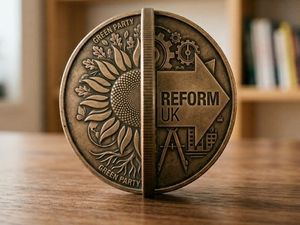
The Sylvans debated whether the Greens and Reform are two sides of the same coin. This topic sparked fiery arguments and deep political analysis. Let’s dive right into the key speeches.
The proposer compares Greens and Reform
The proposer started with a bold claim about Greens and Reform. They argued that the Greens are to Labour what Reform are to the Conservatives. Neither party currently holds power. Consequently, nobody expects them to deliver on their promises. This freedom allows both parties to say whatever they please. They simply want to win over frustrated voters.
The proposer highlighted party leadership to prove this point. They noted that the Green Party often contradicts itself trying to please everyone. Furthermore, they recounted a story about a former London Assembly member. In 2005, this Green politician allegedly torpedoed a budget consensus purely out of personal prejudice against the Tories.
On the flip side, the proposer discussed Nigel Farage. They painted the Reform leader as a charismatic front man who lacks detail. They claimed Farage makes up policy on the hoof. To the proposer, Reform resembles a bright Piccadilly Circus neon sign. It takes up space but lacks real depth. Ultimately, both parties lack government experience and would make a massive mess if elected.
The opposer analyses Greens and Reform
Stepping up next, the opposer vehemently challenged this comparison. They urged the audience to look beyond simple anti-establishment labels. The Greens and Reform represent fundamentally different political entities.
Firstly, they pointed out stark political backgrounds. Greens are a grassroots party. Their politicians have championed Green policies their entire careers. Conversely, every standard Reform MP previously represented the Tory party. This makes Reform a party of defectors who simply wanted a new banner.
The opposer also addressed economic goals. The Greens want to tax the wealthiest people to fix society and close corporate loopholes. Meanwhile, Reform wants to cut taxes for corporations and the super-rich. Demographics reveal another huge divide. Older men typically vote for Reform. Young people and women gravitate towards the Greens. Therefore, these parties represent entirely different communities.
Passionate floor speeches
The room quickly heated up as the audience weighed in. Several speakers strongly backed the proposer. One speaker argued that voters flock to Greens and Reform because they distrust mainstream politicians. These votes express deep frustration with the ruling establishment. Another speaker noted that both parties thrive on political polarisation. They both offer easy solutions to very complex problems. They equated ‘Stop the boats’ with ‘Tax the rich’ as examples of simplistic populism. Another audience member warned about evidence-less populism. They stated that Reform ignores climate change evidence. Meanwhile, the Greens historically feared nuclear energy and promoted homeopathy.
However, many attendees firmly rejected the motion. One speaker argued that the coin metaphor entirely fails. They claimed British politics currently resembles a six-way dice. They suggested the Greens embody a hopeful naivety. In contrast, Reform represents nostalgic, bitter experience. Funding also emerged as a major divider. Reform relies on billionaire backers pursuing elite interests. Meanwhile, the Greens operate as a genuine grassroots movement. Finally, another speaker emphasised dark policy differences. They labelled Reform a racist organisation. Conversely, they view the Greens as a beacon of hope for youth.
Closing arguments: the opposer
The opposer returned to deliver their final thoughts. They hammered home the financial differences between Greens and Reform. In 2025, Reform received millions from rich donors. In stark contrast, the highest single donation for the Green Party remained in the thousands. The opposer argued that Reform wants to take a sledgehammer to British democracy. The Greens just want to rewire the system to serve public interests fairly.
Closing arguments: the proposer
The proposer wrapped up the debate by reflecting on the fractured two-party system. Voters previously rejected proportional representation. Consequently, smaller parties must shout louder to gain traction. The proposer reiterated that the Greens act as the ultra-left, while Reform acts as the ultra-right. Furthermore, they claimed the Greens have completely abandoned their original ecological philosophy. Ultimately, both Greens and Reform rely entirely on populist promises. They simply tell their target audiences exactly what they want to hear.
The final vote in the Greens and Reform debate
After a thrilling and passionate debate, the audience cast their votes. A portion of the room abstained, clearly torn by the contrasting arguments. However, the final tally favoured the proposition in a very close vote. The audience officially passed the motion that Greens and Reform are two sides of the same coin.
Further reading
A detailed summary and analysis of the debate can be viewed here.
Please see summaries of earlier Sylvan debates here.
For more information about how our meetings run, see meeting info.