
Category: Uncategorized

  • Affording Net Zero – May 2025

    Affording Net Zero – May 2025

    The affording Net Zero debate considered the following motion:

    This house believes we cannot afford Net Zero.

    The debate took place on Monday 12th May.  Peter Hulme Cross proposed the motion and Vicky Griffiths opposed it.

    The proposition arguing we cannot afford to reach net-zero carbon emissions

    The proposer opened by strongly questioning the point of reaching Net Zero – the UK represents less than 1% of carbon emissions globally! We have wind, and in London many cars – electric cars are twice as heavy, leading to particulate pollution from tyre wear, just as toxic. We have gas boilers, and heat pumps require good insulation and extensive retro-fitting, they would triple the electricity bill. Hydrogen, expensive to produce, would leak out of the pipes. We need reliable, cheap electricity – currently it costs 5x the USA and 2x the EU here. We should drill for more gas, as green subsidies make up 40% of the electricity bill. While we have oil and tax it to death, Norway sells it. My solar panels provide 3x the energy in the summer, when I don’t need it, and have a 14 year payback period!

    We don’t produce wind turbines, they require rare earths which we don’t have, making investment imprudent. After a 25 year life cycle they need replacing. Ed Miliband wants to spend £55 billion on doubling our wind capacity. Yet the National Grid cannot handle this and requires £60 billion in upgrades. Spain and Portugal recently had a complete power blackout, and it just so happens that 90% of their energy at the time came from renewables. A cascade failure due to AC power varying from its normal 50hz caused this, more likely to occur with renewables. Wind and solar power is inherently unstable, and blackouts will be more likely. We have rising crime that we cannot afford to fix, and the Chancellor cites a ‘black hole’ in the finances. Affording Net Zero costs of £115 billion to pat ourselves on the back, what’s the point – we have other priorities.

    The opposition against the affording Net Zero motion

    The opposer defined Net Zero as balancing carbon emissions with removal. We hear scare stories about it leading to higher costs and economic decline. Yet we face an existential crisis, with the cost of inaction far greater. Climate change has already led to big losses, and we should not rip up the Paris agreement. What should we offer to future generations? We can afford it, and need it to thrive. Saving the initial investment and fossil fuel jobs is a short-termist view. We need stability, and while £50 billion is huge, it represents less than 0.5% of GDP. We already have 22,800 Net Zero businesses, most of them SMEs. Green energy drives Foreign Direct Investment, and today’s costs are due to Putin’s war in Ukraine. We need stability and resilience, which will reduce bills.

    Climate change will cause many deaths across the world, while Net Zero will drive growth and 950,000 jobs. Of course we will lose some jobs, that green jobs will replace. The closing of the Redcar steel plant reduced pollution. Farmers can work around wind turbines. My village in Kent won’t exist in 150 years due to coastal erosion. Diesel and petrol make asthma and COPD worse, and there are cleaner alternatives. We cannot afford to sit on our hands and let climate change happen, for instance in Vietnam, where salt water incursion drives up the cost of producing rice. China contributes hugely to carbon emissions, but signed the Paris agreement and have increased spending on clean power by 10x. Their coal use continues to grow but will peak.

    The UK has a debt due to past emissions, and emits more than our population’s share today. We can’t stop affording Net Zero now, and while it won’t be easy, not much that is easy is worth doing. In China they say the best time to plant a tree was 20 years ago, and the second best is today.

    Floor speeches from the audience of the debate

    The world had warmer temperatures in Roman times than it does now, and we did not have thermometers until the 1600s. Vinyards existed up to Hull in those days, and while vinyards have crept northwards, they have not gone past Hull. We will get back to Roman temps, not a big problem given our cool overall climate. We should not make our existing, working electricity grid worthless. Yet the proposition would stick with fossil fuels. Churchill switched the Navy from coal to oil, making us dependent on imports. The cost of those imports dwarfs the £115 billion of investments required for green power, and we need to produce energy here. AI will increasingly require more compute power to stay ahead in that race, and social spending will face further constraints. Not investing represents a false economy.

    Floor speeches continued

    Household solar panels that last 25-30 years and have a 14 year payback period represent a good investment. Increasing frequency and impact of natural disasters drives up insurance costs and business disruption. Oil and gas have a finite lifespan, circa 50 years for oil, and we need a new source of energy. Why would we race to be the second and not the first – the UK was a pioneer and could end up as a follower. The opposition took a national and global view, rather than a selfish view of individuals in Britain. We should prioritise jobs – and need critical thinking, not politics. In South Africa they have ‘load shedding’, i.e. rolling blackouts, because they didn’t invest in infrastructure. We need the political will to take the hard decision to make short-term sacrifices to invest.

    More floor speeches

    Yet governments don’t usually do it without political will, and the UK population haven’t exactly been jumping up and down for Net Zero. Theresa May committed to it, judging that the then estimated net cost of 1.3% of GDP represented value for money. The current estimate of the cost stands at less than 1%. Green tech continues to get cheaper, and while 1% of GDP is a lot, it comes with other benefits including replacing the limited fossil fuels and energy sustainability. EV car batteries will get lighter. We spend 2.3-2.5% of GDP on the military. While we have to import wind turbines, the UK’s extensive wind should mean that buying them from the global market will give us one of the highest returns on that investment. We need a good return given our debt to GDP ratio of 100%.

    The opposer’s rebuttal

    The hideous expense of Net Zero will be worth it, humans need to be #1. We need to retrain workers, such as pit miners, saving jobs and creating sustainable alternatives. The UK has the 6th-largest economy, we have significant influence. EVs and solar panels provide an economic opportunity, and yes we need to invest to fix the power grid. Power will be cheaper, particularly with solar panels lasting the lifetime of a house. This debate centres on the future of the human race, and the planet. We should focus on hope and embrace and grab the change.

    The proposer’s closing speech

    We have heard from starry-eyed optimists tonight, perhaps they have imbibed magic mushrooms! Wind and solar power are inherently unstable, yet the government’s policy and propaganda are all about them. Bills will come down? The Hornsea 4 wind farm, one of the largest planned, has been cancelled due to the company wanting a higher price for the power generated. We represent 0.88% of global emissions yet bother on about climate change. India burns one million tonnes of coal a day, and China’s usage has risen. We emit less than Australia and South Africa. The best backup power, begrudgingly, is nuclear. Mini reactors would dig us out of the hole, yet Canada beat us to it and France has 43 reactors. Our government dragged their feet. We can’t afford it anyway, with 100% of GDP worth of debt, bordering on bankrupt. We have low growth, low productivity and high debt.

    Result: the affording Net Zero debate motion did not carry

    In the final vote, the Sylvans concluded through the debate that we can afford Net Zero carbon emissions.

    Please see summaries of earlier Sylvan debates here.

    For more information about how our meetings run, see meeting info.
  • Mayor Khan debate – April 2025

    Mayor Khan debate – April 2025

    The Sylvan Mayor Khan debate considered the following motion:

    This house has no trust in Mayor Khan.

    The debate took place on Monday 7th April.  Undisclosed proposed the motion and Stan Billington opposed it.

    The proposition arguing we do not trust Sadiq Khan

    The proposer introduced himself, pointing out that he attended the London Assembly to scrutinise the mayor. He has three big failures: crime, the economy and the environment. We had 21,000 robberies in 2015/16 and 34,000 last year, knife crime doubled and gun crime has risen 30%. Sir Sadiq Khan promised to keep council tax as low as possible, yet it has risen 78% in around a decade. He claims to fund the police, yet missed a key recruitment target. While spending on vanity projects such as renaming the Overground lines, he should focus on keeping women and girls safe. City Hall now has its own coat of arms, but nightlife suffers relative to other big UK cities. Mayor Khan has never run a business, doesn’t understand SMEs and doesn’t support business.

    If only he had been honest, people wouldn’t be upset. On the Ultra Low Emission Zone (ULEZ), in 2022 he had ruled out expanding it beyond inner London, yet he did it anyway. ULEZ is about raising revenue not the environment, and air pollution is in inner London and around Heathrow, and is improving. TFL face significant financial challenges, due to covid. We simply cannot trust him on the environment. He has failed to hit house building targets, we’ve had transport strikes and he didn’t hit tree planting or EV charge point targets. We need to judge him not on his performance, but the motion. He puts his political ambitions in front of Londoners’ lives.

    The opposition against the Mayor Khan motion

    The opposer began by pointing out that we should not strictly define trust, and need to guard against political biases entering. Sadiq Khan had Pakistani immigrant parents, his father serving as a bus driver. He faced racism, which led to his progressive, inclusive politics, and we’ve elected him three times. He did manage to build 116,000 affordable houses. Air quality has improved, with PM2.5 and NO2 declining – not a dramatic failure. ULEZ affects only a small number of drivers, yet many people died due to pollution. People believe the mayor has a lot of cash, but can spend only 7% of council tax and business rates. The New York mayor gets 50% of tax from a wider base including income, property, share transactions etc. We have the most centralised government of any Western democracy, the mayor has a budget of £16-20 billion.

    Khan has served as mayor mostly under Conservative governments, which slammed him. Hopefully, we will see greater efficacy under a Labour government. He has put 1,300 extra police on the street, and a 2019 violence reduction unit has seen some evidence of progress. Many things affect crime rates. ULEZ was bold and principled, and he pushed for free school meals. The Elizabeth line delays – large projects always face them. Is he a flawed man? – politicians always face a tricky landscape. I don’t see a demon, he’s a progressive guy who loves London. He doesn’t deserve us questioning him.

    Floor speeches from the audience of the debate

    He was elected with Theresa May, and both said they would push for women and ethnic minorities to be equal in workplaces. As a black person, Mayor Khan isn’t helping me. Most knife crime actually comes from white people, not well known. Khan tramples over local councils of the 32 boroughs, such as pedestrianising Oxford Street and the ULEZ expansion. Outer London has poor transport, people need cars. Khan bangs the drum for Labour, a highly political mayor, yet we want a mayor for everybody. Please vote for non-Labour candidates for the London Assembly, which holds the mayor to account.

    Going back to the motion, to be clear we don’t trust politicians to deliver everything they say. It is tough to realise promises, reality hits. President Obama said ‘yes we can’ – he didn’t deliver, yet I still trust him. If we want to single out Mayor Khan, we would need to show he is particularly bad. Voters put their trust in him in three elections. ULEZ overall beneficial, tens of thousands of lorries have stayed away, benefiting all of London. It only affects old diesels and very old petrols. The campaign against ULEZ has been from the right wing. Many reasons for crime going up.

    Floor speeches continued

    We could trust as defined through beliefs and adherence to promises, or in his capacity to handle things. Black swan events do happen – do we trust him to handle those, such as covid? The mayoralty is a Blairite farce, and only a political stepping stone. We can’t know what’s in Sadiq Khan’s head. He’s the least worst option I voted for, and rare for politicians to tell the truth 100% of the time given the realities of office. Politicians can compromise, situations change. Do the decisions after the changes align with the politician’s stated values? I haven’t seen Khan do something against his values.

    Sadiq Khan contracted adult-onset asthma, likely due to high pollution levels in London, and brought in ULEZ as a conviction politician. It has significantly reduced pollution, which has declined by half over ten years, and at a faster pace than other UK cities. You can see and smell the difference, with fewer dreadful older diesels on the roads. The outer boroughs complain, yet the ULEZ extension benefits everyone both there, across inner London and even further out into the home counties.

    The opposer’s rebuttal

    Sadiq Khan has held consistent values through life, as a barrister, MP and thrice-elected mayor. He has faced various limits on his behaviour, including taking only a small share of tax. The strength of the motion does not deserve your vote. Boris smothered a 2010 report on pollution in London schools, with 433 schools having illegal air quality, four fifths in deprived areas. The courts face drastic under funding, and cases don’t get through properly. Khan pushes for more funding. The voting has changed to first past the post for the mayor, which drives up big party votes. The proposer hasn’t made the case, Khan is a good guy doing his best.

    The proposer’s closing speech

    We need to have belief in the reliability of someone. Recruiting police officers, housing starts. High-rise flats for students. The nighttime economy. We have what he says and what he does. I don’t want to give money to someone who doesn’t do a good job. We will see whether Khan under a Labour government can do more, he’s only met the PM twice, and Labour are seeking a replacement. He took free tickets to Taylor Swift and didn’t declare – does that engender trust? In London a red rosette on a donkey could get elected three times. If Labour hold onto power, they will put in a better mayor. I want a more trustworthy and less political mayor.

    Result: the Mayor Khan debate motion carried

    In a close final vote, the Sylvans concluded through the debate that we do not trust Mayor Khan.

    Please see summaries of earlier Sylvan debates here.

    For more information about how our meetings run, see meeting info.
  • Equality of opportunity vs. equality of outcome: a worthy debate

    Equality of opportunity vs. equality of outcome: a worthy debate

    A spirited Sylvan debate tackled one of the most enduring questions in politics and social theory: should we prioritise equality of opportunity over equality of outcome? The motion sparked a nuanced discussion, with impassioned speeches, real-world examples, and thought-provoking insights.


    Defining the debate

    The proposer began by defining the opposing concepts. Equality of opportunity seeks to give everyone a fair start—access to education, jobs, and resources—so individuals can make the most of their talents. Equality of outcome, on the other hand, is about ensuring that everyone ends up at similar levels of success, regardless of their starting point.

    He questioned the feasibility of outcome-based equality:

    “How much money do we want to spend on making Stephen Hawking good at the triple jump? It’s a waste of money.”

    He warned that pushing for equal outcomes across all areas of life would require an oppressive level of bureaucracy, government overreach, and an unrealistic denial of individual differences.

    Instead, he proposed a more pragmatic vision:

    “Let’s give everybody as good access to opportunities as we possibly can, and then see how they get on.”


    The opposer’s case: equality of outcome

    The opposer acknowledged the value of equal opportunity but urged the audience to look beyond idealistic principles and consider real-world disparities.

    He linked equality of opportunity to extreme capitalism, and painted a stark picture of growing inequality in the United States, where minimal social safety nets and massive executive pay gaps show how opportunity alone isn’t enough:

    “Executive salaries in the US are unbelievable… and there’s an entire underclass with very little access to education.”

    He emphasised that while opportunity matters, so do the outcomes those opportunities lead to. Without attention to results, policies risk becoming performative rather than transformative:

    “If we don’t deliver outcomes, we don’t give people opportunities.”

    He also reminded the audience that equity—as used in DEI (diversity, equity, inclusion) frameworks—doesn’t mean identical results for everyone, but rather correcting systemic disadvantages that block true opportunity.


    Voices from the floor on equality of opportunity

    As the floor opened to audience contributions, the conversation deepened.

    Blurring the binary

    One speaker rejected the premise that opportunity and outcome must be opposing ideals:

    “Equality of opportunity leads to better outcomes, so I don’t see the two as separate or mutually exclusive.”

    This theme echoed throughout the discussion. Many argued that if we take equality of opportunity seriously, we must accept that it involves addressing disparities in both access and result.

    The problem with tokenism

    Several speakers challenged diversity quotas or enforced outcome-based systems. One woman recounted being invited to speak on a panel, only to realise she had been asked to fill a gender quota:

    “I don’t want to be there as a token. I want to be there on merit.”

    She emphasized that true empowerment means having the support and systems that allow underrepresented individuals to succeed on their own terms—not being elevated to hit a statistical target.

    Systemic barriers still undermine equality of opportunity

    A powerful testimony came from a female entrepreneur who contrasted the theoretical existence of equal opportunity with the real-world discrimination she faces:

    “I have equal opportunity, but systemically, I don’t have a level playing field.”

    She highlighted that unconscious bias, limited access to funding, and societal expectations still skew outcomes—especially for women and minorities—even when opportunities technically exist.

    Education and the myth of meritocracy

    Several contributors focused on education as the battleground for this debate. One pointed out that pouring money equally into all schools wouldn’t erase the effects of poverty or generational disadvantage. Another added:

    “How are you meant to succeed in school if you haven’t had breakfast that morning?”

    Equal inputs do not always lead to equal outputs. For many, the conclusion was clear: equality of opportunity is not just about policies—it’s about addressing systemic inequalities in health, wealth, and social capital.

    Human nature and parental instincts

    One speaker offered a candid take on meritocracy and parental ambition:

    “I don’t want my kids to be equal at the start line. I want them to be ahead.”

    This highlighted the tension between societal ideals and individual behaviour. Even the most equality-minded parents are unlikely to level the playing field voluntarily, revealing the limits of policy in the face of human instinct.


    Philosophical and humorous interludes

    True to the Sylvan spirit, the debate also included humorous and philosophical reflections.

    A spirited aside on Stephen Hawking led to a brief detour into astrophysics and ancient Greek theories of the Big Bang. Another speaker mused:

    “Stephen Hawking said he never understood women. I’ve spent my whole life studying them—so I’ve got one up on him.”

    Another attendee questioned whether the debate itself was missing the point entirely:

    “Are we just tinkering with the system? Should we be talking about the 117 million homeless people in the world instead?”


    Closing arguments: equality of opportunity is a spectrum

    In their closing remarks, both speakers acknowledged the complexity of the motion.

    The opposer noted that while the motion presented a binary, most people fall somewhere in the middle:

    “The motion is written in extremes. All of us are somewhere in the middle of that spectrum.”

    He highlighted audience member’s insight:

    “If you don’t get outcomes you can live with, then there was no opportunity in the first place.”

    For him, this meant that measuring outcomes is essential to evaluating whether equality of opportunity is real or just rhetorical.

    The proposer, meanwhile, re-emphasised the cost and impracticality of prioritising outcomes:

    “Every human society that has tried to equalise outcomes has failed. It’s better to focus on giving people fair chances and removing the biggest barriers.”

    He urged a focus on realistic progress:

    “Let’s not bite off more than we can chew. Let’s fight for equality of opportunity first—that’s hard enough.”


    The verdict: a cautious lean towards equality of opportunity

    When the votes were tallied, the motion carried by a few votes. While many agreed that outcomes matter, there was a prevailing sense that equality of opportunity remains a more practical, achievable goal—so long as we recognise the deep work still needed to make it meaningful.


    Why equality of opportunity still matters

    This debate revealed that equality of opportunity is not a passive concept. It demands investment in schools, the dismantling of systemic bias, and serious commitment to social mobility. But it also offers a flexible, fair framework—one that avoids the pitfalls of coercion while striving for justice.

    As one speaker put it:

    “We don’t live in a fair and just world. But if we want to… we have to care about outcomes too.”

    Ultimately, fighting for opportunity is fighting for freedom, fairness, and the possibility for everyone to thrive—on their own terms.

    Please see summaries of earlier Sylvan debates here.

    For more information about how our meetings run, see meeting info.
  • Working from home: has its day come and gone? 🏡

    Working from home: has its day come and gone? 🏡

    Over the past five years, working from home has shifted from a fringe perk to a mainstream model — and now, to a subject of growing debate. Once celebrated for its flexibility and efficiency, remote work is being re-evaluated. Is this model sustainable? And more importantly, is it good for our careers, our economy, and our society?

    That was the central question explored by the Sylvans in a rapid debate on the motion:

    Working from home has had its day.

    The discussion was robust, passionate, and — like the topic itself — far from one-sided.

    💼 You can’t build a career from your kitchen table

    The debate opened with a powerful case in support of the motion. The proposer, a businesswoman managing two companies — one office-based and one fully remote — offered a front-row view of remote work’s benefits and its blind spots.

    Yes, she acknowledged, working from home improved accessibility, helped employees with childcare responsibilities, and encouraged healthier lifestyles. But those wins come with a cost.

    “The impact on young people’s careers is significant,” she said. “When you work remotely, you lose those organic opportunities to learn — those moments in the hallway, the coffee machine chats, the quick, ‘Can I pick your brain?’ conversations that shape your growth.”

    She spoke of how, early in her own career, a casual chat with a senior leader opened her eyes to a career path she hadn’t even considered. “You can’t replicate that on Zoom.”

    Her starkest warning? That some companies are now choosing not to hire junior staff at all — instead using AI tools under the supervision of senior employees. Why train someone from scratch when a machine can do the job faster?

    But then who becomes the next generation of senior employees?

    “If we don’t go back to having shared spaces where people can learn, grow, and show their personalities,” she concluded, “we’re in real trouble.”


    🌿 The power of flexibility — and trust when working from home

    Opposing the motion, the next speaker offered a balanced but firm rebuttal: working from home hasn’t had its day — it’s evolved.

    He didn’t deny the importance of collaboration, but argued that hybrid working — three days in, two days at home—is the sweet spot. “Going back five days a week? That’s overkill. We’re not trying to revive the 2018 commute.”

    He cited productivity research, noting that employees working partially remotely tend to be more efficient. “We’re in a flatlining economy. If anything, we need to let go of outdated assumptions to get out of it.”

    As for concerns about junior staff missing out, he shared a personal example: a young man who started work eager to be in the office — but after three months of experience, switched to remote by choice. “The knowledge transfer still happened. It doesn’t require five full days at a desk.”

    He also pulled back the curtain on the economic forces behind the return-to-office push.

    “Let’s be honest,” he said. “This pressure is coming from real estate investors, private equity firms, and corporations with billions tied up in office property. It’s not about your well-being — it’s about their bottom line.”


    💡 Serendipity, Shakespeare, and sandwiches

    While some speakers focused on productivity, others went philosophical—and even poetic.

    One speaker riffed on Shakespeare: “All the world’s a stage,” he said, “but when everyone’s working from home, the stage is empty.”

    He painted a vivid picture of deserted offices, silent streets, and young professionals wearing pajamas at 3 p.m. “Our mental health hasn’t improved,” he argued. “We’ve lost the joy of human interaction—the magic of bumping into someone and having your day change.”

    Others offered personal testimony: one man had started a remote business with friends but found the process slow and inefficient. “We’re now restructuring just to fix the problems caused by remote work. If we ever hire staff, they won’t work from home.”

    Another participant added a class-conscious angle: “Let’s not forget, working from home is a privilege. The butcher, the baker, the candlestick maker — they don’t get that option. So who is this really for?”


    🛠 A question of management

    But not everyone agreed that remote work is broken — some saw it as a mirror reflecting flaws in management, not in the model.

    “Working from home isn’t the issue,” said one engineer. “The issue is bad leadership. A good manager knows which team members need more check-ins and which ones thrive independently.”

    He added a cheeky observation: “Also, if you think working from home is bad, try closing a deal next to a toilet in a shared office. Not glamorous.”

    Others agreed. “Remote work exposes weak systems,” said another. “It’s up to leaders to adapt, not employees to suffer.”


    🧠 Extroverts vs. introverts — and the value of choice

    One speaker framed the debate through personality types.

    “Extroverts say, ‘I love the office!’ and assume everyone else does too. But introverts found remote work deeply refreshing,” he said. “We need to acknowledge different preferences — and allow room for both.”

    He argued for flexibility and choice. “It’s not about being fully remote or fully in-person. It’s about giving people the autonomy to work in ways that suit their roles and temperaments.”


    🧳 The takeaway: working from home is not over, it’s changing

    The closing statements drove the message home: working from home isn’t a fad — it’s a framework. And like any tool, its impact depends on how we use it.

    “Let’s not throw away everything we’ve learned post-pandemic,” the opposition said. “We don’t need mandatory five-day weeks. We need a model that lets people thrive.”

    Even the proposer acknowledged that hybrid work would remain. “But the era of fully remote as the default? That’s over,” she argued. “We need to bring people back together — not for control, but for connection.”

    Result: the working from home motion carried

    In a razor-thin final vote, the Sylvans concluded through the debate that working from home has had its day.

    Please see summaries of earlier Sylvan debates here.

    For more information about how our meetings run, see meeting info.
  • European defence debate – March 2025

    European defence debate – March 2025

    The Sylvan European defence debate considered the following motion:

    Europe and the UK need to provide for our own collective defence.

    The debate took place on Monday 3rd March.  Michael Carton proposed the motion and Giovanni Patricelli opposed it.

    The proposition arguing we should provide for our own defence

    The proposer opened by asking the house whether we could trust Russia not to invade Europe. Since 1991 the Russian Federation has undertaken 15 wars to grab land and support communists. Vladimir Putin has ruled Russia effectively since 2000. Ukraine gave up its nuclear weapons in exchange for security guarantees from Russia and the US. In 2014 Putin ignored this agreement in taking Crimea and Donetsk, and illegally invaded wholesale in 2022. We cannot trust Putin, can we trust Trump? The Washington Post catalogued 30,000 false or misleading claims during his first term in office, a pathological liar. He uses Hitler’s ‘big lie’ approach – a lie so big, no one believes it’s a lie – and he’s a convicted felon. He called Zelenskyy a dictator and vastly under-quoted his approval rating at 4% versus the real 57% figure.

    Trump claimed the US spent $350 billion on Ukraine, double the verified amount, and has repeatedly stated his desire to take Greenland and Canada. Elon Musk has said the US should leave Nato, and Friday’s dust-up in the White House between Trump, Vance and Zelenskyy has left Putin revelling. Does the US get nothing from Nato? They have $1 trillion in trade with Nato countries. We cannot trust Trump or any future US security, and Trump represents a bigger threat than even China. The UK and Europe must look after our own interests, with step one securing the safety of our citizens. We need a coalition of the willing now, and we should have done more after Crimea in 2014. We will need to make sacrifices. The $300 billion in Russian foreign assets should be used to defend Ukraine. Many died in World War II – we need to protect our freedom.

    The opposition against the European defence motion

    The opposer pointed out that a lot of emotions are wrapped up in this topic. We need to link trust and the consequences of the inability to trust. I cannot prove that Trump is reliable or Putin is okay. The motion states that we should go it alone, even with a third-party attacking Nato. Yet doing it by ourselves would have less value than doing it via Nato. Before Trump required Nato members to meet their spending pledges – now he is even more isolationist, even though the US has had its own benefits from the Nato alliance. The US had a relationship-based focus, but now it has become transactional – I despise that.

    Project 2025 states that Europe should defend themselves. Should we invest in the military on losing our biggest ally? First of all, the end of Nato does not make anyone more effective individually, and secondly not more effective in projecting power. Rearming will not lead to peace, and sends out a message – defending against whom? Russia. You make peace with your enemies not your friends. However, none of this justifies Putin’s actions. We either annihilate or sit at a table. The thought that the US could attack Europe is ludicrous. Our current Nato defence arrangement provides a better value for money than a Europe-only arrangement. Having more allies drives more value, and we can’t ditch the US overnight. We need to address the threat to Nato head on.

    We don’t yet face a Churchill moment where the means justify the ends. Do not activate the domino, let’s see if Nato can continue to work by trying to mend it. While we dislike the current US administration, and we can disagree on everything, now we should stand up and find our dignity. Not by serving the wrong purpose through rearmament but channelling it into diplomacy. I’m not ready to throw in the towel on the Americans.

    Floor speeches from the audience of the European defence debate

    Floor speakers ranged widely across all aspects of the topic. Nato in terms of military strength is 70% American, without them we would be tiny and incapable today. Trump joked about whether Europe could take on the Russians – not at all funny. Yet the US may come round when Europe spends more. Post World War II the world didn’t want Europe to militarise, and needed time to become wealthy (partly via the Marshall Plan). The US wanted to become the world’s policeman. Even the Soviets under Gorbachev pulled out of the nuclear race due to the costs. The British army today can only just fill Wembly Stadium. The motion does not mean withdrawing from Nato – yet we could be drawn into more wars. Trump isn’t stupid, he won two elections – perhaps he just cajoles to get more military help for the US.

    Is Putin a long-term threat to us – Russia is far less powerful now, with a smaller population, weaker economy and tech. We should put boots on the ground in Ukraine, but army too small, and I would use the nuclear threat[!]. Weakening Nato will help world peace, as we have imposed our values on others who don’t share them, as in Gaza. The US interference in Ukraine upset the Russians and led Ukraine to war. We blocked Russia Today, against the principle of free speech. On the other hand, even Obama was clear on the lack of European defence, it wasn’t just Trump. We need a European defence capability that keeps the US engaged. We should find a way for European troops to deploy under a Nato badge.

    Floor speeches continued

    Abstain on this motion for peace! Defence is an illusion, weapons kill people, we are all humans. Putin loves the weakening of Nato, and we can’t negotiate with an unreasonable actor. Europe needs to get its act together – either roll over or put it in place. But who will pay for military spending, given the economy, and this will help the Reform Party. Putin doesn’t want European forces in Ukraine, but why would he go into western Europe? Trump angry that the Democrats don’t use US power to dominate, and he wants to use it everywhere. He may not back the Baltic states. If Putin wins, will we face more invasions globally? Nato was not about US goodwill but its strategic interest.

    The opposer’s rebuttal

    People share a range of values, and ours do overlap with those of Russia’s. Trump respects economic and diplomatic strength also. Russia haven’t won, but neither have they used nuclear weapons. The motion would mean going our own separate way from the US instead of collective defence with the US. The costs of leaving Nato do not outweigh its advantages. We do have emotions and historical momentum to consider. The threat to our unity is more dangerous than the threat to our safety. We need to mind what we have, and not push the ego button. We do not kneel to Trump, but economic and diplomatic strength. The Nato motto loosely means that the soul or mind should be undisturbed when taking decisions. We need to focus on defending our unity.

    The proposer’s closing speech

    Putin is the aggressor here, he wants to expand Russian territory. He would test the water in the Baltics, and the West would only talk. We have a view that democracy is important, as a choice – if you don’t like it, you can go wherever you want. Putin only recognises strength as a dictator, and Trump wants autocracy. Trump will leave soon, yet we could end up with J.D. Vance, and need to worry. The US has threatened to withdraw from Nato, we need to prepare. Wars serve the elites, and politicians want more power. Putin decries the fall of the USSR. Should we suck up to Trump?

    Result: the European defence motion carried

    In the final vote, the Sylvans concluded through the debate that the UK and Europe should provide for our own collective defence.

    Please see summaries of earlier Sylvan debates here.

    For more information about how our meetings run, see meeting info.
  • Does attacking wokeness fuel racism and sexism?

    Does attacking wokeness fuel racism and sexism?

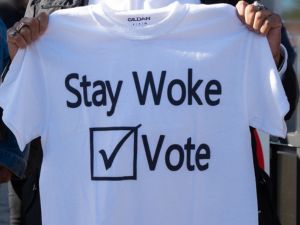
    The term ‘woke’ has taken on many meanings. Originally, it referred to being aware of social injustices. Over time, however, it has become a divisive label. Some see it as a movement for equality. Others view it as political overreach. But does attacking wokeness actually fuel racism and sexism? This was the focus of a recent heated debate.

    The case for wokeness as social awareness

    Many speakers argued that wokeness is about awareness. It helps people recognise injustice and inequality. Historically, marginalised groups have fought for rights, often facing resistance. The push for racial and gender equality, they said, is not an attack—it’s progress.

    A key point made was that ‘woke’ has been weaponised. What once meant social consciousness is now portrayed as an insult. One speaker pointed out that diversity, equality, and inclusion (DEI) are essential for a fair society. If people attack these ideas, they may be indirectly undermining efforts to fight racism and sexism.

    Another speaker referenced history. Decades ago, being gay was considered a mental disorder. Women were discouraged from leadership roles. Would critics of wokeness prefer to go back to those times?

    The argument against wokeness

    Others saw wokeness differently. They argued that it forces people into identity categories rather than focusing on shared humanity. Some described it as divisive. Instead of bringing people together, they believe it creates conflict by emphasising differences.

    One speaker, referencing French universalism, argued that identity should not define a person’s worth. Instead, ideas and character should. Another noted that DEI policies sometimes lead to ‘positive discrimination.’ This, they argued, is still discrimination, even if well-intended.

    A major concern raised was free speech. Some felt that wokeness suppresses open discussion. The fear of being labeled racist or sexist, they argued, makes people afraid to speak their minds.

    Does attacking wokeness cause harm?

    One of the strongest arguments in favor of the motion came from statistics. Some studies suggest that when anti-woke rhetoric rises, hate crimes also increase. While correlation does not prove causation, this raises concerns. If attacking wokeness emboldens those with racist or sexist views, then it becomes more than just a political stance—it has real-world consequences.

    Others, however, argued that criticising wokeness is not the same as promoting discrimination. People can disagree with aspects of the movement without being bigots. The problem, they said, is that ‘woke’ is an ever-changing term. What is considered progressive today may be seen as outdated tomorrow.

    The verdict: a divided audience

    In the end, the room was split. Some believed that attacking wokeness does fuel racism and sexism. Others thought it was just a critique of political overreach. After a final vote, the motion carried—most agreed that opposing wokeness risks reinforcing discrimination.

    Final thoughts about attacking wokeness

    The debate revealed a key takeaway: definitions matter. ‘Woke’ means different things to different people. To some, it represents justice. To others, it’s a political tool. The challenge is finding a way to fight discrimination without stifling free speech.

    Please see summaries of earlier Sylvan debates here.

    For more information about how our meetings run, see meeting info.
  • Is a child’s success more driven by family or schooling?

    Is a child’s success more driven by family or schooling?

    What truly determines a child’s success? Is it the nurturing support of family or the structured guidance of schooling? This question sparked a lively and thought-provoking debate, with passionate arguments from both sides.

    The case for family as the foundation of success

    Many speakers highlighted the fundamental role that family plays in shaping a child’s future. A strong family unit provides emotional stability, values, and early learning opportunities that set the foundation for lifelong success. Some key points included:

    • Time spent with family: Children spend their formative years at home, where parents and siblings influence their behaviour, mindset, and habits.
    • Role models and values: Parents instil discipline, work ethic, and interpersonal skills that are crucial for success beyond academics.
    • Wealth and opportunity: Family background often determines access to quality education, extracurricular activities, and career opportunities.

    Speakers cited research from institutions like Harvard, which suggests that children raised in loving and supportive environments have a greater likelihood of achieving success in adulthood. Real-life examples, such as influential entrepreneurs and leaders, often point back to a strong family foundation as their key to success.

    The argument for schooling as the great equaliser in a child’s success

    On the other side of the debate, many argued that schooling plays a more significant role in shaping a child’s success. Schools provide structured education, exposure to diverse perspectives, and socialisation that family alone cannot offer. Key arguments included:

    • Educational access: Quality schooling equips children with essential literacy and numeracy skills that are fundamental for career success.
    • Influential teachers: A great teacher can inspire and change the trajectory of a child’s life, sometimes more than parental influence.
    • Networking and opportunities: Schools connect students with peers, mentors, and institutions that open doors to future success.

    One compelling example discussed was the case of Tibetan children being placed in Mandarin-speaking schools, illustrating how education can fundamentally shape a child’s identity and future prospects. Another argument was that historically, modern education systems have driven economic and technological progress, proving their significance in long-term success.

    Finding the balance: a holistic view of a child’s success

    While the debate saw strong opinions on both sides, many agreed that the ideal scenario is a balance between family influence and quality schooling. A loving family lays the groundwork for emotional resilience and ambition, while education provides the tools and opportunities needed to thrive in a competitive world.

    Ultimately, the discussion concluded with a vote, where the majority supported the idea that family plays the most crucial role in determining a child’s success. However, schooling remains an essential pillar that can enhance or, in some cases, compensate for family circumstances.

    Final thoughts

    As society continues to evolve, so does our understanding of what drives a child’s success. Whether it’s the nurturing environment of family or the structured guidance of education, both elements are indispensable in shaping a well-rounded individual. The real question isn’t family or schooling—it’s how we can ensure that every child benefits from the best of both worlds.

    Please see summaries of earlier Sylvan debates here.

    For more information about how our meetings run, see meeting info.
  • Special relationship debate – February 2025

    Special relationship debate – February 2025

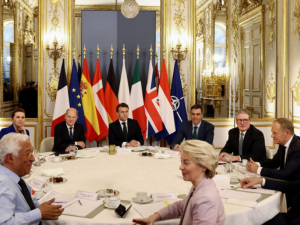
    The Sylvan special relationship debate considered the following motion:

    The UK should not have a special relationship with the Trump administration.

    The debate took place on Monday 3rd February.  Julian Meek proposed the motion and Lo Luong Lo opposed it.

    The proposition arguing we should not have a special relationship

    The proposer began by questioning whether the special relationship exists. Marie Antoinette had a special relationship with the people and Henry VIII with his wives. The US has a lot of nostalgia. What right do the UK have for it – do we have a superiority complex over other nations? Do we hanker for the Empire? Sore losers from the war of independence? Trump wants a Nobel Peace Prize, an Oscar would be more apt. What are our principles and values as a sovereign country? All solutions need to be for one world, and not dictate the rules. President Bush and Tony Blair got us into trouble, with many lives lost. Trump sees himself as a peacemaker, but do we need a special relationship for world peace?

    The UK should play our own role in our own way. What would the consequences be if we don’t have the relationship – can we have relationships with the world? We don’t have a common language with the US. At Speaker’s Corner I heard that the US isn’t a country, it’s a mass meeting. Trump offers free hamburgers at his rallies. What would we get from Trump – it would be like speed dating RFK Jr, Musk and Trump. We can’t define it and it has no value.

    The opposition against the special relationship debate motion

    We need to define the special relationship, not as a myth. A close political, diplomatic, cultural, economic and military relationship. It dates back from historical ties and the World Wars. The UK benefits in intelligence gathering, defence and access to US politicians. The US gets intelligence reach into new areas from the UK. I oppose this for two reasons: 1) effective foreign policy requires a long-term perspective and 2) the risks of ending the special relationship outweigh the benefits. We have had strains on the relationship over the years.

    Yet the Marshall Plan strengthened it, and the Reagan-Thatcher bond endured. Putin’s invasion of Ukraine strengthened ties within Nato. The US did not want war Falklands, but rather a diplomatic solution. Many in Britain did not support the Iraq war. Trump’s first term threatened Nato. We need shared long-term goals and prospects, and work out short-term issues. We need strengthened shared security including cyber, economic prosperity via trade and investment. The US wants to lead, the UK wants to influence.

    The risk of ending the special relationship outweighs the benefits. We get access to advanced weaponry and defence capabilities. The US has committed to defending the UK, we would be gone without it. Could we go with India or China instead? Rachel Reeves hailed £600m in investment from China, yet we get billions from the US. We have no trade deal with India five years after Brexit. Would we have sovereignty if we couldn’t defend our country? While the relationship isn’t perfect, that can be said about any relationship. Both sides need to adjust and manage expectations. The US must accept different cultural views and can’t bully the UK. The UK should push back when it can. We should re-set the relationship not end it.

    Floor speeches from the audience of the special relationship debate

    The UK’s future lies with Europe – Trump will put tariffs on everyone and does not care about Ukraine, too far away. The MAGA movement is anti liberal democracy, and there may not be a 2028 election in the US. We should avoid emotional arguments and need a longer-term view. We have had varied strengths of relationships between leaders, but the behind-the-scenes elements really deliver the value. Diplomacy occurs between states, not individuals, and the American people chose Trump. He has it right when saying we need to defend ourselves. We could be attacked, particularly on the cyber front. Trump has some respect for British grandeur. Would an American debating club have said no to a relationship with Liz Truss? He won’t last forever and we need to suck it up. We survived the first four year term with him, the sky didn’t fall. Americans aren’t all crazy!

    The UK can try to influence the US and mediate between Trump and Europe, sharing the difficult messages. Could we downgrade the relationship to transactional for a period? What if his sons get in? America has no allies, only interests. We share values with the world’s most powerful country in an ever more dangerous world. The UK is not considered what we once were – a lap dog. Putin works off of Hitler’s playbook, a real threat.

    The opposer’s rebuttal

    We have a rational for a long-term relationship between nations, not individuals. The special relationship endured past Trump’s first term, and he will go after four years. While easy to end, it would be very hard to rebuild the relationship. The world is getting more dangerous, and both the US and UK have benefited from it. Even though Trump is dreadful, there’s no need to terminate the relationship. There have been deep cultural, economic and military ties over centuries. We have shared democratic values in good and bad times, and we can’t let Trump alter our course. We need to respect each other’s systems – we can re-set the relationship but not end it.

    The proposer’s closing speech

    The Sylvans have cemented our relationship with the proposer, a member of 104 London Debaters! We are human beings and have emotions. We should connect as souls, with poetry. If Donald Trump had a word with Charles III it should be: ‘You’re fired!’. We have cynicism about leaders, perhaps Musk can put them all in a rocket. We the people need to have a revolution for peace on Earth – we don’t need a special relationship. Trump can go for an Oscar. No one should abstain tonight, vote for or against. We’ve had nostalgia for Churchill from the floor tonight. We have a fear of enemies in Russia and China. We cannot live in fear but in peace.

    Result: the special relationship debate motion did not carry

    In the final vote, the Sylvans concluded through the debate that we should have a special relationship with the Trump administration.

    Please see summaries of earlier Sylvan debates here.

    For more information about how our meetings run, see meeting info.
  • Ukraine land for peace: is it the right course?

    Ukraine land for peace: is it the right course?

    The topic of whether Ukraine should cede land to secure peace has been a contentious issue. In a Sylvan debate on 20th January 2025, various perspectives were shared, highlighting historical, political and ethical dimensions.


    Historical context of the Ukraine war

    One of the opening arguments in favour of Ukraine ceding territory revolved around historical shifts in the region’s borders. It was pointed out that Ukraine’s borders have evolved over centuries due to empires and conflicts. Towns like Lviv have changed names and allegiances multiple times, symbolising the region’s fluid history.

    Another historical point raised was the famine of 1932-1933, known as the Holodomor. During this period, Stalin’s collectivisation policies led to mass starvation in Ukraine, leaving parts of the country depopulated and occupied by Russians. This tragic past underscores the deep-rooted tensions between Ukraine and Russia.

    In favour: giving up Ukrainian land for peace

    Supporters of the motion argued that Ukraine faces an unwinnable conflict. One speaker highlighted that Russia’s nuclear arsenal and military capabilities make a full retreat unlikely. For them, negotiating a settlement that acknowledges Russia’s control over parts of eastern Ukraine is the pragmatic choice. By doing so, fewer lives would be lost, and the conflict could end sooner rather than dragging on for years.

    Another argument likened the situation to other territorial splits around the world, such as North and South Korea or Cyprus. In these cases, although not ideal, partitioning helped stabilise tensions. Some believed that allowing ethnic Russians in eastern Ukraine to align with Russia could be a pathway to peace.

    Opposed: resistance and sovereignty

    Those opposing the motion firmly rejected the notion of appeasement. Many likened the idea of ceding territory to the appeasement of Hitler before World War II, suggesting it would only embolden Russian President Vladimir Putin to push further. Historical analogies like the Sudetenland were invoked to stress that giving up land now would not secure lasting peace.

    Another speaker emphasised that Ukraine is a sovereign state with a unique national identity forged over the past three decades. Allowing Russia to dictate borders undermines international law and sets a dangerous precedent. Additionally, there is widespread concern that Putin’s ambitions extend beyond Ukraine to other parts of Eastern Europe.

    NATO and Western influence

    Multiple speakers discussed Ukraine’s relationship with NATO and the European Union. Some argued that promises of NATO membership provoked Russia’s aggression, with Putin viewing Ukraine’s western alignment as a threat. However, opponents countered that Ukraine has every right to choose its alliances without external interference.

    Western support for Ukraine

    A recurring theme was the West’s role in the conflict. Critics of Western involvement noted that NATO and other countries have provided arms but not enough to decisively end the war. They argued that the West’s half-measures prolong the conflict without offering Ukraine a clear path to victory. One speaker suggested that Western nations should either fully commit to Ukraine’s defence or push for peace negotiations.

    Ethical considerations

    Some participants urged a more human-centred approach. They argued that peace must come from changing mindsets rather than military force. Others raised concerns about the lack of Ukrainian voices in the debate, noting that elections are currently suspended in Ukraine and conscription is mandatory. Without a clear understanding of what Ukrainians want, any discussion about land-for-peace deals feels premature.

    Conclusion of the land for peace debate

    The debate ended with a divided vote, reflecting the broader global division on this issue. While some see ceding land as a necessary step for peace, others believe it would only invite further aggression. As the conflict rages on, the world watches closely, hoping for a resolution that honours Ukraine’s sovereignty while ensuring lasting peace.

    The complexities surrounding the Ukraine land for peace debate highlight the need for nuanced discussions and thoughtful diplomacy. Only time will tell how this conflict will be resolved, but one thing is certain: the stakes could not be higher for Ukraine and the world.

    Result: the Ukraine land for peace motion carried

    In a razor-thin final vote (determined by the chair’s casting vote), the Sylvans concluded through the debate that Ukraine should give up land to secure peace.

    Please see summaries of earlier Sylvan debates here.

    For more information about how our meetings run, see meeting info.

  • Violence against women debate – January 2025

    Violence against women debate – January 2025

    The Sylvan violence against women debate considered the following motion:

    Violence against women and girls is not taken seriously enough.

    The debate took place on Monday 6th January.  Florence Powell proposed the motion and Vicky Griffiths opposed it.

    The proposition arguing that it isn’t being taken seriously enough

    The proposer opened by pointing out that one in four women and girls are subject to harassment. Our institutions and the general public need to recognise the seriousness of the issue and try to prevent it. We need more resources to respond to incidents of violence – the police have called this a national emergency. Yet victims have to report something three times for them to take action. The relentless pursuit of offenders should provide the best way to stop the problem. Because few reports lead to a conviction, rape has been effectively decriminalised and the police are not equipped to handle it. They do not treat victims properly, trawling through their personal data to assess their credibility, including therapy. Those with an ethnic background face poor treatment and victims have lost faith in the system.

    As a result, 83% of rape victims don’t report it to the police. The family courts have no training on coercive control, and the system does not provide free advice. Crown court cases face delays of up to four years. We need a whole-society approach. The police did not recall Zara Aleena’s attacker Jordan McSweeney to prison in time, even though he had violated his parole. We need coordinated steps to prevent this, and help victims escape and recover from attacks. Women’s Aid needs more funding, we need more refuge spaces. Migrant women should not face immigration punishments when reporting attacks. We need education to promote healthy relationships and consent. Social media amplifies online abuse and harm, with the Met not equipped to handle the online element. Black women face double the rate of attacks. We need a new attitude to solve this problem.

    The opposition against the violence against women debate motion

    The opposer strongly stated that no one thinks violence against women is acceptable – the question is whether we think it’s taken seriously enough. We can’t quantify enough. We have a patriarchal society with violence against women, how can we force more change? I’m from a diverse part of London, and in 2021 a woman died after her kidnapping. Within two days, the police had apprehended the culprit, who got a minimum 36-year sentence. We had the appalling Sarah Everard attack, which led to protests during covid, on which the police used a heavy-handed approach. The public, police and courts treat violence against women very seriously indeed. We need to remember that men actually face one-third of domestic abuse – the most prolific rapist targeted men.

    We have made progress, let’s not undermine that. In the 1960s men could slap women on the backside. We had Benny Hill-style jokes, yet now upskirting is a crime. Charities have emerged, a positive development, reflecting how serious we take this. It takes time to put laws through the legal system, for instance on banning indoor smoking. We’ve had several major new laws including the Domestic Abuse Act 2021, etc and we have specialists in every 999 call centre.

    MPs read the names of female victims in Parliament, including 70 in December alone. We measure what we want to improve, and until recently we had no statistics at all. The UN Secretary General stated that violence against women is about power, and to address it we need gender equality. Behaviour has changed across the country because we take it seriously – no one thinks it isn’t serious. We do need change to happen. The motion reflects the politics of despair.

    Floor speeches from the audience of the violence against women debate

    I’ve felt abuse, we’ve had progress – yeah. Politicians only do sound bites and jump on the bandwagon. Mayor Khan doesn’t have a clear plan on how to change male attitudes. If one rapist remains on the streets, we haven’t done enough. I don’t believe humans as a species are violent, though local violence is more personal – we need to become a non-violent society. The government takes a top-down approach, and police, a reactive rather than proactive one. Hard times lead to more violence, unfortunately. Women today have more equality and more risk, an unpopular view. Only the most heinous crimes get our attention, can we say we’re taking it seriously enough? Men with many accusers still get away with it. We need the politics of high standards.

    Floor speeches continued

    This has been a global issue since Biblical times and is a feature of war zones. We still have societies where women do not have equal rights, and the UK does arms deals with some of them. Andrew Tate means boys hear talk of women as inferiors. We need greater investment in mental health care. I grew up in a home of domestic violence, which I condemned – it had been passed down the generations. We have toxic masculinity, and we need healthy masculinity. We need to dismantle the patriarchy, and more equality does not equal more violence, no. The media monetise these stories.

    More floor speeches

    There has been progress but from a low base. Most abuse happens behind closed doors, with an imbalance of power between individuals. Women need to be empowered to speak out, yet will anyone believe them? Everyone scrutinises all the details, and the perpetrator has the presumption of innocence. The change has to come from women, and we need to make the UK a beacon of progressive society. Elon Musk can draw attention to our failings, so long he bases it on facts. Boys get taught that violence is okay, from their parents and / or their friends – it’s a learned behaviour. Only one prison has therapy for men, why? Grooming gangs are not only Muslim, in fact the largest percentage are white. Girls also pick on and bully each other.

    The opposer’s rebuttal

    We’ve clearly heard that no man has the right to do this to women. The whole reason for tonight is taking violence against women and girls seriously. We do need to make change via serious solutions. Inquiries punish the wrongdoers and find the cause. Everyone ignored Jimmy Savile in the 70s and 80s, now we have recompense and lessons learned. We haven’t got it right yet – justice needs to be applied equally. Women and men should both push for this.

    Loads of men don’t understand basic sexism, though if you point it out to them they are horrified. The BBC changed to calling it ‘men’s football’ instead of just football only recently. People didn’t understand coercive control until just recently, and the pandemic made it more obvious. Everyone has spoken about the horrors and that we need to change, which shows that while we haven’t done enough, we are taking it seriously.

    The proposer’s closing speech

    Just because we take it seriously, doesn’t mean we take it seriously enough. Some in this room do, but not society as a whole. If Sadiq Khan says something, do the police enact it? Yes we have new legislation, but that doesn’t mean we’ve done enough. Charities are looking for support all of the time, and have to send women home to violent places. This has happened forever, and we need to do more than just thinking about it seriously. We need to prevent it happening by tackling the root causes, and we need more counselling. Violence against men needs more attention too, we need to take both more seriously. Power imbalances apply more to women. We need the politics of high standards.

    Result: the violence against women debate motion carried

    In the final vote, the Sylvans concluded through the debate that we do not take violence against women seriously enough.

    Please see summaries of earlier Sylvan debates here.

    For more information about how our meetings run, see meeting info.