

Category: Uncategorized

  • Religion and safety: a debate on faith

    Religion and safety: a debate on faith

    People pray in over 7,000 languages worldwide. Billions look to a higher power for guidance. But does this devotion breed peace or conflict? We recently explored a highly contentious motion regarding religion and safety. The motion stated that the world would be a safer place without religion. This debate tackled history, morality and human nature. Here is a breakdown of the compelling arguments.

    The proposer’s opening arguments regarding religion and safety

    The debate began with a fierce critique of organised faith. The proposer argued that religion presents unproven beliefs as undeniable facts. Consequently, this certainty creates dangerous dogma. Dogma inevitably leads to fanaticism. Fanatics then show severe intolerance towards different beliefs. 

    They highlighted history to establish the link between religion and safety issues. For instance, the Pope ordered the First Crusade in 1095. Crusaders slaughtered thousands in Jerusalem to establish a Christian kingdom. Later, Muslims reconquered the city to secure their own holy sites. The proposer also mentioned the Albigensian crusade. During this conflict, papal forces wiped out the Cathars. A papal legate reportedly said, ‘Kill them all, for the Lord knows those that are His.’

    Furthermore, the proposer brought the argument into the modern era. They pointed out recent Islamist terror attacks in the UK. Attackers seek martyrdom to secure a place in heaven. In the Middle East, the proposer argued that religious dogma fuels ongoing territorial disputes. They noted that some settlers justify illegal expansion using scripture. One settler simply said, ‘God gave us this land. It says it in the Bible, that’s my law.’

    Ultimately, the proposer claimed that organised religion distorts spiritual messages. It demands absolute obedience. This unchallengeable authority divides humanity. Therefore, removing it would definitely improve global safety.

    The opposer’s opening arguments defending religion and safety

    Next, the opposer took the floor to challenge the motion. They conceded that leaders sometimes abuse organised religion. However, they argued that removing faith would not cure human flaws. The underlying drivers of violence would easily survive. People naturally fight over power, scarce resources and fear. Without religion, humanity would simply find new excuses to wage war.

    The opposer made three central points regarding religion and safety. First, they explained that corrupt leaders use faith merely as a tool. If faith vanished, leaders would exploit other narratives. Modern populists already mobilise supporters using economic grievances and national identity. Second, they noted that extremism thrives outside of religious spaces. Political and ideological fanaticism exist everywhere. Certain individuals possess an absolutist mindset regardless of their spiritual beliefs.

    Finally, the opposer highlighted the positive social impacts of faith. Religion successfully unites people across massive geographical and cultural divides. It builds essential social cohesion. Without this unifying framework, society might fracture. We would likely see worse tribalism. Consequently, smaller identity groups would clash more often.

    Voices from the floor on religion and safety

    The audience then shared their diverse perspectives. Many attendees echoed the opposer. One speaker emphasised that humans are not inherently good. They argued that scripture provides vital moral guidance. Another participant agreed that people cause violence, not belief systems. They highlighted how faith provides crucial hope during dark times. A different speaker pointed out that geopolitical wars usually centre on resource extraction. Cuba, Venezuela and World War II had nothing to do with faith.

    Conversely, several speakers strongly supported the motion. One contributor argued that religious texts contain inherently violent instructions. They warned that believers cannot easily ignore these aggressive doctrines. Another speaker noted that secular rights protect human life better than divine laws. They stated that questioning a god is much harder than questioning a politician. This makes religious authority uniquely dangerous. 

    Other speakers raised concerns about indoctrination and institutional abuse. One participant shared alarming statistics regarding child abuse within various religious institutions. They stressed that institutions silence victims to protect their reputations. Another person highlighted the massive hoarded wealth of religious organisations. They argued that dismantling these groups could free up vast resources. We could use this wealth to help the vulnerable.

    Overall, the floor debate revealed deep complexities. Some praised the intellectual and community benefits of faith. Others condemned the tribalism and strict dogma it creates.

    The opposer’s closing statement

    The opposer returned to deliver their final remarks. They firmly maintained their stance. They summarised that the root causes of global conflict are inherently human. Taking away religion only treats a symptom. It completely ignores the underlying disease. 

    Moreover, they argued that a completely secular world would lack essential community bonds. People naturally form groups and alienate outsiders. Therefore, removing religion simply shifts the battlegrounds to race, class and nationalism. They concluded that dogmatism is the true enemy. Removing faith would not resolve our safety issues. It might actually exacerbate them.

    The proposer’s closing statement

    Finally, the proposer concluded the debate. They strongly rejected the idea that religious violence is just a symptom. They provided a poignant example of institutional cruelty and cited the Magdalene laundries as evidence of warped religious compassion. 

    The proposer also circled back to the Middle East. They insisted that the conflict strictly revolves around religious holy sites. It is not just a standard land dispute. They pointed to Christian Zionists who actively anticipate a biblical Armageddon. This religious anticipation actively shapes modern foreign policy. 

    In their final plea, the proposer stated that organised religion is ultimately about power. It uses the illusion of divine authority to control the masses. We would undeniably achieve a safer world without this dangerous confidence trick.

    The final vote

    After a truly thought provoking debate, the audience cast their votes. The results were incredibly close. Ultimately, the motion failed to pass. The house decided that the world would not necessarily be a safer place without religion.

    Further reading

    A detailed summary and analysis of the debate can be viewed here.

    Please see summaries of earlier Sylvan debates here.

    For more information about how our meetings run, see meeting info.

  • Home ownership obsession: does it lead to poor decisions?

    Home ownership obsession: does it lead to poor decisions?

    The Sylvans debate club recently tackled a highly controversial and deeply personal topic. They debated a fascinating motion: the UK’s home ownership obsession leads to poor decisions. Buying a house often feels like the ultimate life goal. However, does this relentless pursuit actually hurt our economy and ruin our personal finances? Let’s explore the arguments from both sides of the room.

    The proposer: A crisis of capital, NIMBYism and home ownership obsession

    The proposer opened the floor with a strong warning. They acknowledged that owning a home brings financial stability and a feeling of safety. Yet, they argued that the UK’s home ownership obsession ultimately creates severe economic instability. They traced this issue back to the era of deregulation. Soon after, baby boomers solidified the idea that property secures a comfortable retirement. Then, the 2008 financial crash completely changed the landscape.

    Now, the country faces a severe housing crisis. The median age to buy a house has risen to 33. Moreover, many renters pay more than half their income to landlords. The proposer highlighted how this home ownership obsession heavily misallocates the nation’s capital. In the UK, 70% of capital sits locked in housing. Conversely, Germany has less than 50% tied up in property. Putting money into housing simply does not create new jobs or fund productive businesses.

    Furthermore, this obsession limits the Bank of England’s flexibility. When inflation hits, the Bank hesitates to hike interest rates quickly. They fear crushing homeowners who rely on short term mortgages. Finally, the proposer blamed this property mindset for rampant NIMBYism. Homeowners naturally resist new local developments to protect their property values. Consequently, this creates a vicious cycle of rising prices and stagnant building.

    The opposer: Security, choice and the human element of home ownership obsession

    The opposer took a very different stance. They shifted the focus from macroeconomics to individual human choices. We all need a place to live. Furthermore, investing in a home provides profound personal value. People want to control their living space, remodel it freely and host friends without answering to a landlord. For many, this is not a toxic home ownership obsession. Instead, it represents a healthy desire for domestic security.

    The opposer also firmly separated the desire to own a home from NIMBYism. Wanting a nice house does not automatically mean you want to block all new regional builds. While the UK does face high house prices, the opposer rejected the idea that housing starves the country of business investment. They pointed out that the US enjoys high home ownership alongside massive capital investment. Ultimately, the opposer argued that buying a home requires great financial discipline. People save diligently for deposits and pay their mortgages regularly. Therefore, valuing property results in responsible financial decisions.

    Voices from the floor: Personal stories, economic realities and home ownership obsession

    The debate then opened up to the audience. Several speakers shared deeply personal stories regarding their property journeys. One participant recounted buying a flat in the 1980s. They eventually lost the property after choosing to fund their struggling business instead of paying the mortgage. However, they still valued the freedom of ownership. They noted that renting actually cost them more money than buying back then.

    Another speaker passionately attacked the motion. They called it unethical to shame people for wanting permanent homes and warned the audience against relying on the stock market or pensions alone. They cited the historical endowment mortgage scandal as proof that alternative investments often fail ordinary workers. Furthermore, they blamed institutional investors for buying up housing blocks and artificially inflating prices.

    Conversely, another speaker heavily criticised the societal pressure placed on young adults. They argued that pushing 25 year olds into 40 year mortgages ruins their financial futures. These young buyers miss out on lucrative pension tax relief to service massive debts. The speaker emphasised that renting is a perfectly valid financial decision. They warned that people should only buy a property if they plan to stay for at least seven years.

    Floor speeches from the audience continued

    Another contributor shared a chaotic history of buying and selling multiple houses. They detailed soaring 15% interest rates, choosing wrong locations and constantly moving across the world. This story highlighted the immense stress that property ownership inevitably brings.

    Meanwhile, one audience member linked property wealth directly to the hatred of inheritance tax. They suggested that older generations hoard wealth specifically to help grandchildren onto the housing ladder. This intergenerational transfer locks capital away from the broader society. Finally, a veteran homeowner summarised the core issue simply. They pointed out that the UK population has grown massively over 30 years. Meanwhile, developers have failed to construct nearly enough homes to meet this soaring demand.

    Closing arguments: The opposer

    The opposer returned to deliver their closing thoughts. They reiterated that people value houses for excellent, logical reasons. A home offers security, community and comfort. Individuals should absolutely make personal choices about their own living situations. While some people make bad financial choices, the opposer argued that the home ownership obsession does not cause these errors. Instead, the real culprits are strict planning laws and a massive lack of property supply. We need to fix the housing shortage rather than shame people for wanting a castle of their own.

    Closing arguments: The proposer

    The proposer concluded the debate with a final stark warning. They acknowledged the human desire for community. However, they noted that renting focused European countries still build strong, connected communities. The proposer insisted that the current pressure on youth remains entirely unrealistic. We cannot solve the crisis simply by subsidising buyer demand. Pumping money into buyer schemes only makes property prices explode further. Homeowners refuse to support new builds because they desperately want their investments to grow. The proposer urged the room to recognise this toxic cycle as a massive series of bad decisions.

    The verdict

    After a spirited discussion, the Chair finally called for a vote. The audience carefully weighed the economic data against personal desires. Ultimately, the opposition claimed a narrow victory. The room decided that the UK’s home ownership obsession does not fundamentally lead to poor decisions. Several attendees abstained from voting, proving exactly how complex this housing dilemma truly is.

    Further reading

    A detailed summary and analysis of the debate can be viewed here.

    Please see summaries of earlier Sylvan debates here.

    For more information about how our meetings run, see meeting info.

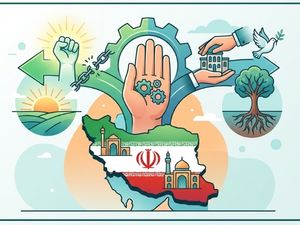
  • Iran regime change: morals, history and strategy

    Iran regime change: morals, history and strategy

    On 16 March 2026, the Sylvans gathered to tackle a highly contentious geopolitical issue: Iran regime change. The room buzzed with anticipation as the speakers prepared to debate a provocative motion, which read: ‘This house welcomes attempts for regime change in Iran.’ What followed was a passionate clash of morals, history and international strategy.

    The proposer: a geopolitical necessity for Iran regime change

    The proposer opened the debate with a starkly pragmatic argument. They bypassed moral idealism and focused entirely on power politics. They argued that the United States acts as a growing empire and must defend its interests. Furthermore, they highlighted Iran’s stubborn resistance to American hegemony. The proposer pointed out that Iran actively pursues a nuclear programme and backs anti-Western proxies like Hezbollah.

    Consequently, they linked this regional tension to a much larger threat. The proposer suggested that American leadership is aggressively changing regimes to prepare for a future clash with China. They freely admitted that this strategy sounds abhorrent to liberal Western ears. However, they stressed that the West must make difficult choices in a dangerous world. They concluded that neutralising a key Chinese ally is necessary to protect the Western sphere of influence.

    The opposer: challenging Western morality on Iran regime change

    The opposer fired back immediately. They fiercely dismantled the narrative that the West acts as the ‘good guys’. They listed recent aggressive interventions in Venezuela, Cuba and Gaza to prove their point. Next, they framed the potential attack as an existential crisis for 93 million Iranians.

    They reminded the audience of the region’s dark history. They noted that Western powers previously overthrew Iran’s democratically elected Prime Minister, Mossadegh, simply to secure oil. Therefore, the narrative that the US wants to help the Iranian people is ‘for the birds’. The opposer argued the real motives are maintaining global hegemony, protecting the petrodollar and controlling the Strait of Hormuz. They insisted these imperialistic goals directly contradict liberal democratic values.

    Voices from the floor: history, religion and realities

    The audience eagerly jumped into the fray. One speaker demanded that grassroots movements drive change rather than foreign interference. They highlighted the gross hypocrisy of Western powers who actively repress human rights at home.

    Another speaker introduced a fascinating religious and historical angle. They pointed out that recent Israeli strikes coincided with the Jewish holiday of Purim, explained the deep-seated rivalry between Shia Iran and Sunni Saudi Arabia and argued this religious fracture complicates any foreign intervention.

    Several speakers debated the brutal practicalities of an invasion. One contributor noted the current regime has killed thousands of innocent people. They suggested that citizens desperately want new leadership. However, they doubted that hurling missiles would achieve anything positive. They argued that true Iran regime change requires boots on the ground.

    More audience contributions

    A different speaker countered this idea immediately. They warned that the Iranian military easily crushes internal opposition. They firmly stated that a US invasion would inevitably repeat the catastrophic failures of Iraq and Afghanistan.

    Another passionate speaker criticised the West’s glaring double standards on nuclear power. They condemned the terrible cruelty to women in Iran but suspected the war drums were merely a political distraction.

    One contributor reminded the room of Iran’s unique identity. They emphasised that Iran is the historic Persian Empire. They warned that geopolitical interlinkages with China and Russia could easily escalate a regional conflict into a global war.

    Further floor speeches

    A younger speaker expressed deep disillusionment with Western moral superiority. They argued that social media exposes fabricated historical narratives. They stated that Western leaders lack the moral reputation to dictate global right and wrong.

    Despite the heavy criticism of Western motives, some floor speakers still supported the motion. They clarified that ‘attempts for regime change’ do not strictly mandate military action. One speaker cited the BBC Persian service as a valid, non-military attempt to provide unbiased information to oppressed citizens.

    Finally, the debate chair stepped in with a personal perspective. They shared stories of meeting friendly, welcoming Iranian people who deeply despise their authoritarian leaders. They urged the room to support the motion specifically for the sake of the suffering Iranian public.

    Closing arguments: the opposer

    The opposer returned to deliver their final, forceful summary. They agreed that everyone fundamentally desires a liberal democracy for Iran. However, they warned that Western military intervention historically brings absolute destruction. They cited Iraq, Libya and Syria as grim warnings. They argued the human rights narrative is carefully designed to manufacture public consent. Ultimately, they warned that foreign intervention would balkanise Iran and trigger a global disaster.

    Closing arguments: the proposer

    The proposer took the floor for the final word. They completely agreed that an internal revolution remains the best possible scenario. They also admitted that past American interventions directly created the current anti-Western theocracy. Nevertheless, they rooted their final plea in harsh geopolitical reality. They maintained that America must relentlessly prepare for a future conflict with China. They argued that the West safely cowers in the shadow of American protection. Therefore, they urged the house to support Iran regime change to secure our global future.

    The verdict: the final vote on Iran regime change

    The debate showcased a massive divide between ethical idealism and harsh geopolitical pragmatism. The audience weighed the historic suffering of the Iranian people against the dangers of Western imperialism. Following the passionate closing arguments, the room cast their votes.

    Ultimately, the motion carried. The house officially welcomes attempts for regime change in Iran.

    Further reading

    A detailed summary and analysis of the debate can be viewed here.

    Please see summaries of earlier Sylvan debates here.

    For more information about how our meetings run, see meeting info.

  • Universal childcare: the greatest boost to equality?

    Universal childcare: the greatest boost to equality?

    Is the path to gender equality paved with economic policy or cultural revolution? The Sylvans gathered to debate a motion that strikes at the heart of modern society: whether universal childcare would provide the greatest boost to equality for women.

    The discussion revealed a significant divide between those who see financial barriers as the primary obstacle and those who believe deep-seated cultural attitudes are the true enemy. The group had a wide range of backgrounds including ages ranging from 20 to 80, providing a diverse set of inputs to tackle this question.

    The proposer: the economic case for universal childcare

    The proposer opened the debate with a sobering statistic: 2158. That is the year estimates suggest we will finally reach gender parity. She argued that waiting 132 years is unacceptable and that society needs systemic changes today.

    According to the proposer, the ‘motherhood penalty’ is the single biggest driver of inequality. While women under 30 face a small pay gap, the divide widens significantly after age 40. She noted that 75% of women report pregnancy discrimination and earnings drop by 43% compared to men.

    The speaker dismantled the current system in the UK. She pointed out that full-time nursery costs have skyrocketed, often making work financially unviable for moderate earners. Furthermore, current ‘free’ hours are insufficient. They cover only 38 weeks of the year and fail to account for the full working day.

    The proposer shared a moving story about a young boy left alone during school holidays because his single mother had to work. This, she argued, is the reality of a system that fails to provide universal childcare. By removing these cost barriers, the proposer insisted we could increase the maternal labour supply and close the wealth gap.

    The opposer: cultural barriers beyond universal childcare

    The opposer acknowledged the importance of childcare but firmly rejected the idea that it is the greatest boost to equality. She argued that viewing equality as an economic equation ignores critical realities.

    First, she noted that women who never have children still face discrimination and pay gaps. If childcare were the silver bullet, these women would ‘be sailing through the system’, yet they are not.

    The speaker pointed to Nordic countries like Finland. Despite having excellent universal childcare, Finland still struggles with gendered divisions of labour. The opposer argued this proves that funded care alone does not create equality.

    She also highlighted structural incompatibilities. Jobs in politics, surgery or policing often require hours that standard nurseries simply cannot cover. The speaker noted that ‘heart attacks don’t stop at seven o’clock’, meaning women in these fields face barriers that free nurseries cannot fix.

    Ultimately, the opposer contended that sexism is endemic. From comments about a female politician’s shoes to safety on the streets, the issues are cultural. They concluded that while childcare helps, the greatest boost will only come when society judges women as equals to men.

    Voices from the floor: debating universal childcare

    The debate opened to the floor, sparking a wide range of passionate perspectives.

    One speaker supported the motion by linking it to children’s rights. They argued that just as we have universal healthcare, universal childcare ensures every child gets a fair start, regardless of their parents’ situation.

    Conversely, another participant felt the motion was reductive. They expressed discomfort with narrowing women’s existence down to motherhood. As a woman choosing not to have children, they felt their battles with the patriarchy regarding safety and identity would persist regardless of childcare policies.

    Historical perspectives also emerged. One speaker suggested that the ‘motherhood penalty’ should actually be viewed as a contribution to GDP. They argued that if men could have babies, the state would likely have solved the financial penalty of parenthood long ago.

    Others were sceptical about the ‘free’ aspect. A speaker noted that taxpayers ultimately foot the bill and questioned the economic benefit if businesses struggle to cover maternity leave. Another voice from the floor took a traditional stance, suggesting that biological differences mean a woman’s place is in the home, sparking audible reactions from the room.

    A particularly vivid analogy came from a speaker referencing the TV show House MD. They compared universal childcare to fixing a dislocated shoulder when the patient actually has a lack of blood flow. They argued that safety and domestic abuse are the systemic ‘blood flow’ issues that society must solve first.

    The closing arguments

    The opposer returned to emphasise that financial fixes cannot solve attitudinal problems. She shared personal stories about the invisible costs of being a woman, from safety concerns to societal expectations of appearance. She reiterated that senior roles often remain out of reach due to time demands, not just nursery costs. Finally, she concluded that we must treat the root cause culture rather than just the symptom.

    The proposer delivered a fiery closing rebuttal. She expressed frustration with the pace of cultural change. ‘I’m really bored of waiting for it’, she stated, rejecting the idea of waiting another century for attitudes to shift. She argued that getting more women into leadership is elitist and ignores the vast majority of the workforce who simply need to make ends meet. For them, universal childcare is the only tangible lever available to make an immediate difference.

    The vote

    The debate proved to be a dynamic one, with opinions shifting as the evening progressed. While the pre-vote leaned against the motion, the arguments regarding the urgency of economic intervention resonated with the room.

    In the final count, the motion that universal free childcare would provide the greatest boost to equality for women was carried. The Sylvans concluded that while cultural change is the ultimate goal, the immediate impact of economic support cannot be ignored.

    Further reading

    A detailed summary and analysis of the debate can be viewed here.

    Please see summaries of earlier Sylvan debates here.

    For more information about how our meetings run, see meeting info.

  • US-Europe alliance: is the bond broken?

    US-Europe alliance: is the bond broken?

    Welcome to another engaging evening with the Sylvans, where members gathered to debate a highly controversial motion. They fiercely discussed the following statement: ‘The US is no longer a European ally.’ This topic directly challenges the current state of the US-Europe alliance. The room buzzed with anticipation. Let us dive into the arguments from the floor.

    The proposer’s opening on the US-Europe alliance

    The proposer started the evening strongly. They asked the audience to look beyond the current US President. Instead, they highlighted a major global shift. Europe is no longer the centre point of the world. From 1914 to 1989, global dominance meant controlling Europe. Therefore, the US needed a strong western ally to counter Soviet influence.

    Today, the world looks completely different. The US must look out for itself. To maintain security, they need total control of the Western Hemisphere. Consequently, American focus is shifting heavily towards East Asia and Africa. The proposer argued this trajectory would continue under any president. Eventually, every leader realises that influence in other regions matters more than Europe. Ultimately, Europe must pull its own weight. The US might remain a friendly buddy, but they are no longer a close European ally.

    The opposer’s defence of the US-Europe alliance

    The opposer took the stage next. They warned against taking an inaccurate snapshot of today’s politics. Assuming the US-Europe alliance is dead remains a dangerous game. Historically, the relationship always experienced intense ups and downs. For example, the US only entered the Second World War militarily after Pearl Harbour. They also demanded heavy financial payment for Lend Lease supplies. Despite these past tensions, we always assumed the US remained a steadfast ally.

    The current administration features a unique individual. This leader relies on extreme leverage and media outrage to govern. However, this one man does not represent the entire American population. The opposer noted the president’s incredibly low approval ratings. Once this unique individual leaves office, they suspect a powerful resurgence in transatlantic allegiances. Therefore, focusing only on the current chaos makes the motion completely false.

    Spirited floor speeches on the US-Europe alliance

    The debate then opened to the floor. Members eagerly shared their diverse perspectives.

    One speaker argued passionately against the motion. They noted that nearly half of America still values these democratic ties. We ignore the threat of losing this friendship at our peril. Another member highlighted deep historical, linguistic and commercial linkages. These bonds do not simply vanish overnight. They argued a true breaking point only happens when values of democracy and free speech completely misalign. We have certainly not reached that point yet.

    Conversely, a bold supporter of the motion challenged history. They claimed the US and Europe were never actually true allies. They pointed to the 1823 Monroe Doctrine and heavy Cold War tensions. Furthermore, recent sanctions on Russia actually boosted the US economy. Meanwhile, Europe currently struggles with highly expensive liquefied natural gas. Thus, separate power blocks inherently hold separate interests.

    Defending the US-Europe alliance, another attendee pointed directly to NATO. The US still honours the commitment that an attack on one is an attack on all. They actively meddle in Europe because they still care deeply about Russian influence. Another speaker backed this up. They reminded the room of the very real, physical threat from Russia. Europe desperately needs the US to counter this present danger.

    Taking a more analytical approach, another speaker examined American imperialism. They argued that European fragmentation continually causes its own weakness. If Europe and the US truly unite, they wield massive positive influence. Sadly, Europe remains too divided.

    A fiery proponent of the motion focused heavily on the current US president. They described the leader as a dictator hungry for constant media attention. They passionately stressed to the room, ‘we don’t have Trump Derangement Syndrome; we have Deranged Trump Syndrome.’ Because the president treats allies terribly with sudden tariffs, the US-Europe alliance acts functionally dead.

    Taking a pragmatic approach, another speaker distinguished between true allies and strategic partners. An ally always has your back. A strategic partner only helps when it directly benefits them. Because the US now shows ambiguity regarding Article Five, they act merely as a strategic partner. Therefore, they are no longer a dependable ally.

    Finally, the chair stepped in to share their thoughts. They compared international alliances to personal friendships. A true friend does not use a hostile, threatening diplomatic approach. The current communication style lacks basic sympathy. Consequently, this harsh tone completely undermines the very idea of a modern alliance.

    Closing arguments

    Following the floor speeches, the main debaters returned to deliver their final verdicts.

    The opposer summarised their strong defence first. They reiterated that taking a snapshot of a single volatile presidency is extremely unwise. They warned against casually dismissing Article Five. Doing so actively risks a catastrophic hot war with Russia. Furthermore, they emphasised that the US and Europe still collaborate deeply on crucial military intelligence. Because we still share core democratic values, the US-Europe alliance proudly endures.

    The proposer then closed the evening’s debate. They firmly maintained that the US is no longer a European ally spiritually. While paper treaties currently exist, the underlying reality looks vastly different. They stressed that this geopolitical shift represents a long term trajectory. Regardless of who sits in the Oval Office, American interests have permanently pivoted. They now look towards South America, Africa and Asia. Europe’s time in the spotlight is slowly waning. Consequently, the US now prioritises non European powers for the future.

    The final vote

    After a spirited and thoroughly engaging evening, the chair called for a vote. The room found itself fiercely divided on the issue. In the end, with the chair casting an abstention to break a tense deadlock, the motion was ultimately opposed. Despite the recent political turbulence, the Sylvans officially decided that the US remains an ally to Europe.

    Further reading

    A detailed summary and analysis of the debate can be viewed here.

    Please see summaries of earlier Sylvan debates here.

    For more information about how our meetings run, see meeting info.

  • AI inequality: the productivity debate

    AI inequality: the productivity debate

    The Sylvans recently hosted a fascinating short debate evening on AI inequality. The audience voted to tackle a highly relevant and divisive topic. They chose to debate whether AI will widen inequality more than it increases productivity. This question sparks intense opinions across all industries. Does artificial intelligence democratise skills, or does it exclusively reward the tech-savvy? Let us dive straight into the arguments.

    The proposer: AI inequality is rapidly approaching

    The proposer opened the debate with a stark warning. They argued that severe AI inequality is coming because people drastically underestimate the technology. The pace of change is staggering. Early adopters already use these tools to complete massive projects. For example, one person built a fully functional to-do application over a weekend using Claude without any coding experience. Furthermore, users can now run complex financial models better than a CFO.

    The proposer highlighted a profound workplace shift. Their own startup refuses to hire anyone who does not actively use artificial intelligence. Consequently, individuals who ignore this technology will face severe disadvantages. Unprepared workers risk losing their jobs entirely. Why hire a junior software engineer or an accountant when software can do the job instantly? Ultimately, the proposer believes that AI inequality will explode as tech adopters leave hesitant workers far behind.

    The opposer: balancing productivity and AI inequality

    The opposer immediately challenged this pessimistic view. They agreed that the technology fundamentally changes daily tasks. However, they firmly denied that this guarantees a negative outcome. The opposer compared the current landscape to the internet boom in the 1990s. Early computer adopters gained initial advantages, but the internet ultimately democratised global access to information.

    Similarly, artificial intelligence democratises the tech industry. Now, ordinary people can execute complex projects easily. The opposer also dismissed fears regarding capital concentration. Competition naturally arises, just as DeepSeek recently challenged established giants like Nvidia. Furthermore, the opposer noted a looming demographic crisis. Our economy currently features fewer workers supporting a much larger pensioned population. Consequently, we desperately need the massive productivity boosts that this innovation provides.

    Floor speeches: perspectives from the audience

    • One speaker urged the room to look globally. They suggested that the technology might actually reduce global inequality by empowering the global South, much like smartphones previously did.
    • Another speaker highlighted a modern crisis in academia. They noted that students use artificial intelligence to generate massive literature reviews instantly. This deceives the academic world and leaves professors feeling entirely stuck.
    • Meanwhile, a legal professional shared a mixed experience. The software brilliantly reformatted massive documents for them, saving hours of tedious work. However, lawyers using ChatGPT to prepare cases have accidentally submitted fake legal precedents. This clogs the underfunded court system and severely hurts overall productivity.
    • A theatre worker offered a very different perspective. They argued that algorithms cannot easily replace physical manual labour, like cleaning or checking tickets. Therefore, manual workers might enjoy sudden job security while academic jobs vanish.
    • Another attendee emphasised the absolute necessity of innovation. They pointed out that Western economies barely grow right now. Without innovation, living standards stagnate. Therefore, society must embrace the productivity that these tools promise.
    • Finally, a healthcare expert highlighted massive medical benefits. The technology accelerates drug discovery and promises personalised medicine. By investing these productivity gains into public services like the NHS, society can actively reduce inequality.

    The opposer’s closing arguments

    Taking the stage again, the opposer delivered their closing summary. They reiterated that humans must learn to use these programs as tools. Even when the software makes errors, finding and fixing those errors remains a vital human job. Historically, humanity has successfully managed the disruptive effects of new technologies. When spreadsheet software arrived, people thought accounting would disappear. Instead, the profession bloomed because analysis became cheaper and better. Ultimately, the opposer argued that bad governance causes inequality, not the technology itself. With the right policies, the incredible value generated by artificial intelligence can easily solve our current economic crises.

    The proposer’s closing arguments

    The proposer secured the final word of the evening. They acknowledged the brilliant medical and personal benefits mentioned by the audience. However, they doubled down on their core warning. Artificial intelligence can now write end-to-end software. This directly threatens countless white-collar jobs. Furthermore, the proposer doubted that the wealthy would willingly share their new tech-generated fortunes. The wealthy often threaten to leave the country when faced with higher taxes. Consequently, massive job losses will inevitably create unprecedented AI inequality. Society remains entirely unprepared for this rapid transition.

    The verdict on AI inequality

    After a thrilling discussion, the chairperson called for a room vote. The audience raised their hands to declare their final stance. A passionate group chose to abstain entirely. However, between the two distinct sides, the proposition won the vote. The room ultimately concluded that AI inequality will indeed worsen faster than productivity improves. This debate proved that the future of work remains a highly contested frontier.

    Further reading

    A detailed summary and analysis of the debate can be viewed here.

    Please see summaries of earlier Sylvan debates here.

    For more information about how our meetings run, see meeting info.
  • Social media accountability: executive liability for algorithms

    Social media accountability: executive liability for algorithms

    The Sylvans gathered to debate a motion that strikes at the heart of social media accountability: ‘social media executives should be personally liable for their algorithms’.

    As concerns over mental health and digital addiction rise, the call for greater social media accountability has grown louder. The debate explored whether the legal corporate veil should be pierced to hold individual leaders responsible for the code that governs our lives.

    Here is an account of the arguments presented during this lively session.

    The proposition: Big Tech and social media accountability

    The first speaker opened with a powerful historical parallel: the tobacco industry. They reminded the audience of advertisements from the 1940s and 50s, where doctors promoted cigarettes. Society eventually moved from accepting smoking to litigation, driven by the revelation that companies knew their products were addictive.

    The speaker argued that we are on a similar journey with social media. They referenced a current 2026 legal case in California, where a 19-year-old is suing major tech platforms for causing addiction and health issues.

    The core of the argument rested on the definition of an algorithm. The speaker described it not as a tool for user satisfaction, but as a giant prediction machine engineered to guess what a user will be attracted to next. This mechanism triggers dopamine spikes, creating a cycle of craving. Crucially, the speaker noted the difference between wanting and liking. The algorithm creates a want, even when the user no longer derives pleasure from the activity.

    The proposition did not call for a witch hunt against success. Instead, they argued for the application of existing legal principles – gross negligence and wilful misconduct. If executives knowingly engineer addiction that harms users, they should face personal liability, much like the tobacco executives of the past.

    The opposition: the media is the real bogeyman

    The second speaker rejected the motion, suggesting that social media is merely a convenient scapegoat. They argued that the real issue is not the delivery mechanism (the algorithm), but the content itself. In their view, legacy media outlets create the division and misinformation that social media simply reflects.

    The opposition placed the responsibility firmly on parents and individuals. Sharing personal anecdotes, the speaker claimed that addiction is a failure of discipline, not technology. They described controlling their own children’s phone usage through strict parenting, arguing that if they can do it, others can too.

    Furthermore, the speaker warned against lawfare. They argued that stripping executives of protection would invite endless, frivolous lawsuits that could stifle business. They also questioned why social media is singled out when gaming, gambling and even language learning apps like Duolingo use similar engagement mechanics. The speaker concluded that we should not punish Mark Zuckerberg simply because he is successful.

    Voices from the floor on social media accountability

    • Privilege and profit: One audience member challenged the opposition’s stance on parenting, noting that not all families have the resources or time to monitor screen usage constantly. They pointed to Project Mercury, an internal investigation at Meta, alleging that the company prioritised profit over user well-being despite knowing the harms.
    • The science of harm: Another speaker highlighted the biological impact of these platforms. They referenced Jonathan Haidt’s work, The Anxious Generation, noting that the brain’s frontal cortex is not fully developed until age 25. This makes young people uniquely vulnerable to algorithms designed to maximize engagement.
    • Sovereignty and values: A contributor raised the issue of technological sovereignty. They argued that because Europe relies heavily on American tech, it lacks the control to enforce its values. They suggested that while the proposition is morally right, enforcing it against foreign giants is politically difficult.
    • The teenage magazine analogy: In a striking visual argument, a speaker asked the room to imagine a physical magazine for teenagers. If pages 1-4 were fashion, but the rest contained pornography, gambling and suicide content, it would be banned immediately. They asked why digital platforms are allowed to operate without the same scrutiny.
    • Legal precedents: Several speakers discussed the legal mechanisms. One noted that the UK’s Online Safety Act is already forcing changes, proving that regulation works. Another pointed out that in the financial services industry, senior managers are already held personally liable for misconduct, which successfully focuses the mind on compliance.
    • Defence of the corporate veil: Conversely, a speaker defended the principle of separate legal personality. They argued that English law protects directors to encourage entrepreneurship. In their view, proving an intent to harm is impossible because the primary goal of these platforms is connection and profit, not injury.

    The closing arguments

    The opposition closing

    Returning to the podium, the second speaker reiterated that addiction is a universal human trait. They admitted to their own addiction to language learning apps but argued this does not necessitate suing executives. They warned that if social media vanished, children would simply find something else to binge on.

    The speaker maintained that existing laws are sufficient. If a company is sued and the share price drops, the executives suffer financial consequences naturally. They concluded with a metaphor: if a joyrider crashes a Ford at 150mph, we do not sue the executives of Ford. We blame the driver.

    The proposition closing

    The first speaker closed by referencing the film Thank You for Smoking, illustrating how industries often hide behind the guise of personal responsibility to defend harmful products. They agreed that personal responsibility is vital but emphasised that we live in a society based on a social contract.

    The speaker clarified that they are not arguing for immediate conviction, but for liability. They argued that executives must operate within a framework that protects society. If executives are found guilty of gross negligence – turning a blind eye to the harm their products cause – they must face enforceable consequences. The speaker concluded that liability ensures that innovation does not come at the cost of public safety.

    The verdict on social media accountability

    The debate highlighted deep concerns regarding the power of big tech and the vulnerability of users. While valid concerns were raised regarding the practicality of enforcement and the risk of over-regulation, the mood of the room leaned heavily toward greater social media accountability.

    When the final vote was cast, the motion carried by a significant margin. The Sylvans resolved that social media executives should indeed be personally liable for their algorithms.

    Further reading

    A detailed summary and analysis of the debate can be viewed here.

    Please see summaries of earlier Sylvan debates here.

    For more information about how our meetings run, see meeting info.

  • Growth and climate change: can economic growth help solve it?

    Growth and climate change: can economic growth help solve it?

    The Sylvans gathered to debate a pressing global issue regarding growth and climate change. The motion before the house was: ‘Economic growth is incompatible with solving climate change.’

    This discussion brought together diverse views on economics, technology and environmental ethics. It explored whether the drive for prosperity must inevitably destroy the planet, or if innovation allows for sustainable progress. The debate highlighted the complex tension between growth and climate change.

    The proposition: realism in growth and climate change

    The proposer opened the debate by arguing that a functioning economy demands energy that is both plentiful and cheap. They contended that the UK currently lacks cheap energy, not because of gas prices, but due to ‘green subsidies’ hidden within costs.

    A significant portion of their argument focused on the intermittency of renewable power. The proposer noted that their own solar panels provide ‘three times as much energy in the summer as they do in the winter.’ They argued that unless massive battery storage becomes viable, wind and solar remain unreliable.

    Furthermore, the proposer stated that the UK produces less than 1% of global carbon emissions. They compared this to the rising emissions of India, China and the United States. Consequently, they claimed that domestic efforts to reach Net Zero are ‘destroying our economy’ while having ‘no effect at all’ on global temperatures. In their view, growth and climate change policies are currently at odds because the latter undermines the former without achieving results.

    The opposition: innovation for growth and climate change

    The opposer rejected the idea that we must choose between prosperity and the planet. Instead, they argued that ‘solving climate change is a part of future growth.’

    They acknowledged that nuclear energy is ‘very green’ and should be expanded. However, they disputed the proposer’s dismissal of renewables. The opposer cited data showing that battery costs have dropped dramatically, moving from $450 to $60 per unit of storage. This trend suggests that intermittency problems will soon be solved by technology.

    Moreover, the opposer warned that ignoring the climate crisis would destroy GDP. They referenced research suggesting significant economic costs regarding infrastructure and health if temperatures rise. They argued that extreme weather impacts agriculture, decreasing wheat and corn production. Therefore, addressing growth and climate change simultaneously is the only way to ensure future stability.

    Voices from the floor on growth and climate change

    The floor debate revealed a wide spectrum of opinions regarding how we define success and sustainability.

    • Defining Growth: One speaker, an economics graduate, urged the room to define their terms. They argued we must focus on real GDP per capita and innovation rather than just population size. They also noted that wealthier countries are better positioned to care about the environment, describing it as a ‘Maslow’s Hierarchy of Needs type thing.’
    • Challenging Capitalism: Conversely, another speaker questioned why we use GDP as a measure of success at all. They argued that current systems benefit a tiny fraction of the global population while pushing humanity towards ‘ecological ceilings.’ They suggested we need a new system, referencing Doughnut Economics.
    • The Role of Innovation: A speaker used historical context to refute degrowth arguments. They compared modern pollution to the ‘horse poo’ crisis of 19th-century London, which was solved by the invention of the car. They expressed confidence that innovation, such as fusion technology, will similarly solve current issues.
    • Global Inequality: The debate also touched on the Global South. One contributor asked if the room supported ‘dumping toxic waste’ or destroying the Amazon for the sake of growth. They reminded the audience that pollution causes illness and that developed nations often export their environmental damage.
    • Investment Opportunities: Looking at solutions, another participant highlighted that the UK has a natural resource bounty in wind power. They argued that investment in renewables offers strong economic returns and is necessary because the country has been ‘coasting on infrastructure from Victorian Empire times.’

    Closing arguments

    The opposer closed by reiterating that humanity does not need to sacrifice growth for the environment. They argued that the world has grown significantly in health and quality of life over the last century. They maintained that ‘innovation is both the answer to growth and climate change.’

    The proposer concluded by challenging the opposition’s faith in solutions. They asserted that we cannot simply ‘solve’ climate change but must adapt to it. They warned that a lack of economic growth leads to misery. ‘If we have no economic growth, or stable economic growth, we all get poorer,’ they stated, arguing that people strive for better lives and that requires an expanding economy.

    The outcome

    Following the closing speeches, the Chair put the motion to a vote. A plurality of members voted against the idea that growth and climate change solutions are incompatible: the motion was defeated.

    Further reading

    A detailed summary and analysis of the debate can be viewed here.

    Please see summaries of earlier Sylvan debates here.

    For more information about how our meetings run, see meeting info.

  • Greenland’s sovereignty: would we fight to ensure it?

    Greenland’s sovereignty: would we fight to ensure it?

    On a winter evening in 2026, the Sylvans gathered to debate a hypothetical yet high-stakes geopolitical crisis. The motion before the House was: ‘This House would fight to ensure Greenland’s sovereignty.’

    The debate was set against a dramatic, fictional backdrop. Attendees were asked to imagine themselves not in Parliament, but in a COBRA meeting. British troops are currently on the ground in Greenland, and a United States task force is inbound with the intent to annex the territory. The question was simple but terrifying: do we fight back?

    The proposition: a just war for Greenland’s sovereignty

    The Proposer opened the debate by arguing that protecting Greenland’s sovereignty requires immediate action. They outlined three main pillars for their argument: justice, worthiness and winnability.

    First, they argued this would be a ‘just war’. The Proposer described the US advance as a ‘naked act of aggression’ against a sovereign land without the consent of Denmark or the Greenlandic people. They noted that the annexation is not needed for national security or economics, making the aggression baseless.

    Secondly, the Proposer stated the fight is worth it. They emphasised that British troops are already under fire in this scenario. To withdraw would be an act of cowardice and a failure of NATO obligations. Furthermore, they argued that if NATO fails to protect its members now, the alliance is effectively dead.

    Finally, the Proposer argued that the war is winnable. They suggested that the US President typically ‘chickens out’ when faced with real resistance. If European forces show strength, the US would likely retreat to a peace treaty rather than engage in a long-term conflict.

    The opposition: caution over Greenland’s sovereignty conflict

    The Opposer urged the House to restrain their emotions regarding the battle for Greenland’s sovereignty. While clarifying that they do not support handing the territory over to the US, they strongly cautioned against the word ‘fight’.

    They painted a grim picture of the global repercussions. The Opposer argued that fighting the Americans would not lead to peace but would trigger chaos in the Middle East and East Asia. They suggested that without the US, the security of the West collapses.

    Instead of military action, the Opposer advocated for negotiation. They reminded the audience that the US President is a one-term leader and that waiting out the administration might yield a better outcome than rushing into a ‘hot war’.

    Voices from the floor on Greenland’s sovereignty

    The debate then opened to the floor, where speakers offered a wide range of perspectives on how to handle the threat to Greenland’s sovereignty.

    The strategy of waiting

    One speaker supported the Opposition’s call for patience. They suggested dragging out negotiations and prevaricating until the US administration changes. They believed a new president would likely reverse the ‘nonsense’ of the invasion.

    The psychology of the bully

    Several attendees focused on the personality of the US leader. One speaker introduced the acronym TACO: ‘Trump Always Chickens Out.’ They questioned whether the President would double down or back down when ‘punched on the nose’. Another speaker compared the President to a toddler having a tantrum, suggesting the best approach is to hold boundaries kindly while offering a ‘lollipop’ or off-ramp.

    Imperialism and consistency

    A speaker from the floor raised a point about consistency. They argued that if the UK is willing to fight Russian or Chinese imperialism, it must also stand up to US imperialism. They noted that simply because the US is an ally does not give them the right to annex territory.

    Self-determination

    Another participant shifted the focus to the people of Greenland. They argued that before intervening, the international community must consider self-determination. They posited that if the Greenlandic people actually prefer US rule, then external powers should not intervene.

    Military and economic realities

    The practicality of fighting was a major point of contention. One speaker noted that the UK military is in a poor state and relies on US technology for its nuclear deterrent. They questioned if Europe could truly unite to fight such a powerful force. Conversely, another speaker suggested using economic warfare. They proposed that holding out against tariffs and making the invasion financially costly would force the US to withdraw without bloodshed.

    Closing arguments in the Greenland’s sovereignty debate

    The opposer

    In their summary, the Opposer reiterated that they are not advocating for appeasement. However, they stressed that economic sanctions are a viable alternative to military conflict. They warned that a war could open a ‘Pandora’s box’, potentially turning allies like Israel and Turkey against Europe. They implored the audience to stay calm and avoid a conflict that even the American people do not want.

    The proposer

    The Proposer closed by quoting Neville Chamberlain, warning against the dangers of ignoring conflicts in ‘faraway lands’. They argued that this is fundamentally a defensive war. They stated that if the US wants to visit Greenland peacefully, they can, but aggression must be met with force.

    The speaker returned to the ‘TACO’ theory, arguing that a ‘bloody nose’ such as shooting down a few helicopters would cause the US President to panic and retreat. They concluded that fighting for Greenland’s sovereignty is essential to show the world that ‘might is not right’.

    The vote

    The debate highlighted deep concerns about the stability of NATO and the dangers of unchecked imperialism. After hearing all arguments, the Chair put the motion to a vote.

    The motion was carried. The House resolved that it would fight to ensure Greenland’s sovereignty.

    Further reading

    A detailed summary and analysis of the debate can be viewed here.

    Please see summaries of earlier Sylvan debates here.

    For more information about how our meetings run, see meeting info.

  • University education: is it worth the cost?

    University education: is it worth the cost?

    The value of university education is a topic that divides opinion across generations and industries. The Sylvans gathered to debate a motion that cuts to the heart of modern aspiration: ‘university education is no longer worth the cost.’

    With tuition fees rising and the landscape of work shifting beneath our feet, is the traditional degree still the golden ticket it once was? Here is how the debate unfolded.

    The proposition: RoI on university education and skills

    The proposer opened the debate by challenging the room to reflect on their own career paths. They asked a poignant question: how many attendees were actually working in the field they studied at eighteen?

    For the proposer, the primary purpose of university education to secure a career and earn a living is often at odds with reality. They argued that most people ‘fall into the jobs they actually love’ through on-the-job learning rather than academic theory. Drawing a comparison to driving, they suggested that we learn by doing, not just by passing a theory test.

    The financial argument was central to the proposition. In the UK, the average student accumulates around £53,000 in debt. While low earners might pay back very little, high earners face a repayment figure upwards of £112,000. Contrast this with an apprenticeship, where a young person could finish three years with money in the bank and vital experience.

    Furthermore, the proposer highlighted a lag in academia. Curriculums are often years behind the real world. In a fast-moving economy, this gap renders much of the learning obsolete before graduation. Sharing their own experience in recruiting, the proposer noted that for eight recent hires, not one was selected based on their degree. Instead, skills, experience and character were the deciding factors.

    The opposition: the value of university education

    The opposer rejected the idea that university education is a failed investment. They presented three core arguments: financial return, personal nuance and the unique value of time.

    Firstly, they argued that university remains an excellent financial decision. Statistics consistently show that graduates earn more over a lifetime and face lower unemployment rates. Moreover, for professions like medicine, law and engineering, university is not just an option; it is a necessary gateway. The opposer also warned that as AI makes it easier to polish CVs, employers will increasingly use degrees as a filter to distinguish candidates.

    Secondly, the opposer stressed that university is not a passive consumer good like ‘milk or bread at Sainsbury’s.’ Its worth depends on how the student engages with it. It offers access to world-class libraries, laboratories and experts. While vocational paths are valid, they argued that this does not render the academic route worthless.

    Finally, the opposer championed the intrinsic value of the university experience. Unlike the corporate world, university affords individuals time to think, reflect and discover who they are. On a societal level, universities are engines of innovation. The opposer cited the development of RNA vaccines as a triumph of long-term academic research that immediate profit-seeking would never have supported.

    Voices from the floor

    The debate then opened to the floor, where a diverse range of perspectives emerged regarding the state of university education.

    The professional perspective

    One speaker, a former student journalist, noted that university offers unique opportunities to run organisations and gain high-level experience early on. However, they questioned whether the cost is justified for ‘ordinary’ degrees outside of the sciences. Another speaker added that while employment often requires a degree due to competition, entrepreneurship does not. They suggested that for budding business owners, travel might offer more ‘evolution to your brain’ than a classroom.

    The reality of debt

    A speaker who owes £60,000 to the Student Loans Company offered a conflicted view. They admitted their first degree in Arts was ‘entirely useless for actually obtaining a job’ but they loved the learning experience. They eventually retrained in Law, which required a degree. They concluded that education is worth the cost, with the caveat that many will never fully repay the debt.

    Vocational vs. academic

    The room heard from a speaker who built a successful 30-year career in computing after taking a simple aptitude test in a doorway on Oxford Street. They learned on the job, contrasting this with the immaturity of some modern students, citing a memorable anecdote about students who didn’t know how to use a microwave or sit on a chair without breaking it.

    Quality and standards in university education

    A speaker with a background in chemistry and accountancy argued that academic standards have dropped. They observed that material they learned in their first year is now taught to third-year students. They felt that paying high fees for a ‘poorer education’ supports the motion, even though they value the social aspect of leaving home.

    Social mobility

    Several speakers touched on the social role of university education. One noted that for students from small towns or rural areas, university is the only way to discover high-level careers in finance or law. Another argument that while self-education is possible, university builds confidence and report-writing skills that give graduates an edge in administrative roles.

    Conversely, a different speaker criticised universities for functioning as businesses. They lamented the lack of an industrial strategy that values trades, noting that we cannot run a country solely on financial services.

    Closing arguments in the university education debate

    The opposer’s rebuttal

    Returning to the podium, the opposer addressed the complaints about cost. They argued that if a student does not earn enough to repay their loan, the education is effectively free. They also defended ‘niche’ courses. If a student is passionate about dance, spending three years studying it is a valid pursuit of happiness, even if it doesn’t lead to a specific career. They concluded that the ‘horror’ of the application process proves people still value the experience.

    The proposer’s rebuttal

    The proposer used their closing remarks to double down on the changing job market. They revealed that their company uses AI to screen CVs for skills and sentiment, ignoring education sections entirely. They argued that mentorship and independence are better teachers than a lecture hall. They concluded that while education is priceless, the current university model is a ‘fundamental waste of money’ for the vast majority of people who do not need a specific licence to practise.

    The vote

    Following a passionate evening of arguments, the Chairman put the motion to a vote. The result reflected the complexity of the topic.

    The numbers were incredibly close. By a narrow margin, the motion that ‘University education is no longer worth the cost’ was rejected.

    The debate highlighted that while the cost of university education is high, the value it provides whether in career earnings, personal growth or societal progress remains significant for many, though clearly not for all.

    Please see summaries of earlier Sylvan debates here.

    For more information about how our meetings run, see meeting info.