
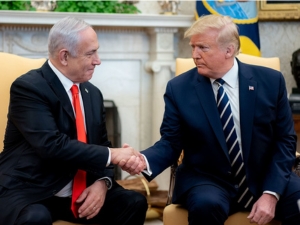
The Gaza peace plan was at the heart of the motion: this house supports Trump’s peace plan for Gaza. This led to a wide-ranging and often emotional debate.
Opening for the motion — perspectives on the Gaza peace plan
In advocating the Gaza peace plan, the proposer framed the case pragmatically. The proposer urged focusing on outcomes, not personalities. Drawing on the paradox of past U.S. leaders who spoke of peace yet waged war, they argued that peace usually comes through imperfect compromise.
The core case:
- The Gaza peace plan is intentionally imperfect and vague to avoid cornering either side and to enable dialogue.
- It should be treated as a building block rather than a comprehensive or morally balanced settlement.
- Its most important promise is to stop the killing immediately -however modest, an improvement over the status quo.
- Supporting the plan does not absolve anyone; legal accountability through courts can and should continue in parallel.
- The proposal creates a neutral ground for international engagement and may align with wider momentum toward diplomacy and recognition.
They stressed that war resists simple labels and that moral purity tests can paralyse action.
“If you want to make peace with your enemy, you have to work with your enemy; then he becomes your partner.”
The proposer reminded the room, quoting Nelson Mandela.
Primary opposition — critique of the Gaza peace plan
The principal opponent rejected the plan as a false start that entrenches failure. In their view, the Gaza peace plan merely entrenches failure. They argued that decades of Western-backed status quo have brought neither security nor justice, and this proposal keeps that trajectory.
Their critique:
- The plan undermines international law and offers political cover for continued military operations.
- It avoids a genuine path to Palestinian rights or statehood and risks perpetuating apartheid-like conditions.
- They evaluated several points reportedly in the plan: demands for “de-radicalisation,” conditional hostages-for-prisoners exchanges, amnesty conditioned on disarmament, aid framed as generosity rather than as a legal obligation, and transitional governance that could resemble externally imposed administration. They argued these elements are punitive, impractical, or prone to abuse.
- They warned governance arrangements would lack local legitimacy, aid could be superficial, freedom of movement historically gets restricted, and dialogue without a two-state commitment rings hollow.
As an alternative, they called for declaring Israel a rogue state, imposing escalating sanctions, deploying UN peacekeepers, expelling settlers from the West Bank, and implementing one person, one vote -citing South Africa as a precedent. They insisted that accountability via the ICC and ICJ remains crucial for both sides.
Contributions from the audience: floor speeches in the Gaza peach plan debate
Bypassed Palestinians and statehood: Several argued the Gaza peace plan sidelines Palestinians, with no credible path to sovereignty, and prolongs a violent status quo. They noted public signals from Israeli leadership rejecting a two-state outcome.
International actors and geopolitics: One contributor claimed China benefits from prolonged proxy conflicts and has sought to undermine the Abraham Accords; others emphasised shifting Western public opinion and the potential leverage that creates.
UN role and on-the-ground practicality: Speakers criticised the plan’s minimal UN role—no peacekeepers or clear withdrawal provisions—arguing that without credible enforcement, promises could be hollow.
Floor speeches continued
Morality and race: There were reflections on perceived racial bias in global responses to suffering and a reminder that human dignity must be central. Another speaker observed that language around “war” and “human shields” can normalise civilian harm.
Realism vs idealism: Some favoured accepting an imperfect Gaza peace plan to reduce immediate harm, arguing that diplomacy often starts with small steps. Others insisted that half-measures entrench abuse.
Nature of the conflict: Multiple voices noted the asymmetry of the fighting and warned that labelling the situation as a traditional war risks licensing civilian casualties.
More floor speeches
Practical peace: One speaker argued for pragmatic help over symbolic gestures: peace must be tangible—aid delivered, hostages released, movement restored.
Five-block framing: Another summarised the plan’s logic as five connected blocks—stop killing, exchange hostages, deliver humanitarian relief, set transitional governance, begin dialogue—while warning that transitional governance would be hardest to implement.
Metrics of success: Questions were raised: Is success a ceasefire, improved life expectancy, economic recovery, or justice? Whose justice? Speakers noted peace often involves painful concessions.
Closing speeches in the Gaza peace debate
Opposer’s conclusion: The Gaza peace plan erodes international law, risks enabling mass harm, and antagonises Palestinians. They urged sanctions, UN peacekeepers, dismantling apartheid-like systems, and equal rights—arguing that justice can end tribalism and build a multi-ethnic, thriving society.
Proposer’s conclusion: Rejecting the Gaza peace plan guarantees more killing now. Backing it does not block legal accountability; it opens a channel to stop the violence and test whether dialogue can work. They asked the room to be brave and support a first step, not a final settlement.
Outcome of the final vote
The motion – this house supports Trump’s peace plan for Gaza -carried.
Key takeaways on the Gaza peace plan
Supporters see it as a practical ceasefire-first approach that can save lives and unlock diplomatic space, even if imperfect and politically messy.
Opponents see it as entrenching a failed status quo, lacking legal legitimacy and a genuine path to Palestinian rights, and at risk of being weaponised for further violence.
Across the room, there was shared emphasis on accountability, humanitarian urgency, and the need to define success in concrete terms.
The unresolved question remains at the heart of every discussion on a Gaza peace plan: Is an imperfect, immediate step toward less killing worth taking if deeper justice is still contested—or does real peace require re-calibrating power and law first, even if that takes longer?
Please see this detailed summary of the debate for more information.
For earlier Sylvan debates, click here.
For more information about how our meetings run, see meeting info.