
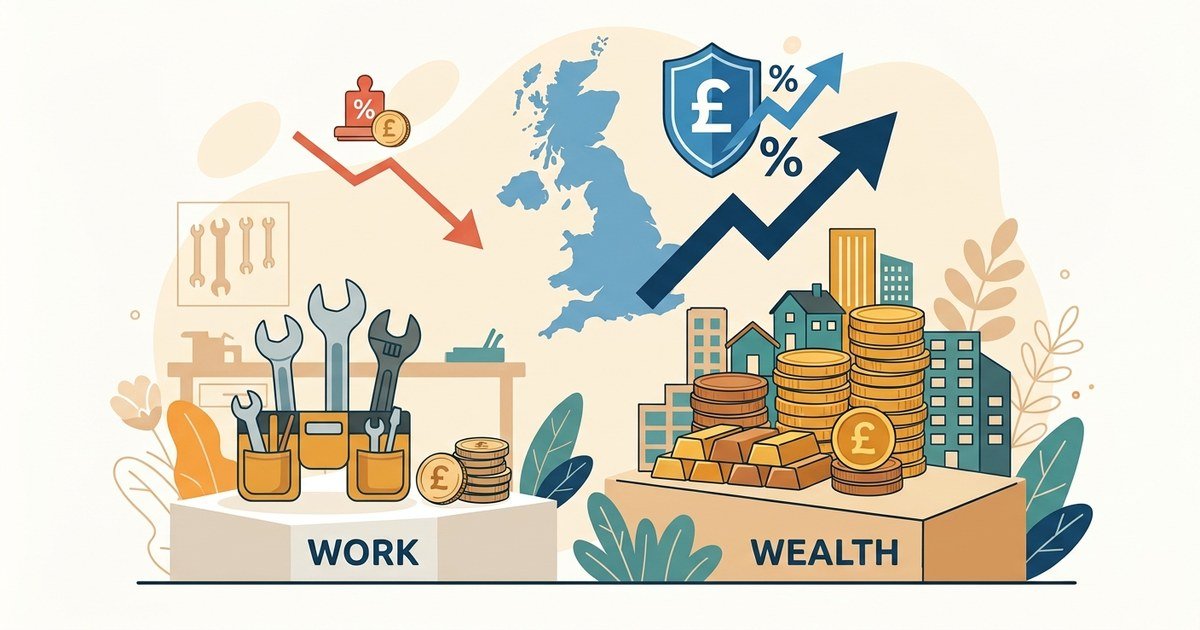
Motion in the tax wealth not work debate: Britain should tax wealth rather than work
Debated: 21 September 2026, Ye Olde Cock Tavern, Fleet Street
Format: rapid debate, opening speeches, floor speeches, closings
Should Britain take more of its revenue from what people own and less from what they earn? ‘Tax wealth not work’ has become a slogan, and in September the Sylvans tested it under the motion that Britain should tax wealth rather than work. A show of hands before the speeches put eight in favour, nine against and four undecided.
The proposer in the tax wealth not work debate: broader shoulders
The opposition spoke first on the night, so the proposer opened by answering it. They accepted much of what had just been said. Taxing assets alone, they agreed, would not produce a tax base broad enough to fund the NHS, social care or the armed forces. Their response was to widen the definition. Wealth, in their reading, meant assets and high incomes together, since people on very high pay generally build up wealth over time.
A tax on work, from the first pound over the allowance
On the other side of the motion sat work. Income tax starts at 20 per cent once earnings pass a personal allowance of about £12,500, the proposer noted, far below what most people need to house and feed a family. Someone close to the higher-rate threshold, they argued, may turn down a promotion or extra hours rather than tip into the next band. That, in their view, is a tax on work, and it discourages people from doing more of it.
The wealthy, by contrast, have the broadest shoulders. The proposer conceded that some had already left, pointing to Russian billionaires after the end of non-dom status, and that departures have an impact. Britain still runs an economy without them, they argued. Wealthy people want to be in London, and tax alone would not stop them generating economic activity here.
The opposer in the tax wealth not work debate: wealth you cannot spend
The opening speech against the motion set out to show that wealth, in the literal sense, is mostly untaxable. Wealth is assets, the opposer argued, and assets are not money. A government taking 2 per cent of a field does not want the mud; it wants a sale. Headline fortunes, on this view, are paper estimates of what assets would fetch on an open market, and they assume buyers who often do not exist.
Paper fortunes and missing buyers
Two examples made the point. Elon Musk could not readily sell SpaceX, the opposer said, and his liquid cash is probably small. At the other end of the scale, a pensioner in South London with a house worth a million pounds has a million pounds of wealth and no income from which to pay a tax on it. Studies of taxing only the assets that can actually be taxed, they claimed, find yields of two or three billion pounds a year at most.
The second argument was about who buys. An owner forced to sell 2 per cent of a business has to find a buyer, and other British owners would face the same tax. The buyers, the opposer argued, would therefore be foreign, and the result a large transfer of ownership abroad for very little revenue. Anyone wanting to redistribute ownership should legislate for co-operatives or shareholder capitalism directly. Many advocates of wealth taxes, they claimed, were misleading the public about the money available.
Voices from the floor in the tax wealth not work debate: definitions and mechanisms
Income, avoidance and who would collect it
The first floor speaker argued that Britain taxes income, not work, and asked whether the proposition meant to abolish income tax. If so, no budget could support current spending. Shifting the burden onto a small group would, they warned, build a further tax avoidance economy, in a country where government had in their view exceeded a reasonable level of taxation for 10 or 20 years. A second speaker liked the idea but could not see the machinery. Employers collect income tax; would banks agree to collect a wealth tax, and who would collect it on wealth held elsewhere?
A third speaker came in on the motion’s side. People who earn through work, they argued, should not carry a heavier burden than people whose wealth grows through ownership. Wages bear income tax and national insurance while accumulated wealth grows without being taxed at the same effective rate.
The test that counts behaviour
The next speaker granted the proposer’s point that Britain would survive the departure of some wealthy people, and called it the wrong test. Why design a system that encourages capital to leave? A departing millionaire takes their income tax, capital gains tax, investment and spending too. The question, they argued, is whether Britain gains more from the tax than it loses through migration, avoidance and reduced investment, and behaviour has to go into that sum.
Power as well as money
A younger speaker widened the frame to power. Billionaires own news outlets and shape social media, they argued, so inequality of wealth is also inequality of democratic voice. They urged closing loopholes, claiming that Jeff Bezos had been able to claim child tax credits in the United States. They also turned to the royal family, citing a BBC figure of £510 million a year from the taxpayer, and suggested selling some royal wealth and reducing its power.
One mind changed in public
One speaker announced that the opening speeches had changed their vote, away from the motion. They still thought limiting inequality a proper aim of society, pointing to how much British land can be traced to grants made around 1066. They also thought wealth could be taxed in practice, since loans can be taken against land and art. What persuaded them, they said, was the harm a wealth tax could do to the aspirations of workers and small businesses.
Their friend spoke next, and leaned the other way. After the Second World War, they noted, top rates of about 90 per cent coincided with a sharp fall in wealth inequality, which reversed from the 1980s. They wanted proportionality rather than a heavier load on the rich, but warned that without some curb the gap would only keep growing.
Network effects and the r greater than g argument
The fullest case for the motion came from the floor. Globalisation and network effects, one speaker argued, let a handful of firms in AI or online retail extract money from Tokyo to Jakarta, producing a concentration of wealth they called unprecedented in human history. The illiquidity objection, in their view, missed what the wealthy actually do: borrow against assets, live on the loan and pay no tax on it.
They cited Thomas Piketty’s formula that the return on capital exceeds the rate of growth, so concentration would keep rising. Their strongest claim was about fairness. People facing stagnant salaries and high mortgages watch the yachts on social media, and that sense of unfairness, they warned, is how revolutions start. A wealth tax, they concluded, would preserve the benefits of capitalism and of having wealth creators.
What ‘rather than’ means
A speaker who had voted for the motion explained why: they had read it as radical. If Britain taxed only wealth and no income at all, people might pay only for the services they wanted, funding the NHS without funding foreign wars. They asked the proposer to say whether the motion meant wealth instead of income tax entirely.
A method instead of an answer
Another speaker offered a method. Taxation, they argued, has several purposes: repaying the society that made an activity possible, sustaining the state, redistributing, judging merit against luck, rewarding effort and taxing less the money that does social good. Active assets that create jobs differ from passive ones. Quantify those variables, they said, and the answer to the motion follows. They left the numbers to the room.
The rentier class and public ownership
One speaker defined wealth as the rentier class: people whose income comes from property, assets and shares rather than labour. Someone on £200,000 a year, they pointed out, can still live payday to payday. They doubted a wealth tax would work, claiming the number of billionaires in London had already fallen under the current government. They raised asset-rich, cash-poor farmers facing inheritance tax, and a middle class carrying much of the burden. Their alternative was public ownership of rail, water and energy, with surpluses returning to public services.
Wealth beyond money
A later speaker observed that, in the opening vote, younger members had tended to back the motion and older members to oppose it. Most wealth, they argued, comes from income already taxed, and borrowing against assets to pay a tax recalled the subprime crisis. Their curveball was the motion itself: devolved governments set some of their own taxes, so what did ‘Britain’ mean? They then asked whether wealth means kindness, clean air, health and music, and recalled the slogan over the gates of Auschwitz to separate work from toil.
The chair’s case for equal rates
The chair, speaking last from the floor, argued that labour could never go untaxed without killing the tax base. Wealth and labour should instead be taxed equally. They recalled Warren Buffett’s complaint that his effective tax rate was half his secretary’s, and proposed charging capital gains at income tax rates and applying national insurance to investment income. Those two changes, they claimed, would raise around £50 billion a year.
Closing arguments in the tax wealth not work debate: the opposer
The opposer’s reply took on the argument about power directly. The motion says tax wealth, they argued; it does not say break up tech monopolies or use antitrust law, which could split Google with the stroke of a pen. A 2 per cent levy changes nothing about who holds power, because the people who hold it can afford it.
Capital gains tax might deserve a rise, the opposer conceded, but they read the motion as the popular call for a wealth tax associated with Gary Stevenson. Applied in detail, they argued, it alienates the top 10 per cent who pay for almost everything, raises little and leaves the country poorer.
Closing arguments in the tax wealth not work debate: the proposer
The proposer’s closing went back to the definition, drawing on the floor speakers who had asked what the motion meant. It did not mean all revenue from assets. Its sentiment, they argued, was that wealthy people and very high earners should pay more, with some revenue from assets. They took up the post-war figures: high marginal rates, then falling inequality, then a steep rise since Thatcher.
Their new example was private equity. The share of profits known as carry, they claimed, is taxed as capital gains rather than at the 45 per cent or effective 60 per cent rates paid on income, even by employees in their thirties. That, they argued, is the kind of wealth to tax more. Anyone who agreed that wealthy people and high earners should pay more, they said, should vote for the motion.
The final vote in the tax wealth not work debate
The motion carried by 12 votes to 8, with five abstentions. At the opening show of hands it had trailed by eight to nine, with four undecided. That makes it a reversal: the motion went in behind and came out ahead. More hands went up at the close than at the start, 25 against 21, so this was not quite the same room. One floor speaker also moved the other way, from support to opposition, so the net figure hides movement both ways.
The room ended where the proposer’s closing had placed it. Few voted to abolish income tax; most voted to ask more of those with the most.
Why the tax wealth not work motion carried
In the tax wealth not work debate, the room reversed an opening deficit of eight to nine and finished 12 votes to 8. Underneath it was a contest over the motion’s two key words. The opposition’s case was technical, specific and largely unanswered on its own terms: most wealth is illiquid, and taxing it raises little. The proposition never tried to win that argument. It changed the question to whether the wealthy should pay more, and the room voted on the new question.
The proposition’s case: definition, incentive, shoulders
Speaking second was an advantage the proposer used at once. Conceding that asset taxes alone cannot fund the state took the opposer’s strongest point off the table rather than contesting it. The redefinition that followed, wealth as assets plus high income, was candidly offered to the room as a choice: agree with one definition or the other.
The work half of the case was the more concrete. A personal allowance well below a living wage and a cliff at the higher-rate threshold gave ‘tax on work’ a meaning most of the room could recognise from a payslip. The broad shoulders argument was weaker, because it conceded that the wealthy were leaving and asked the room not to mind.
The closing was stronger than the opening. It borrowed the floor’s post-war history and added private equity, an example that made the idea of untaxed wealth vivid without requiring anyone to value an asset. Carried interest moved the argument from what people own to how their income is classified, which was the ground the opposition had left undefended.
The opposition’s case: liquidity, flight, futility
The opening speech against was the most rigorous of the evening. Paper wealth, missing buyers and the pensioner in a million-pound house formed a coherent argument that a tax on assets is mostly a tax on something that cannot be spent. The point about foreign buyers was original and went unanswered all evening.
Its weakness was scope. By defining wealth strictly as assets, the opposer made the motion easy to defeat and easy to redefine. Once the proposer moved the debate onto income, the liquidity argument no longer touched it. The claim that many advocates were misleading the public also gave the other side little to engage with.
The closing tried to separate power from money: break up Google by all means, but that is antitrust, not tax. It was a sharp distinction, and it answered the younger floor speaker directly. Conceding that capital gains might deserve a rise, however, granted part of the proposer’s redefined motion at the moment the room was deciding.
The ebb and flow of the floor in the tax wealth not work debate
Four battlegrounds formed. The proposition took two and the opposition one; the fourth was never settled.
Can wealth be taxed at all? The opposer’s illiquidity argument drew the most direct rebuttal. Two speakers independently pointed out that the wealthy borrow against assets, one to say a tax could be paid that way and one to say the borrowing itself is a loophole. A later speaker countered with the subprime crisis. The opposition never returned to the point, and the proposition benefited from the doubt.
Will the wealthy leave? This was the opposition’s ground. The speaker who reframed the test as net revenue after migration, avoidance and reduced investment gave the most disciplined argument against the motion, sharper than the opposer’s own. Falling billionaire numbers, as claimed by the rentier speaker, reinforced it. The proposition’s only answer, given before the point was made, was that Britain was still doing fine.
What the motion means. Three speakers asked whether ‘rather than’ meant abolishing income tax, and one asked whether ‘Britain’ could set the tax at all. These questions could have helped either side. The proposer turned them into an opening for the closing speech, reading the motion as a sentiment rather than a statute.
Fairness and power. The network effects speech, the post-war history and the power argument gave the motion a moral case its opener had not made. The opposer’s antitrust reply was effective against the power argument and silent on the fairness one.
What the floor added
This was a rapid debate, and the evening shows the format doing what it is for. The room’s working definition of the motion shifted during the floor speeches, and the shift came from the floor first. It was two floor speakers, not either opener, who argued that wealth can be taxed through the loans the wealthy already take. The chair’s proposal to tax capital gains at income rates was the most specific policy anyone offered.
The format also explains the shape of the result. In a rapid debate the opening speeches stake out territory rather than settle it, and here the two openers staked out different territories altogether. The floor did the work of mapping one onto the other.
One speaker also changed their mind in public, against the motion, and their friend answered from the other side. That exchange put both arguments of the evening into two consecutive speeches more clearly than the openers had.
What the tax wealth not work debate left unexamined
Nobody named a wealth tax design. Annual levies, land value tax, council tax reform and higher inheritance tax are very different instruments, and the debate moved between them without distinguishing them. The figures offered, two or three billion a year from asset taxes and £50 billion from equalising rates, were never set against each other.
Nobody answered the devolution point, or the question of who would collect the tax. The work side of the motion also received less attention than the wealth side. After the proposer’s opening, few floor speakers discussed wages directly.
Two readings of the tax wealth not work slogan
The phrase ‘tax wealth not work’ can be heard as a statement about the tax base or as a statement about fairness. The opposer took the first meaning: a proposal to move revenue from income to assets, which invites the question of how assets would be valued and sold. For the proposer it was the second: a demand that people with the most should pay more of the bill. Both readings are available in the words, and the evening never settled which one the motion meant.
That ambiguity shaped every exchange. Floor speakers who took the first reading tended to oppose, or to ask for clarification; those who took the second tended to support, and to bring examples of lightly taxed income, from carried interest to dividends free of national insurance. The chair’s proposal sat between them. Taxing income from wealth at the same rate as income from work is a tax wealth not work policy on either reading, and it was the nearest the room came to common ground.
It also suggests why the reversal happened without anyone defending an annual wealth tax in detail. A voter could support the motion without accepting any claim about what assets are worth. The opposition’s arithmetic about two or three billion a year answered a question many of the motion’s supporters were not asking.
What drove the result
To win, the proposition needed to move a handful of votes, and it moved them by changing what the motion asked. The opposition’s case was strongest on a reading of the motion that, by the end, almost nobody in the room held. Each floor speaker who asked what ‘rather than’ meant made the proposer’s broader reading more available, and the closing took it.
The opposer argued that wealth cannot be spent. The room decided it could still be asked for.
Full transcript of the tax wealth not work debate
Read the full transcript
The tax wealth not work motion, and the opening show of hands
The motion is: Britain should tax wealth rather than work. I’m going to ask for a vote as to where you stand on this topic beforehand, and then at the end we’ll have another vote, and we’ll see how you have been swayed or not by the proposition and the opposition. So, can I have first of all a show of hands? Who believes in the motion, Britain should tax wealth rather than work? Eight. And who would oppose the motion to start with? Nine. And who is undecided? Four. Okay, that should be interesting.
The opposition opens: why most wealth cannot be taxed
I have no notes, nor did I prepare, nor did I know what the topic was, so let me just design a speech with you out loud, if I might. I think the first point has to be that in most cases wealth refers to assets, and assets are not taxable in the literal sense, meaning they’re not money. For example, if you have a piece of property or a piece of land, the government does not want 2 per cent of that land. They don’t want to dig you up and give you some mud. They’re going to sell it for some income. So in a literal sense, wealth, as a matter of fact, is in almost no cases taxable. That’s point number one, and I’ll flesh out what wealth really is and how that works.
Point number two is a kind of rebuttal point, which is that most people who propose these policies think of them as somehow being redistributive of power or wealth, and in most cases they’re not. If you force a sale of some asset to some other person, you’re merely transferring ownership of that asset to someone else, and in most cases wealth is really about ownership rights rather than income. The tax is not effective at doing that. If you wanted, for example, shareholder capitalism, or co-ops, you could do that, but that would require passing policies to that effect, not just taxing people.
Paper wealth, pensioners and the missing buyers
Let’s go to the first one: why wealth is literally not taxable in most cases. We have to distinguish between wealth and income. When you see newspaper headlines, you see someone like Elon Musk worth a trillion or something. That’s sometimes called paper wealth, meaning it’s speculation. What’s happening when people assess someone’s wealth is they ask how much money it would take, if we sold all your property on an open market, for someone to acquire that property. That’s what wealth is: an assessment. There is, in most cases, no such income.
When people make that assessment, they are guessing, and first of all they’re assuming buyers. In very few cases are there such things as buyers. Elon Musk could not sell these assets. In most cases he couldn’t sell SpaceX. There’d be very few buyers in the market; maybe a Saudi wealth fund. The assumed existence of buyers is a very big problem for asking people to pay tax on assets, because in most cases you can’t assume those people have an income, so they would have to sell their asset.
We see this very often with pensioners in South London who have maybe a million-pound property. They have a wealth of a million pounds, but they could not possibly afford any tax. They can’t be taxed effectively, because they would have to sell their house to yield tax income. There are relatively few cases where people have very large assets and an income that would match that asset. You can own SpaceX; that does not give you an income which is 2 per cent of SpaceX. Elon Musk’s liquid money is probably very, very small. There are many more people in the world who have much more cash than Elon Musk does, even though on paper he has a lot, because when people speculate about his wealth, again, they’re assuming buyers.
So suppose we force a sale, or suppose somehow we only tax those assets which are in some sense taxable. Studies have been done into what happens when you do that. You get very little money. You’re talking about two, three billion a year in the UK at most. However, what you do is alienate a tremendous class of property-owning capitalists from your country, and they go to a different country without paying tax, and that’s for literally peanuts. You don’t do that for half the NHS budget. You don’t do it for the defence budget. You do it for a few days of NHS money. So for the ability to raise literally a couple of billion pounds a year, you’ll alienate the 300 richest people in the country, for no real gain.
I could say more about that, but I think it’s relatively persuasive. You might say, well, why are people proposing this? Most people proposing it are just liars, drifters who are trying to deceive the public into thinking that lying around in people’s pocketbooks is a trillion dollars or something. This is just not true. It suits the media to do that, because it gets you riled up. It simply isn’t true.
Who buys the shares?
On the second point, about whether this is genuinely redistributive, here’s a real problem. Suppose I own a business worth 100 billion, and you want to tax me a certain percentage of that 100 billion. I have to raise those funds, because as an owner you’re not usually drawing income. Maybe I sell shares in my company, or maybe I take out a loan, or maybe I do draw an income from the business; maybe I pay myself a salary. All three of these options are very bad in practice, because who are you selling shares to? We always have to assume a buyer.
If you have 100 or 200 billionaires in the UK, and they all have to sell 2 per cent of their businesses to pay for this tax, who’s buying that? It’s not other rich people in this country, because they’re similarly subject to the same tax. So the buyers of all the businesses in the UK which would be taxed in this way would be foreign buyers who are not subject to this tax. It’d be a tremendous transfer of ownership to foreign buyers, and again we’re talking peanuts. It’s not going to raise a lot of money, because there are very few rich people, hundreds, to whom this would apply, and all of their assets are not liquid. You can’t really sell them. It’s a very small amount of money. So it’s a very bad idea.
The proposition: wealth as high income as well as assets
Thank you, Mr Chair. I don’t know if anyone noticed, but I was undecided in the pre-vote, so I can switch, and I’m happily proposing the motion. The opposer has raised some very valid points, and he’s clearly had some kind of economics training, which is good, and that brought something to the debate, I think. We’ll see as we go through.
The opposer has made a very clear argument that taxing wealth assets, and he’s really defined wealth as assets, is not going to lead to a broad enough tax base. We can’t fund the government, we can’t fund the NHS, we can’t fund social care, we can’t fund the military by taxing assets. I think that is actually true. I agree with that. However, I think we can look at a different definition of wealth. So what are we talking about when we say tax wealth, not work?
Wealth, in my book, can be assets. It also can be high income. Wealthy people tend to have high income. There are people who have high income who spend all their money and have loads of debt, and their net worth is actually very low. So it’s possible to have a high income and not be wealthy. But generally, people on very high incomes have more wealth, and they will over time build up more wealth, so I’m going to use that as a definition of wealth.
It is going to be up to you as the audience to decide what you think the definition of wealth is. You all have the vote at the end. You can agree with the opposer’s definition or with mine. If we just talked about taxing land and shareholdings and very specific assets, having a broad tax base and actually funding the government is very difficult. I don’t think that’s the debate tonight.
A tax on work, and the broadest shoulders
I think the debate tonight is about what it actually means for working people. When we talk about not taxing work: should we give working people incentives to work more, and not take their money when they start working more? What is the threshold these days, 52, 53,000? If someone is earning 53,000 a year, they’re paying 20 per cent marginal tax on that. Some people earning that amount are not going to look to get a promotion. They’re not going to put that extra effort in. They’re not going to take on extra hours, because guess what? They earn more money, they tip into a higher tax band, and that discourages them from working. So that is a tax on work.
At the lowest income end, we have a personal allowance in this country of 12,500 something. Up to that level you are not taxed. But if you want to be able to afford a living, have a home and feed your family, you have to earn a lot more than 12,000 to get by, unless you own a house. We start taxing at that point, at 20 per cent. So we tax work in this country. We tax the average working person significantly. That’s the debate for me tonight, but it is up to all of you, and I want to hear your perspectives. There are different ways to tax assets. The opposer wasn’t exhaustive in what he said. There are ways of taxing assets that can raise billions and billions of pounds and help fund the government.
So in my book we should be taxing wealth in terms of assets, and we should be taxing wealthy people even more than we are doing today. They should be shouldering the burden of funding public services and funding our national security through the military, the defence of the realm. They have the broader shoulders, and they should be bearing that burden. Wealthy people and high earners already pay a very high share of tax. That isn’t to say that we can’t do more.
The opposer has made the argument that if we tax wealth, we’ll piss off wealthy people. Well, they’re doing fine. We can tax them much more. The Conservative government took away non-dom status. We have had some Russian billionaires leave, and some other billionaires, to be fair. Are we still doing okay? Can we still run an economy without them? Yes, we can. There is an impact. I won’t lie to you and say there’s no impact. But they have broad shoulders, and they should be able to bear a greater burden. We have tremendous assets in this country. Wealthy people want to be in London. Tax does make a difference to that, but it is not going to turn off all the wealthy people and stop people from generating economic activity in the UK. I propose the motion.
Income, avoidance and who would collect it
I think we have to define exactly what you want to do, because at the moment it’s not work that is being taxed. It’s income that’s being taxed. Are you going to not tax income at all, and rely only on trying to tax wealth? I would doubt that you would be able to succeed in getting any sort of budget that could support all the things that governments at present are paying for.
Now, what happens if you try to switch to getting your income mainly from wealthy people and taxing them? Are you not simply going to create an enormous further tax avoidance economy? I have said in these rooms for some years now that I believe the government has exceeded a reasonable level of taxation on its people, probably for 10 or 20 years. Are you going to switch, therefore, to a much smaller group of people, in what is at the moment a very large tax avoidance nation? I would doubt you would succeed. Thank you, Mr Chair.
Taxing wealth is a good idea, but I don’t know how it would work. With income tax, the employer takes it. With a wealth tax it would be similar: your bank taking it. But whether the bank would agree to do it, I don’t know, and other wealth is not in the bank. I don’t know how you tax that. So it’s a good idea, but I don’t know how it would work.
I think one of the core principles that was raised was that people who earn through work should not carry a heavier burden than those whose wealth grows through assets they own and through ownership. I think the present system places too much pressure on wages through income tax and national insurance, while accumulated wealth can grow without being taxed at the same effective rate. That’s it.
Migration, avoidance and the real test
Although I agree with the proposition that Britain will continue to function if some wealthy people leave, my argument isn’t that the country will collapse. My question is: why would we deliberately design a tax system that encourages economically valuable people and their capital to leave? If a wealthy person leaves, we don’t only lose the proposed wealth tax. We might also lose some of the income tax, capital gains tax, investment and spending. So the relevant question isn’t whether Britain can survive without them. Of course it can. The question is whether the policy leaves Britain better or worse off. The test is whether Britain gains more revenue from the tax than it loses through migration, avoidance and reduced investment. If people change their behaviour because of the tax, that has to be included in the calculation.
Power, loopholes and the royal family
I think it’s not just about wealth inequality, but power inequality as well. Lots of the billionaires across the world own news outlets and pump out news and stuff on social media. So it’s as much about two or three individuals having so much more power than the rest of the country as it is about wealth inequality and the working class being poor. I think making it just an economic argument takes away that side, about losing individual power and democratic power for working people.
I also think maybe we should focus more on stopping tax avoidance by the rich, and closing the loopholes, because everyone’s aware they’re able to do that. For example, in the US, Jeff Bezos was able to claim $4,000 in tax credits for his children, despite being worth so much. Everyone knows he can pay that kind of thing. They just find loopholes, and I think they need to be shut.
Another point I have, specifically about Britain, is about how to make our country more efficient without running off wealthy people. There was obviously austerity in the 2010s. I think the issue of the royal family comes up a lot here, about whether they’re worth it. According to the BBC they get 510 million pounds annually from the taxpayer. I know it might not be that much, but everything adds up; that’s days of the NHS. Cutting that down, selling some of their wealth and reducing some of their power, because they do have power and it doesn’t get spoken about enough, I think that can help bridge the gap between the wealthy and the working class. Thank you.
A mind changed, and the post-war tax rates
I’ve actually had my mind changed from my original vote, and that’s partly because I just didn’t know you could go down the middle and decide not to take either side. But regardless of that, I have had my mind changed away from my initial support for the proposal of taxing wealth. I think there are good reasons why I thought that was a good idea. I think limiting inequality is a good thing, and on a broad level it’s something a society should seek to do. It’s staggering when you look back at land ownership in the UK, how much of it can be traced back to people who received their land around 1066, when their ancestors’ ancestors were mates with William the Conqueror. That’s one example of a staggering level at which wealth has accumulated.
I would also mention that I do think it is possible to tax wealth. You can take out a loan against certain assets: land, art and so on. Practically, although it would be difficult, it’s not an impossible idea to achieve. But I have been convinced by the opposer’s message of the broad societal harm it would do to the economic aspiration of workers and small businesses in the UK. I think that could be really damaging, and that’s what’s convinced me that the opposition is correct in their view of the motion.
Ironically, that’s my friend. When you were speaking, I was reminded of after World War Two, when there was, I believe, a 90 per cent tax on the wealthy to get money back into the economy and get everything started, and wealth inequality massively dropped in the lead-up to the 1980s. With Thatcher economics it reversed direction, and it has been steadily increasing on a gradual trend since.
Now, I’m not for massively increasing the tax burden on the wealthy, to make it so they are carrying more than anyone else. I am aiming for proportionality, so each shoulder carries its own weight rather than one person carrying more than the other. But the worry is the growing wealth gap. Unless there are some slight curbs, some ways of stopping it from growing as it currently is, we will not be able to pull it back. It’ll just get bigger and bigger until it’s way more of an issue. So in that case I am for a tax on wealth, just to balance it out and make sure everyone carries their own weight.
Network effects, loans and r greater than g
I think what we need to realise is that there’s wealth and there’s wealth. Because of globalisation and because of network effects, the firms that win in the marketplace really win. Let’s take AI, for example: something that is going to revolutionise the world, allegedly, hopefully, maybe, let’s see. But it’s only a handful of firms who are actually driving this kind of change, because of the nature of the economy. You have a services-driven economy all across the world. You can provide your AI services sitting in San Jose to Tokyo, to Jakarta, to pretty much anywhere in the world, and extract money from that. Amazon does that as well. They have a global network from which they’re able to pull in money.
That’s why the fortunes of these individuals, to put it simply, are more money than God. We need to find a way to deal with this. This level of wealth concentration is unprecedented in human history, and a wealth tax is one way.
Now, one of the arguments made is that you can’t really tax an asset, because its value is hypothetical and it’s locked in. But there is a loophole which many wealthy people have figured out. They simply take loans against those assets, and banks are more than willing to provide them. You have a nice property worth 10 million; I’ll give you a 5 million loan, and that 5 million is technically debt, on which they pay interest, and they don’t really have to pay any taxes on it.
The worst part is that this wealth concentration is only going to get higher. I think Thomas Piketty summed it up in one equation: r greater than g. The rate of return on assets, because the wealthy have access to the best wealth advisers and to asset classes that the retail investor does not, is greater than the rate of economic growth, in an economy which is already quite anaemic, especially in Europe. So the concentration of wealth is simply going to get higher and higher.
And finally, I would say the strongest argument for it is that it is unfair. We are social animals, and we are struggling with stagnating salaries, high prices, mortgages to pay, a cost of living crisis. That sense of unfairness eats at us, and thanks to social media we can see the lavish lifestyles they live, their yachts, their mega yachts, and all kinds of frivolities that they spend their money on. That is when you get a revolution. A wealth tax would preserve the benefits of capitalism, the benefits of having wealth creators. Thank you.
Does “rather than” mean no income tax at all?
My main question with the motion, even though I voted for it at the beginning, is this: it’s “Britain should tax wealth rather than work”. Does that mean solely wealth, and no work, no income taxes? I voted for it because that seems like a totally radical idea. We get rid of all taxes on all income and only tax wealth. What would you do if you didn’t have to pay tax every year, if you only paid tax on the assets you owned? How many of us in this room own assets? How many of the people that own assets don’t need more? Those are the questions I thought this debate would bring to the fore.
If you only tax wealth and you don’t tax income, the big question you ask is: can you afford all the services for a country? Maybe the answer to that is no. But if people are not being taxed on their income, do they need all the services that the state provides? People could pay into services that they wanted, and not into others.
That goes back to the idea that we all pay tax because we would all like the NHS, but maybe not all of us want to pay for foreign wars. If you get rid of all the income taxes, we could have a funded NHS, but it’s down to the people who actually want to spend their money in that way, and you can still have all the systems of government. It’s just a thought, and that’s where I thought the debate was going to go. But I would like the proposer to say: is it specifically wealth rather than work, in terms of tax? Thank you.
The purposes of taxation, and a method
I don’t know enough about economics to be able to answer this question, to be honest, but I’m a scientist, and my training allows me not to go to conclusions directly but to draw up a method, and whatever comes out of the method will give us the answer. So we have to think about the purpose of taxation, and I have listed five. Retribution: rewarding the society that enabled the taxed activity to take place in the first place. The sustainability of the society: ensuring the means for the state to survive, for example the war effort, where the 90 per cent taxation was mentioned earlier. Redistribution, through social measures, which is like an insurance. Somebody talked about preserving the stability of society, so that no revolution can happen. Sometimes you need to support people so that they are not in a situation that is too distressing.
Then fairness, which is about assessing the individual merit of the people owning the money, versus what should be attributed to contingency, or the luck of those people. Then promoting effort in society. There is a difference between personal effort, the energy you put into a task, and the outcomes you get, which is more of an objective merit in the eyes of society. But you want people to continue making an effort, otherwise the social contract is no longer in place. And the last point is to lower tax if the money does what society defines as good: virtuous activity versus vicious activity. We talked about investment. There are passive and active assets. Is the asset active in the economy? Does it promote job creation, for example?
All of these constitute the purpose of taxation. Now, if you want to assess whether you need to tax assets or income, you need to define the following variables: the individual merit versus the part of contingency; the responsibility of the society that enabled the activity to take place; the level of collective support you want in society; and rewarding personal versus objective merit, to promote effort in your society. The way you quantify those should give you the calculation of whether you should tax or not, and at what level. It must go towards the best possible state of society, and I mentioned the social contract earlier: it should increase the human excellence of individuals, which is basically what the social contract is about. This is the method. I’ll let you decide the numbers. Thank you.
The rentier class and public ownership
The first thing I was trying to establish is how you define wealth, because wealth is not necessarily somebody who has a very high income. Somebody could be on, say, 200,000 a year and still be living paycheque to paycheque. I think you can define wealth in terms of the rentier class: the people who make most of their income through means other than labour, through ownership of property, or through assets or shares. The rentier economy is probably the best way to describe wealth.
In terms of taxing wealthy people, half of me wants to say yes, we should tax the wealthy, but the other half just doesn’t feel it will work. The number of billionaires in London has decreased in the last year, and I think a lot of that is because of the increased tax that the Labour government has actually put on us. If you’re taxing the wealthy, they can just leave the country, or they have very clever accountants who can get them through tax havens to avoid tax. Look at the Panama Papers.
The other thing, regarding taxing assets: are you taxing people who are asset rich but financially poor? For example, inheritance tax for farmers has increased. These people are asset rich; they’ve got property that’s maybe worth over a million pounds, but they’re actually financially poor. Are they going to be taxed as well? And in terms of taxing working people more, middle-class people already have a very heavy burden when it comes to tax. They’re taking a lot of the brunt of it. Poor people are being held up by the welfare system. I’m not saying I’m necessarily critical of that, but it’s the middle classes who are funding a lot of the welfare system.
So why do we want to increase tax? We want better public services. I think the best way to accomplish that is to stop privatising the NHS and to put the railways, water, gas and electricity back into public ownership, so you don’t actually have to increase tax. Any surplus from these services or utilities just goes back into the system, and anything else goes into the other publicly owned systems as well. I think that’s the best way to fund our public services and utilities, and I think that will be better for the economy. Thank you.
What is wealth, and what is work?
I’m just going to make a few observations to start with, and then I’m going to throw in a complete curveball. The first thing I notice is that there seemed to be an initial divide in the room between those who are slightly younger and those who are slightly older. The younger people seem, in general, to have voted in favour of taxing wealth, and the older contingent seems to be more in favour of taxing income. Because for most people to get the wealth, you’ve had the income; it’s already been taxed. And then we’ve had a lot of arguments about sitting on assets and actually being poor. That’s the first point.
Second point: people suggested that people with assets, be they art, houses, whatever, can take a loan and then pay the tax out of that. I would simply refer you to the subprime crisis in the US and what that did to the global economy. There is a reckoning day when debt has to be paid, and if you’ve only got an asset, who’s going to buy that asset, if you’re talking about a large amount?
The curveball I’m now going to throw in, because we’ve had all these arguments, is to go back to the motion: Britain should tax wealth, not income. First of all, Britain is England, Scotland and Wales. My understanding, which may be wrong, and I’m on shaky ground, is that the devolved governments can actually set their own tax rates. Therefore we cannot debate a motion which cannot exist, because it’s Britain, and really we need to be talking about one of those distinct tax places. And secondly, what is Britain? It’s a country. It’s not necessarily the government, and it’s the government who raises taxes.
But leaving those points aside, I want to go to a more theoretical discussion about what wealth is. How do you measure a man’s wealth? And when I say man, I mean human. Everyone is talking about financial assets, but what actually is the wealth of a person, of a country? Is it kindness, clean air, health, music, art, sport? All these things make an individual person wealthy.
And then I’m going to look at the word work, and toil, and that awful thing: if anyone has been to Auschwitz, “work will set you free”. It’s looking at the difference between toil and work, and at the definition of wealth. Are we saying that we actually want to put a tax, as a form of penalty, something taken away, on wealth, which could include general happiness and general well-being, rather than taxing something that is perceived as negative? So I am just taking the motion and completely rethinking it because, quite frankly, I think the debate has been quite weak on what the actual motion is. So rather than adding to it, I thought I would just blow it up and change it. Thank you.
Taxing income from wealth at the same rate as labour
Well, in that case, I’ll have my three minutes. I think the motion is flawed, because it says rather than work, and I don’t think we can not tax labour. I think we’d just kill the tax base, so that wouldn’t work. When it says tax wealth, I think we should tax wealth and labour equally. I’m reminded of Warren Buffett, who got a lot of media attention when he said that his effective tax rate is half that of his secretary. So I think income from labour and income from wealth should be taxed equally: the same rates of income tax and national insurance that all of us who have jobs are taxed should apply to the income of the wealthy.
The wealthy earn their income differently. One of the ways is buy low, sell high, which is basically capital gains, and you can tax capital gains at the same rate as we are all taxed on income. They also earn income from investments. For example, if you buy lots of shares in Coca-Cola, Coca-Cola will give you an amount of money every year, a share dividend, and that in essence is income. At the moment there is no national insurance charge on investment income, and we should charge national insurance contributions on it.
So there is a way to measure the income that the wealthy generate, and we should apply the same income tax and national insurance rates to both. If I remember something I read in the papers, just those two changes would give the economy around 50 billion a year. So there would be a net gain to the economy. I think that’s fair. That is my opinion.
Closing for the opposition in the tax wealth not work debate
Let me address, I think, three points, if I can remember roughly. One is the impassioned speech by the youth about the distribution of power in society, which is something young people speak about, especially young men, throughout history, because you’re always agitating to get some power for yourself. But this is a very specific policy. It says tax wealth. It does not say break up tech monopolies. It does not say use antitrust law to break up the power of the super-rich. It does not say to the central bank, stop inflating the money to protect the asset classes. What it says to the government is: somehow go and get 2 or 5 per cent out of land or something. This is a very specific policy that has nothing to do with redistributing power in society.
If you want to redistribute power in society, do it with the stroke of a pen. Just set the antitrust divisions on all of the US tech monopolies. It’s a very easy thing to do, and it has nothing to do with tax. They could break Google in half, which the New York court almost did. That has nothing to do with tax. So when you actually look at a wealth tax, say 2 per cent, or whatever percentage of wealth, the people who already have all the power can get the loans and can afford all this. It changes nothing about the wealth distribution of society. The people who can afford it can afford it. A wealth tax doesn’t redistribute power. It doesn’t fix any of the issues that have caused the monopolisation of power by the wealthy.
Then you look at what a small wealth tax actually generates. It’s a trivial amount of money. Now, you can talk about capital gains and other things. There may be an argument for raising capital gains tax. But I take the motion to get at the heart of what is popular in the press today, which is the Gary Stevenson line of thinking: people advocating for more power who won’t tell you how to get it. They’ll say you need a wealth tax, but they won’t say, well, let’s break up Google. Why are we doing a wealth tax and not breaking up Google?
So my point is that when you actually look at the details of how you apply a wealth tax to the allegedly wealthy, what you find is that you alienate the top 10 per cent of people who are actually paying for anything in the country. They all leave. You don’t earn any money, and you’ve achieved nothing. You are poorer, not richer, as a country. So for all those reasons, I would oppose it.
Closing for the proposition in the tax wealth not work debate
Right, it’s been a fascinating debate. It really started heating up, with a lot of different perspectives. I’ll try to pick up on a couple of them; there were so many points. I think the crux of this, though, does come back to the definition of the motion. We heard one speaker ask about it. The chair touched upon it. Several people said: what are we actually talking about here? The motion says Britain should tax wealth rather than work.
The opposer has defined that as a very specific policy: all tax revenue should come from taxing assets. That’s not the way I read this motion. I think the sentiment of this motion is that we should tax wealthy people more. We should probably tax some assets and raise some money that way, and we should tax higher-income people even more. That is the sentiment of this motion. That’s the way I’m defining it, and it is up to all of you to decide what your personal definition is. You can all vote on whatever basis you want.
I think it goes back to the point about wealth distribution which the speaker at the back brought up. In the UK and in many places after the Second World War, tax rates were very high. Marginal tax rates were very high, and wealth inequality went way down. Since Thatcher in this country, and since lower taxes in other countries, we’ve seen inequality go through the roof. The only way to address that is to tax wealth more: tax people with wealth today, and tax people who are going to accumulate wealth by having really high incomes.
I want to use one specific example that hasn’t been brought up tonight, but I think is really relevant: private equity. Not even the partners; people who are 30 and came out of an MBA and work in private equity. They get a big salary, and they get something called carry. That’s where they get capital gains when their fund invests in a company and sells it later for much more, usually after taking on a lot of debt and huge amounts of risk, and some of them blow up.
But the ones that work go way up. They get 20 per cent of the increase in value, and that’s shared around by the people in those firms. They pay capital gains rates on that 20 per cent, not the 60 per cent or 45 per cent they would be paying if they took it as regular income. And those guys are loaded. That’s the kind of wealth that we need to tax more.
I do agree that we can’t generate all the tax revenue that we want out of taxing specific assets. We can generate some from taxing assets. Let’s do that; that fits in this motion. We also need to tax people who are building up wealth because their incomes are obscene. For me the sentiment is this: do we need to tax wealthy people and really high-income people more than we are doing today? I think the answer is yes. And if you agree with that, then vote for the motion.
The vote on the tax wealth not work motion
Now we shall vote. So, who has been swayed and who has not? Who would still vote for the motion, Britain should tax wealth rather than work? Can I see a show of hands? Twelve. And who opposes the motion? So we have 12 for, and we started with eight for, and we have eight against, when we started with nine against. So the swing has been for the proposition.
Further reading
Download this debate as a PDF: Sylvan detailed summary, tax wealth not work debate, September 2026. Browse our archive of past Sylvan debates, or read how Sylvan debates work. Related: the equality is a myth debate, the Robin Hood debate on wealth and justice and the British state and growth debate.