
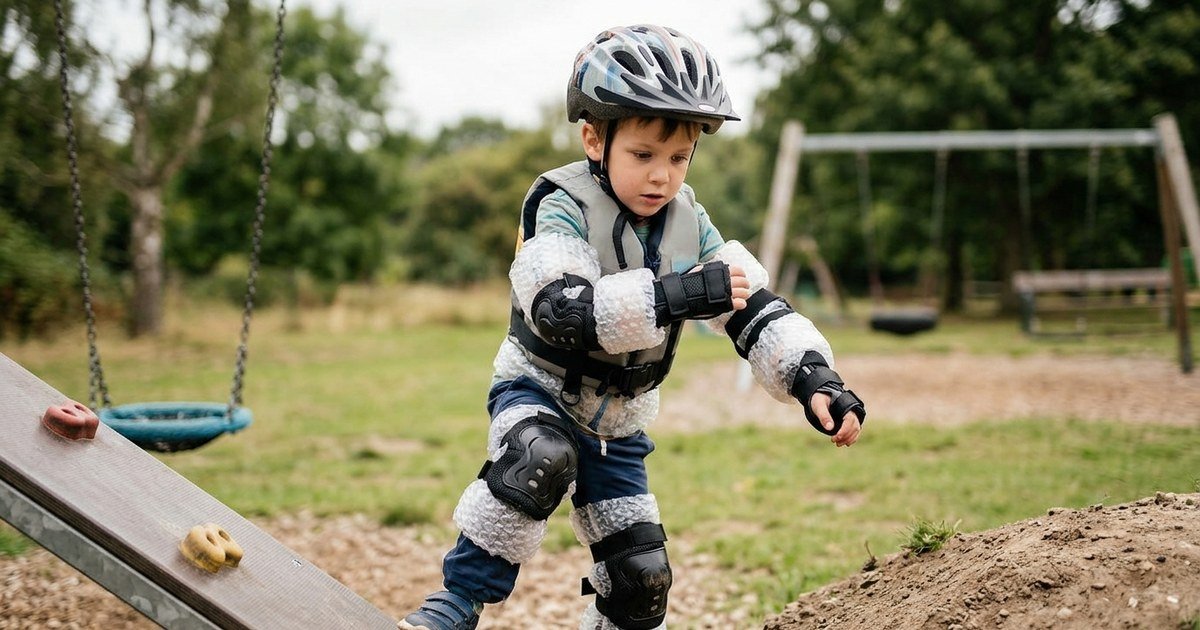
Motion in the childhood safety debate: this house believes we have made childhood too safe
Debated: 5 October 2026, Ye Olde Cock Tavern, Fleet Street
Format: main debate, proposer and opposer, floor speeches
Many adults remember a freedom their own children do not have: a bike, a whole Saturday and a promise to be home for tea. In October the Sylvans asked whether the protections that replaced it have gone too far, debating the motion that we have made childhood too safe. The childhood safety debate set conkers, monkey bars and unsupervised play against algorithms, AI companions and polluted air.
The proposer in the childhood safety debate: a devil’s bargain
Mark Potter proposed the motion and Ross Hunter opposed it. The proposer began by narrowing the question. Across much of the world, they said, children face poverty, exploitation, drug gangs and war, so childhood globally is not safe. The motion concerned prosperous Western countries, and Britain in particular.
From Dickens to the baby boomers
The proposer traced the history. In Dickens’s day most children died before adulthood, they claimed, and those who survived might be sent into factories, up chimneys or to the gallows. After the Second World War a generation that remembered hardship built the NHS, road safety and mass vaccination. Baby boomers grew up with a mix of the safe and the risky: bomb sites, polio and the threat of nuclear war, but also whole Saturdays on a bike, unsupervised.
Lost trust and a generation unready for risk
Since then, the proposer argued, parents have become far more protective, fed by media scares and looser neighbourhoods. Trust has gone with it. In many workplaces, they said, an adult who finds a lost, crying child must call a colleague before comforting them. Drawing on work with young people, they described a generation with little capacity for mild danger, for whom an honest conversation in the staff room can become an HR issue.
Children learn through unsupervised play, the proposer said, and what they miss they must learn later, at greater cost. They warned of possible war within a decade and of an electorate never taught to choose. Their remedy was controlled, manageable risk: climbing trees, self-defence in schools and compulsory training in debate.
The opposer in the childhood safety debate: on balance, not yet
The opposer accepted the focus on the West and on Britain, then complained that Generation X is always left out. They described placing their son in a nursery at a few months old, against their own instincts as a shy child. It was a struggle for years, they said, but now looked worth the risk. The opposer granted that in one or two areas, unsupervised play among them, childhood may have become too safe. But the motion asked for a judgement on balance.
Fences, gates and smaller families
The opposer took the proposer’s river fence as their own example. A three-year-old had recently drowned after escaping from a playground, they noted, and spring-loaded gates exist to prevent exactly that. Such protections cost children nothing. Smaller families also explained parents’ caution: when nearly all children survive and families have one or two, each child becomes more precious.
Algorithms, AI friends and dirty air
New dangers were the core of the opposer’s case. Algorithms had pushed self-harm and suicide content to teenagers, they argued, and AI companions now compete with friends and with play. Physical risks remain too. The opposer cited a recent study which, they said, found that London’s ultra-low emission zone had restored children’s lung function in polluted areas. They claimed that wood burners are now the largest source of particulate pollution in the UK. With so much still to make safer, childhood was not too safe yet.
Voices from the floor in the childhood safety debate: risk, resilience and screens
Lessons learned the hard way
The first floor speaker supported the motion from experience: a stranger on a ferry who borrowed money and never repaid it, bullying at boarding school, a doctorate that failed to reproduce a supervisor’s celebrated result, and a childhood attack by a sheepdog that left scars. Each, they suggested, taught something no protection could.
A speaker who had worked with young people for four decades described a boy whose friend had been shut out by a group at the speed of a phone message. Interpersonal skills were being lost, they argued, and playgrounds had lost their thrill: swings no longer swoop and seesaws carry no risk. Children needed more autonomy to build resilience.
Maslow and a village to raise a child
The first opponent of the motion turned to Maslow’s hierarchy of needs. Children in places such as Gaza lack food, shelter and sleep, they argued, while British children sit near the top of the pyramid. Calling them too soft was a privileged position. Nobody should want to go back.
Another speaker, recently back from Gambia and Ghana, recalled growing up where neighbours knew every family and children feared their parents more than the police. Children are unsafe, they argued, because adults are not. Domestic abuse in wealthy homes goes unreported, they claimed, and sexual abuse in private schools had come to light. They also mourned the old ban on conkers.
A speaker who had walked to school and remembered road safety lessons in infant school took the opposite view: the safer, the better.
Childhood safety and social survival
One speaker asked what childhood is for. Mollycoddled children, they argued, never learn ownership of their own lives. They contrasted private schools, which teach debate, with the state school they had attended, and pointed to the Penan of Borneo, whose children learn which plants and animals can kill them. Society had outsourced safety, they said, to something that is not safety at all.
Childhood safety and the military appetite for risk
After the break, a serving military officer agreed with the proposer while conceding that AI and social media need better safeguards. They described a recent conference on major conflict at which a recurring concern was the ability of personnel, up to senior levels, to tolerate risk. Armed forces reflect society, they argued, and tolerance of risk begins in childhood.
A baby boomer recalled concrete playgrounds and the witch’s hat, a heavy swinging roundabout, as places where children learned about risk. Business, they said, will not wipe a grazed knee. They acknowledged that many children are neglected rather than mollycoddled, and need support. Another speaker suggested briefly that parents only learned to see danger once developmental psychology emerged in the 1960s.
Freedom as a benevolent frame
One speaker challenged the idea that more safety means less freedom. Choice without knowledge, they argued, is not real freedom, and adults protect children until they can choose well. Childhood is safer, with fewer violent crimes and accidents, and safety is best understood as a benevolent frame. Children may need the illusion of risk more than risk itself.
Safetyism, smartphones and Roblox
Another speaker described a middle-class childhood whose chief dangers were mad cow disease and Pokémon card muggers. Much safetyism, they argued, is legal compliance, and parents cannot be blamed for guarding against life-changing accidents. A recent capsize on a Scottish loch, ending in a lifeboat rescue guided by their phone, showed how technology keeps people safe.
A further speaker found children both much safer and in much more danger. Wartime evacuation and post-war abuse scandals had each reshaped protection. Abusers, they claimed, still reach children through platforms such as Roblox, and more than 3 million children in Britain live in poverty. Growing polarisation, they added, leaves some Jewish and Muslim children less safe.
Not safe enough
A later speaker turned the motion around. Removing adversity, they argued, makes childhood less safe, not more. They claimed the share of Year 6 pupils in London unable to swim 25 metres had risen from 23 to 30 per cent since 2014, and that self-defence training and competitive debating had been shown to reduce harm. A fence is no substitute for swimming lessons.
A first-time speaker distinguished too safe from too monitored: children now share their location everywhere, and monkey bars have vanished from playgrounds. Citing work by the Canadian Paediatric Society on risky play, they argued that physical over-protection was costing children social skills. The final floor speaker agreed that physical risk had fallen and parents need more appetite for it, but argued that the digital world had made childhood more dangerous overall.
Closing arguments in the childhood safety debate: the opposer
The opposer called it a personal debate and credited several floor contributions. Psychological safety, they argued, is what lets a child take risks without fear of blame. Parents also have the agency to set boundaries and take calculated risks of their own. The threats that mattered most were new ones: a child alone in a bedroom with a device, and a social media ban for under-13s that, the opposer claimed, would be easy to evade. If anything still needed to be made safer, they urged the room to oppose.
Closing arguments in the childhood safety debate: the proposer
The proposer accepted the dichotomy drawn from the floor: a physical world growing safer and a digital one growing more dangerous. But the digital world, they argued, is only one part of childhood. Picking up the military officer’s point, they asked how a generation never allowed to take risks would cope with war. Children learn to walk by falling over. The West wants a safer world, they concluded, not a risk-free one.
The final vote in the childhood safety debate
The motion was not carried. Six voted for it and 13 against, with no abstentions. Many floor speakers agreed that some ordinary physical risk had been engineered out of childhood, yet the room declined to call childhood as a whole too safe while the dangers online remain.
The house concluded that children may need more freedom outdoors, but that childhood still needs more protection, not less.
Why the childhood safety motion failed
By 13 votes to six, with no abstentions, the house rejected the motion. The result turned on a word the proposer could not avoid defending: ‘too’. Nearly everyone who spoke agreed that something had been lost, whether unsupervised Saturdays, slack swing chains or the freedom to fall out of a tree. Far fewer would say that childhood as a whole was over-protected while algorithms, AI companions and polluted air remained. The opposition’s insistence on judging the motion on balance gave that reluctance somewhere to stand.
The proposition’s case: history, trust and resilience
The opening speech was built as a long arc, from Dickens through the baby boomers to the millennials. Its strength was range. By the time it reached the present, it had framed childhood safety as a story of progress, and the only question left was whether progress had overshot.
Its most persuasive material was concrete and observed: the Saturday bike rides recalled by older interviewees, and the adult who may no longer comfort a crying child. Its most contestable material was generational. The claim that young people cannot cope with disagreement drew on workplace experience the proposer explicitly declined to detail, which left it resting on assertion.
Looking forward, the speech turned to war and to democracy. The prospect of conflict within a decade gave the motion urgency, and later found an ally from the floor. Its remedy, controlled and manageable risk, was modest. That made the proposition easy to agree with in part and harder to vote for as a whole.
The opposition’s case: balance, novelty and agency
The opposer’s first move was to concede ground. By accepting that unsupervised play may have been curtailed too far, they took the proposition’s most sympathetic example out of contention and recast the motion as a sum. Every area where protection still fell short then counted against it.
The second move was to change the subject from what children have lost to what they now face. Social media, AI companions and invisible pollution were dangers the proposer’s history never reached, because none of them troubled the baby boomers. The opposer even claimed the proposer’s own river fence as an argument for protection rather than against it.
The weakness was diffusion. Air quality and wood burners took a large share of a speech whose strongest material concerned screens, and the room did not return to pollution once. The nursery anecdote also cut both ways. It showed a parent deliberately exposing a child to difficulty and judging the result worthwhile, which is close to the proposer’s argument.
The ebb and flow of the childhood safety debate on the floor
Across 15 floor speeches, four battlegrounds emerged.
Lost freedoms. Most supporters of the motion argued from memory: concrete playgrounds, the witch’s hat, a swing whose chains went slack, conkers banned for a decade. These passages were vivid and almost entirely unopposed. Even speakers against the motion shared them. Nostalgia won agreement on the symptom without settling the motion.
Screens. Almost every speaker, on either side, named social media or AI as a danger. Supporters of the motion conceded the point; the military officer opened by doing so. Nobody claimed the online world was too safe, so the opposition’s strongest ground went uncontested all evening. The proposer’s closing came nearest, describing the digital world as only one part of childhood.
Who is unsafe. Several speakers moved from the average child to children at the edges: those in poverty, in violent or neglectful homes, or facing prejudice. Even the baby boomer who believed most children were mollycoddled made an exception for the neglected. Each exception made ‘too safe’ harder to apply to childhood as a whole.
What safety means. The most original contributions redefined the terms. One speaker separated physical, psychological and social survival; another distinguished too safe from too monitored; a third described safety as a benevolent frame inside which children could experience the illusion of risk. Each let a speaker want more freedom for children without conceding that they were too safe.
The childhood safety case turned around from the floor
The decisive reframing came late, from the floor rather than from either opener. One speaker argued that removing adversity makes childhood less safe, and that swimming lessons, self-defence and debate protect children better than fences. This took the proposition’s own instincts, risk and resilience, and enlisted them against the motion.
After it, a voter who wanted children climbing trees could oppose the motion without contradiction. A childhood without that kind of adversity was, on this account, not safe enough. The opposer adopted the point in closing, and it gave the opposition a positive case for risk to set beside its warnings about screens.
The proposition’s best support from the floor came from the military officer. A reported concern inside the armed forces about tolerance of risk gave the proposer’s warnings about war a weight they had lacked, and the proposer used it in closing. The contribution was, though, introduced by a concession on AI and social media that echoed the opposition before it helped the proposition.
The closing speeches
The opposer’s reply credited the floor’s redefinitions and recast psychological safety as the condition for taking risks. It placed agency with parents: anyone worried about over-protection could take calculated risks with their own children without needing the motion. Its final move was explicit. Anyone who believed any area of childhood still needed more protection, it said, should oppose.
The proposer’s closing accepted the split between a safer physical world and a more dangerous digital one, and argued that the digital world was only one part of childhood. That was a fair point, but it adopted the dichotomy on the opposition’s terms. The passage on learning to walk by falling over was the proposer’s most memorable of the night. It made the case for risk, though, rather than the case that childhood had already become too safe.
What the childhood safety debate left unexamined
The evening rarely tested the evidence for over-protection itself. Falling rates of accidents and violent crime were mentioned, but nobody asked whether that fall had carried a measurable cost to resilience, or whether the anxiety the proposer described might have other causes. The generational claims went unchallenged on both sides.
The proposer’s opening definition also went largely unexamined. One speaker argued that a multicultural Britain contains many different ways of raising children, so there is no single Western childhood to call too safe. Nobody followed the point up, though it bore directly on the motion’s ‘we’, and on whether the room was judging other people’s children by its own.
Nor did anyone connect the two halves of the argument. Several speeches implied that children kept indoors spend more time on screens, which would make physical over-protection one cause of digital danger. Had that link been drawn, the motion and its opposition might have looked closer than the vote suggests.
What drove the result
The proposer asked the room whether childhood had become too safe; the opposer asked it to answer on balance. Once the floor had established that the most pressing modern dangers were online, and nobody argued that those were over-protected, the balance was not hard to strike. The two-to-one margin reflects that.
The room’s sympathy for climbing trees was real. It was not, in the end, sympathy for the motion. The house wanted children falling out of trees, and someone keeping watch on the screen.
Full transcript of the childhood safety debate
Read the full transcript
The childhood safety motion
We’re here tonight to debate the motion. This house believes we have made childhood too safe.
The proposition: from Dickens to the baby boomers
Hello, everybody, and hello to all the new people I haven’t seen before, my fellow Sylvans. I’m here to propose the motion that we have made childhood too safe. And for my part, I want to ask the question, if you’re happy for me to: are we talking about childhood all over this planet, or are we talking about Western civilisation, and the childhood we have for our children in Western society: Britain, or America, or basically any nation that is prosperous and fairly safe? Because outside of the rich, prosperous Western nations, childhood ain’t too safe.
Across this world, there are millions of children right now who are living in dangerous poverty, being exploited by dangerous people, potentially about to go running drugs, or in the middle of a conflict, and all sorts of other dangers we hope that our children will never have to face. So childhood globally is not safe. For tonight, I would like to talk about the motion in the sense that Western childhood is too safe.
If you look back to the days of good old Charles Dickens, I’d say we’ve come a long way. It is good that childhood is safer today than it was in the time of Charles Dickens. You don’t have to have read his books to know that childhood, for most of human history, was pretty damn awful, and that was if you could live to adulthood to tell the tale. Statistically, it is known most children would die before they reached adulthood, so those who did were considered blessed. Most children died, some even before their first birthday. They would die of disease, or of simple accidents out on the peasant farms where their parents might be tilling the soil, and an animal accidentally runs them over. It’s not nice to think about, but terrible accidents would befall children.
And if they could get old enough to work, they’d sometimes be put to work, as Dickens was, in a horrible blackened factory, or maybe shoved up a chimney to be a chimney sweep. Some were even put in jail because of the harsh laws against stealing. Some were even hanged. Childhood was pretty horrible 200-odd years ago.
Let’s move forward to the 20th century. Let’s talk about childhood after the Second World War in Western society, when the war was over and America’s Marshall Plan was going to bring a lot of money to us. Childhood was actually at a medium balance, you might say. What I mean is, children born between 1945 and, let’s say, 1965, what we call the baby boomer generation, were growing up in a world which remembered the war, remembered really hard times in the 1930s and before that, and had an institutional memory of what a horrible childhood could be.
And collectively, as a society, the Western world said, “We’re not going to have that for our kids. We’re going to have an NHS here in good old Britain. We are going to have proper road safety.” A few years later, we’re going to have seat belts, so that when we press the brakes, children aren’t going to go flying. We are going to develop science. We are going to look into all these horrible childhood diseases, like polio, which my late great-aunt remembered was a terrible killer back when she was growing up.
So, baby boomer childhood: a very interesting mix of the safe and the risky, because it was not entirely wine and roses. There was still terrible poverty. A lot of children might have been growing up around the ruins of buildings that were bombed in the war, and they would go out and play, and terrible accidents would happen. There was still the danger of disease, even with mass vaccination, and needless to say, there was the threat of nuclear annihilation. And in terms of social dynamics, there were very evil men. There always had been evil people in this world who would prey upon children, and grown-ups in the baby boomers’ childhood knew this. They knew you had to protect children from evil people. Hence we started getting advice about not going off with strangers.
The proposition: unsupervised Saturdays and a loss of trust
However, I can actually verify that the baby boomers did have a lot more freedom than, say, my generation might have had, or younger children. I took part in a project in Stowmarket with Footprints Theatre Company, and part of it was that we would interview people about their childhood experiences. A lot of older people would talk about, on a Saturday, getting their bike, saying, “I’ll see you for tea, Mum,” and off they’d go with their friends for the whole day, unsupervised.
Would parents do that today, especially in this big city of London? Not many who really want the best for their kids, who want to make sure they grow up healthy and happy. I understand that. I understand that there are dangers in this world, and children have to be protected from some of them. And it is good that we have made childhood safer than it was. But have we gone too far?
So let’s go from the baby boomers to, let’s say, my generation, which I believe they call the millennials. That was an era when the baby boomers had grown up and were having children of their own. And to put it in perspective, the baby boomers, without knowing it, were growing up at one of the safest, most prosperous times in the world. It is possible that subconsciously they absorbed the notion that it was normal. I’m just putting it out there. So, the notion of keeping your children indoors, watching TV, away from all those nasty 1980s Satanists, or whatever other crisis was going on. The war on terror: you never know, if your child sets out the door, what terrorists might be lurking in the hedge. Oh, I can see someone smiling at the back.
But as a culture, Western parents have become much more protective of their children, and they do not want them exposed to risks. They don’t want them to go out and play unsupervised, where the parents don’t know where they might be. They definitely do not want them going off with strangers. To the point that there are a lot of workplaces now where, if a staff member turns a corner and sees that a child’s wandered off, crying, alone, before they console them, they can’t hug them. They have to call for another grown-up to be there, to protect themselves, and also for the child’s own wellbeing.
Think of the baby boomers who might have got lost. If a grown-up found them, they’d say, “Where’s your mum and dad, love? Do you want to come with me?” and lead them to safety. Were they right to do it? Were they wrong? I’d say there was a level of trust which we as a society have really lost, partly through scaremongering from the media, partly because our own prosperity means we’re living in less tight-knit neighbourhoods. Which is great, you don’t have your aunties looking over your shoulder at all times, but it also means you know less people. So children don’t grow up with trust in strangers, knowing that if they get lost, they can go to a stranger for help.
The proposition: millennials and a devil’s bargain
All right, so let’s talk about the millennials and what this slightly less risky upbringing might do for them. Well, I can speak from experience. If children do not learn to deal with risk as children, they’ll still have to learn to do it in their 20s and 30s, and it is so much harder. It is so much harder to learn to put yourself in new, unusual situations as a grown-up.
I work with a lot of young people. As this is being recorded, I’m not going to talk in depth about my employment experiences, or even my trade union experiences, where I’ve handled cases. But my goodness, you would not believe how young people today just have this limited capacity to deal with danger. Even having an honest conversation in a staff room can be a minefield, in a way it wasn’t for the baby boomers when they grew up and had differences of opinion in a staff room.
I don’t like the term “woke”. I’ve never liked the term woke. However, I understand where the term came from, because one imagines, say, a millennial or younger, who has grown up with a safe childhood, safer than most of human history, and that has left them unable to deal with mild danger: to take risks, to take the risk of being wrong, to learn to even listen to a stranger and the very different opinions they might have, to even have an honest conversation about certain things without making an HR issue of it. Again, I cannot actually elaborate on this because of the transcript, but I’ve seen some pretty horrific things.
My concern is that we in the West have made a trade-off between the amount of danger and the amount of safety that children should be exposed to. Of course, we should protect them. If we know that there’s a river that they could fall into, put a fence up; make sure the children can’t go falling in. They could meet certain people online: put certain protections in place, explain things to them. But children need to learn, and one of the ways we learn is through unsupervised play. I had to learn a lot of this stuff in my 20s, when I’d left school, and fortunately, thank heaven, I had a supportive environment in which to learn to take risks and to learn to approach strangers: customers who were often near breaking the rules of the establishment.
And my concern is that in the West we have made a devil’s bargain: children are so safe now that they have not learned to deal with danger as previous generations have done. And with all due respect, there could be war in the next 10 years. The danger will find them. It’s not nice to talk about, but should the danger come, we cannot hide in a corner and quibble. We must learn to be brave. And children will learn this stuff in childhood. Say a nice kid’s playing in the street, and the bully comes to beat them up. It’s not nice. But simply by dealing with that nasty experience in childhood, standing your ground or learning to run away, whatever works for you, a little bit of danger can subconsciously prep you for later in life, when you deal with much worse dangers as an adult.
It’s not straightforward. There are some risks I would never expose a child to, but I would say children need a level of unsupervised play, the opportunity to learn to understand danger, to maybe learn to climb a tree, because they’re still going to grow up, and they need to learn these skills. It will be a lot harder for them to learn them as an adult. And especially in a democracy, do we want an electorate who have never learned to make choices for themselves? I have said, as a quip, that if people don’t learn to make choices in a free democracy, a dictator or a despot will make the decisions for them, and maybe the millennials or younger will be happy for it. I don’t know.
What I’m saying is, I believe we have made childhood too safe. We need to reintroduce some level of controlled risk, some manageable danger. Maybe even implement self-defence classes in schools, and mandatory training in the art of debate, which would be great for the Sylvans: something where you can learn to hear someone you disagree with, and you don’t get angry, and you actually stop to learn. So I think there are wonderful things we could do.
I’ll close by saying I feel blessed that I grew up in a relatively safe environment, and yet I’m aware that maybe I grew up in slightly too safe an environment. And I am concerned that children today are growing up in an even safer environment. What they really need is to learn about risk and danger, to become healthy, productive adults, and I hope at the end of this evening you’ll see my point. I rest my case.
The opposition: Generation X, and a child pushed early
Thank you, Mr Chair. Thank you to the proposer, who I thought brought some excellent points to this debate. I can see points on both sides, and it will be fascinating to see everyone’s perspective. We’re going to hear so many different angles on childhood, and I do agree with the proposer’s definition that we should look at the West, and I think we should primarily focus on this country, although bringing in a few examples from other countries is relevant. But it should be about “we”. It’s about our childhood experiences, and those of us who have children or who interact with children today: what we see in them and what they’re experiencing right now.
Of course, my esteemed opponent, being a millennial, completely ignored Gen X. Myself being Gen X, this happens all the time. Millennials, millennials, millennials, Gen Z, Gen Z, Gen Z. Gen X is completely ignored. I saw some statistics, this was the US, I don’t know if it applies here, but drinking in the US is dropping for every generation except Gen X. Gen X is neglected. We’re underserved, but we’ve got childhood issues, clearly, and we’re putting them onto our children as well.
I did grow up in the US, so that is relevant. I was thinking about this, and I didn’t do a huge amount of prep, but when I was little I was an introvert, and I struggled to integrate into school. I started school a little later in the US, at six, though I’d gone to preschool. I really struggled socially, and I’ve had to learn in later decades; it didn’t come naturally to me. With my son, I went completely the opposite direction. When he was only a few months old, I started putting him in a nursery for a couple of afternoons, thinking maybe he’ll adjust by getting that earlier.
That was possibly putting him into a more dangerous situation, if he was going to react the way I might have done, and it was a real struggle for him. He struggled to adjust for years, actually. But now, if I look at his social skills, they’re way better than mine were. There are many other factors, but for a while I thought maybe I’d made the wrong decision, that this was too dangerous for him and he wasn’t ready for it. Now I’m thinking maybe that was worth it, and it was a good thing to put him in a more dangerous situation.
So I can see multiple sides of this issue, and I think we’re going to hear many different aspects. I’m supposed to be the one up here talking about doom and gloom, and I will bring in some doom and gloom, so don’t worry. But I’m very glad that I’m not the only one: the proposer brought in some doom and gloom about the horrible stuff in the past, and even some challenges that we have today. There are some major things that have shifted for children today, and we can’t ignore them. One whole area that the proposer didn’t talk about is technology: social media, AI. It is a world that earlier generations didn’t even have to think about, and kids today are exposed to it massively, and many of them are getting lost in it.
The opposition: fences, gates and childhood safety in smaller families
I’m going to give a few examples. We’ve had entire debates about social media and all these kinds of things, so I’m not going to go into great depth. But I also think there are other areas. The debate is that we’ve made childhood too safe, and that is on balance, so there can be areas where we might agree. In one or two areas, we have made things a little bit too safe. Kids should be able to go out and have unsupervised play, play with their mates, be in the street, those kinds of things. So we might be able to agree on a couple of those things, but we have to look on balance.
I still think there are loads of things that are actually more dangerous than before, and there are things that are simply still dangerous, that we can make less dangerous, which are going to be a good thing for most children and aren’t going to hurt them. That’s the overall thrust of the argument, but I do want to pick up on a couple of the points.
There’s a river, the proposer says: build a fence in front of it. We just had the dreadful story, I forget the child’s name, of the three-year-old who passed away recently after escaping out of a playground. Drowned, I think. That’s exactly trying to reduce that risk, and there are loads of those things around. Look at playgrounds now, at modern playground design. The gate has a super-strong spring on it, so young children are never getting out of there. A bit older, and they will be able to, but they should be able to make that decision.
So there are all kinds of protections that we put in place that make it safer on average for these kids. Is that harming them? I don’t think so. They can ask an adult, and they can be let out. So we have made things safer, but there are still playgrounds where that isn’t the case, and we’re still going to have children dying, unfortunately.
The proposer said it used to be that most children didn’t live; you were blessed if you made it. Today that has flipped massively, and people have responded, for that reason and many others, by having far fewer children, so we’re struggling to get to population replacement levels. We were just talking about this a few weeks ago in this very room. People are having one or two children, whereas when 50 per cent of children died, people were having six, seven, eight children, because they knew only some of them would survive.
What does that mean? I think it is natural, and I feel it as a parent. If you asked an old parent who had three, four or five children, “Did you try to protect your children?”, they absolutely would have said yes, and I don’t think anyone would admit that they would have treated them differently if they’d had only two. But I think there is something subconsciously there: when you have a smaller number, they become even more precious than children were when people had a lot. So there is a rational reason why we are protecting children more. That can go too far, as I said. There are areas where I think we have gone too far. We’re looking for balance.
The opposition: phones, algorithms and AI friends
Let’s talk about digital technology for a little bit. There are so many different areas. Growing up with a mobile phone where you can text can improve safety, because you’re connected with people. It can also reduce safety: kids walking around with a brick phone or a smartphone, distracted, step into the road. There are swings and roundabouts on so many of these different things.
Social media is absolutely massive. There are definite cases where the algorithms have exposed self-harm and suicide content to teens who have killed themselves, and I’m sure in some of those cases it tipped them over the edge. And there are many cases where teenagers have seen that content and weren’t tipped over the edge. That is a danger that is totally new. And by the way, there’s no escaping the “we” in “we have made childhood too safe”. Yes, the algorithms were created by Silicon Valley people, so that’s coming from the US, but we’ve allowed our children to have these things. Some people have made it; we’ve allowed it to happen. We’ve done this.
And the other one, of course, is AI, and AI friends: “My friend is the AI chatbot”, withdrawing people from interacting with their friends. You might have kids who are allowed to do unsupervised play, but actually they’re more attracted by the AI friend that they have, and that means they might or might not be safer, but they’re definitely missing out on some opportunities to grow, to learn about risks, to test themselves, which are some of the things I agree with the proposer on. So there are so many new things that children are facing today that to say we’ve made it too safe, as a blanket statement, is really hard to do.
Even the whole “we don’t know our neighbours any more”: some of that is because of radio, then television and now social media. People spend more time looking at media than they do interacting with their neighbours, because it’s probably more interesting than Mrs So-and-so, or the guy down the road. So all these things have atomised us to an extent, and that makes it harder for those other things to happen.
The opposition: clean air, wood burners and childhood safety
I also want to talk about some other things. It’s a similar point to building a fence by the river, or blocking off things that are unsafe. There are all kinds of regulations that have come in to make things safer. Car safety now: cars have pedestrian sensors and all this stuff. It’s great. It’s saving lives, loads of lives. At the same time, there are things that are actually getting worse for children. Look at air pollution. There used to be pea-souper fogs in London. Air pollution today is almost invisible.
Yet with the ultra-low emission zone in London, there was a study in the last few weeks that compared children’s lung function in polluted areas in London with another town. It showed that the ultra-low emission zone brought down pollutants to the level of this other town, and children’s lung capacity and function also improved to the level of that other town. Because they were sitting in pollution, their lung function in the worst places was 10 per cent smaller than if they had had clean air, and if they go through childhood like that, it will never grow back. So there are real dangers happening right now.
With cars, we have the ultra-low emission zone. There are electric cars coming in. Newer cars are less polluting. By the way, modern diesels, when it’s under 10 degrees, are still bad, because the protection systems turn off, so there’s still a lot of pollution happening that way. But guess what is being installed in ridiculous numbers now, because it’s seen as cosy, and it’s the thing to have, a bit of a fashion statement? Wood burners. Wood burning is now the number one source of particulate pollution in the UK. So we’ve solved the car problem, sort of; it’s getting better. And we’re putting in wood burners, which are totally unnecessary for heating in 98 per cent of houses, and that is going to affect the children of today.
So there are some areas where it’s still dangerous for children, and we actually need to keep going and make things tighter. The pollution thing sounds a bit niche. It’s not. Every winter you can smell the wood-burning fires, and that is affecting children. It’s slowing the growth of their lungs. Those particles go into everyone’s brain, so we’re all carrying that stuff because we’re living in that environment. That may not be something you believe we need to tighten up on, but there are many, many areas where we should be doing more to keep children safe.
So if we step back, these are only some of the issues that I’ve picked up on. There are probably big ones that I haven’t mentioned. I’m sure we’re going to hear things that neither of us has touched on tonight, and that’s what this debate is for, and that’s why we have the structure that we have. Let’s hear from all of you. At the end of the night, the proposer and I will come up and try to synthesise the themes and make a pitch for your vote.
But it really is up to you to decide what, on balance, this is. With new technology, and with so many areas where we can make children safer, and yes, some areas where we can get them to learn more about risk and push them out of their comfort zone: on balance, we haven’t made it too safe yet. There’s more to go. Thank you.
Learning by experience: a ferry, a boarding school and a sheepdog
Well, Mr President, looking back at my past, I have to admit the most dangerous things I have learned by experience. I was brought up in a family where my father was a relatively senior civil servant. Everyone around was therefore honest, and that’s the sort of environment that you learn about. Perhaps if I’d been brought up in a criminal household, I might have learnt much earlier.
So what sort of things did I learn? Well, when I was still at school, they sent me off to spend the summer with a German chap, who then came over the next year and spent the summer with us. Coming back all on my own on the ferry, a man made friends with me, and then he said he was a bit short of money. Could I lend him a bit? Well, I lent him a bit. It wasn’t a large amount. Of course, it didn’t come back again. I learned from that: you don’t take a risk of that sort. Going on a bit further, at school, of course, people can gang up on you and bully you. I was at a public boarding school, and so one learned to defend oneself from those sorts of attacks.
Then, if we move on to university: I stayed on to do a doctorate, and I was given a project that was effectively partly repeating the work that had made my supervisor’s name. And it was sort of suggested to me that if you want to get your degree, you must find his result. I didn’t find it, and nor had practically all the other people who had repeated that experiment. What I was learning, therefore, is that politics is the art of the possible. At university I was quite a lot involved in just that sort of world. I was on the union council, in the middle of intrigues. Politics is the art of the possible.
So in my PhD thesis, I laid out the fact that although my supervisor had made his name with it, no one else had repeated it, and science is very much based upon people producing repeatable results. If you can’t repeat it, it can’t be right. I can’t go into the details of what I thought was going on, but my thesis basically laid out all the other people who had attempted this task, and tried to correlate what might be going on that might account for what was happening. So I got my doctorate, even though I was reducing the status of my supervisor. One is learning, therefore, as you go along.
Perhaps going right back to the beginning, as I’ve just got time: I was brought up on a farm, and when you’re about four, you’re about that high, and geese would come in and peck my legs. I don’t like birds. Apparently I was attacked by a sheepdog, which you’re not supposed to make friends with, because it’s a working dog. My mother made friends with it, and apparently it jumped through the window into my bedroom and attacked me. I’ve still got the scars round here. I hate dogs, even today. So I think I go with the motion: you learn, and you shouldn’t make things too safe, so that you have a chance to learn what goes wrong.
Swings without the thrill: interpersonal skills and resilience
Second time here, so I’m going to try to speak in a semi-relaxed way and paddle furiously underneath. I suppose, where do I come from? I didn’t grow up in an atomised society. I’m at the end of the baby boomer generation, and I’ve been thinking about this. I think there’s a yes and there’s a no, in ways that recognise exactly the kind of risks that are out there with social media, AI, algorithms that might be addictive and so forth. And I’m probably starting where I was going to end. I still work with young people. I’ve worked with marginalised people for over 40 years now, and in the mainstream as well. I don’t just work with people who find it difficult because they’ve got social issues. It might be cognitive difficulties, specific learning difficulties, it might be ASD.
A boy walked in to see me one day, and he was wondering why nobody was talking to his friend. I needed to give him a bit of breathing space before we started working on assessment objectives for exams, and that kind of burden that seems to be getting heavier in this competitive world, which is more atomised and all of that. His friend had walked into the playground and been completely ostracised by groups. The speed, the micro-speed, of that communication. And it struck me how much we have lost here, because we haven’t developed the interpersonal skills that used to be around.
And yes, it might have been a bit rough: to walk up, look someone in the eye, express emotions, say what had happened, try maybe to acknowledge what the other person was feeling, maybe with a bit of guidance and a bit of help, maybe not. But that was gone, and it was a lot more difficult for these kids to navigate. I tried to help them navigate it.
I was thinking about this as I was coming here. I was thinking of playgrounds and how playgrounds have changed, and how a swing is no longer a swing. I was pushing my grandchild, as I pushed my eldest daughter. I was married at 22, so you can try and work out what age she is. She has two kids, and I was so disappointed not to feel the thrill. Maybe it depends what generation you are. When a swing used to begin to lose its momentum, there was a period where the chains went loose, and you got that feeling of “Wow!” Where has that thrill gone? I said to myself. And it was kind of the same with seesaws. Can I problem-solve? “Oh, I’ve hurt myself. Well, what do I do now?”
I suppose, in my own way, for my generation, and I’m corrected on it sometimes by my daughter, I say, “You know what? That pain will go.” And yes, I will nurture, and yes, I will support. So I’m just acknowledging that there has been change. I could probably talk for longer, and maybe I use anecdote too much, but I think that managing fears, dealing with interpersonal relationships and problem-solving, making things, tying a rope to a tree, learning that you can’t swing across the river, are important. And of course we’ve got to make sure that we have some kind of autonomy and more freedom that allows us to develop those kinds of resilience, those kinds of strengths.
And also, like I’m doing now, I suppose, I’ve stopped to regulate my emotions, because beneath this, I’m talking to an audience, and I’m acknowledging and detaching and looking at the nerves, and saying, “Hold on a minute, slow down.” But translate that into the world that we live in: how often do we give young people those opportunities? And that is also true about disputation, about not living in echo chambers, not being hooked on algorithms. Yes, there are places where we expect more, but we’ve got to try to develop a way of giving more freedom and autonomy, so that we develop more resilience and independence, and human beings who feel, I suppose, more fulfilled. Thank you.
Maslow’s hierarchy and how far childhood safety has come
The thing about kids is you have to tell them you love them, and who wants needy kids? No, I’m just joking. We want our kids to be winners. My nephew’s only four, and you can tell he’s a loser. No. Just a bit of comedy to get going.
Would we go back? This is what I’m thinking. I’m going to use a model. I hate this model, actually, but it seems appropriate in this case: Maslow’s hierarchy of needs. Are we all familiar with it? It goes to the point here. The proposition opened by referencing the past, when things for kids were awful, and if we go through Maslow’s hierarchy, what a long way we’ve come, and we really would not want to go back. Thank God our children are pretty much at the top of Maslow’s hierarchy, where they can self-actualise, which you hear when people talk about manifestation and things like that. But imagine where we were at the lower level. I’m going to go through this, because it’s really interesting, and compare it to other parts of the world, which the proposition also mentioned.
At the bottom is physiological need. Air, obviously, is pretty necessary, but I was reminded when I looked at it that when Tehran was bombed, they bombed the oil depots, and the point of that was to poison the air and the water supply. So thank God our children don’t live in parts of the world where that happens. Food: we can think about Gaza, where there is a lack of food, forced starvation. Shelter: there’s no shelter in Gaza, and other parts of the world as well; it’s not just Gaza. Clothing: the right to be clothed. The right to reproduce: ethnic cleansing, genocide, that right is taken away. The right to sleep: not easy when bombs are going off above your head.
So would we go back to that? No. And that’s the lower level of Maslow’s hierarchy. As we’ve developed economically and risen, our children have been given the privilege of these higher-level aspects. Safety is the next layer: we have security, employment, resources, property, health. And when all of those basic needs are fulfilled, we move up to love and belonging, where we have friendship, love, intimacy, family and community. So we’re moving up into areas where we want our children to be. We wouldn’t want them to go back. Above that, esteem: we give our children self-esteem, respect, status, freedom and recognition, the sort of things that parents want to give their children. And then, right at the top, self-actualisation.
So I cannot agree with the proposition, because we’ve worked hard to get where we are, and we’re being a bit privileged to say, “Oh, they’re a bit too soft.” We’ve worked hard to get to where we are, and there’s no way we want to go back. And that’s what I have to say.
It takes a village to raise a child
I did want to be in opposition, but I came to the table too late. Maybe it’s because I spent time in Gambia and Ghana recently, and learned a bit about my history and yours. I went to Elmina Castle, the last port the slaves went through before they went on the ship. Now, what I want to say is: “It takes a village to raise a child” is an old African proverb, and that’s what I grew up with in the community in Ealing. If I walked from Northfields to West Ealing, which is maybe half an hour, because I was saving on the bus fares my mum gave me, I’d see so many people who knew my family: “Hi, Mrs This; hi, Mrs That.” I couldn’t do anything wrong. And my parents were so frightening. We were good children.
And maybe that’s what’s lost. The young people today seem to have a need for violence. We’ll leave it at that, because if some of those boys had been beaten, they wouldn’t be doing what they’re doing. Let’s say, in my day, you were more frightened of your parents than you were of the police. It’s true.
You know what? Just an hour ago, a Black woman did me a favour. I’m not going to say what it was, because I don’t want that favour to stop. There might be others doing that favour, whatever their nationality. She didn’t ask; she just did it. I think it was kinship, but she might also have done it for other ethnic groups. The reason I’m saying this is that it’s about how we relate. And I’m actually quite surprised, I don’t want to say disgusted, that we don’t want to talk about children being safe the world over, especially when you consider the wars that happen from the bombs and arms made in this country.
Playgrounds have the rubber on now. I still like to go on swings, but they’re not meant for my weight. And what that gentleman said about the swoop: I’m telling you, that is real. But yes, as an adult, I shouldn’t be going on the swings. Anyway, I live in a multicultural country, and in the UK there are different ways of dealing with children. Like I was saying, it’s how I was brought up, how this gentleman was brought up, how this lady here was brought up, how others here bring up theirs: all different. So we can’t just say “the West”, because in the UK we’re multicultural, and so when you’re going into schools, there are different things you might do.
What was said about going around a corner: I heard that somebody couldn’t go up to a child and bend down to speak to them, because it was considered that you’re not supposed to do that to a child. But the child’s crying, and they’re three. Why can’t you bend down? And this was members of staff in her workplace.
But what I also want to say is that the reason children aren’t safe is that the adults are not safe. Think about how many people grow up in violent homes. Forget the criminals, because domestic violence happens across the board. And it’s worse dealing with it in rich families, because the doctor knows the husband, or they don’t want to lose their status, so they don’t want to report it. But a child grows up in that. And children who go to private school: sexual assault. About two years ago, there were all the reports of sexual abuse and rape in mixed private schools. So children are not necessarily being protected.
There’s the internet. I’ve had a phone, and I couldn’t be bothered to get certified that I was 18, because they wanted my passport, and I’m not giving them my passport. But things would come up on there, and I’d be like, “Hold on a minute. My phone’s supposed to be 18-rated. This shouldn’t be coming up on my phone.”
Conkers. At some point they decided that schoolchildren could not play conkers. I couldn’t believe it. My brother had the best conkers and always won. So for about 10 years children couldn’t play conkers. And those clackers, and that other spinning thing: yes, I did play with those. But when I heard that about conkers, I thought the world had gone mad.
There’s something I just want to say quickly: flats make it harder for you to know your neighbours. Where I live, or used to live, you used to have a garden, and you’d walk out to it. Now the gardens are all paved, and each of those houses has been turned into flats. You used to be able to walk through the alleyways. So you don’t know your neighbour. And I think if we as adults felt safe, then our children would be safe. I’ll leave it at that. If I say anything more, I’ll be here for another few minutes.
Road safety lessons: the more childhood safety, the better
Memories of my own childhood. I know parents now do the school run. I had to walk to school most days, sometimes in snow. We had road safety demonstrations in primary school, I remember, in the infant school. So we all learned about road safety. But I think we are moving ahead with the times, and I don’t think we’ve made it too safe. I think the safer we make it, the better. Thank you.
The purpose of childhood, and the Penan of Borneo
So I’m not really sure where I stand on this, because I keep going back and forth, and there are so many things going through my head. But the thing I was thinking about when I think about childhood is: what is the purpose? Why do we go through childhood? For most animals, I guess, it’s to learn to survive for yourself, to find a way to deal with life. And what I see, and I think some people have touched on this, is that a lot of people are mollycoddled in a way where they don’t learn to take responsibility and have accountability or ownership over their own life.
I see that as a big problem, because if we aren’t able to take ownership or accountability of our own life, or make our own choices, then, like you said, other people make them for us. And we live in a big world where our political systems are interconnected, so our voice really does matter in our community, in our councils and in our country. And being able to learn to speak for yourself: I think I heard someone say something earlier about private schools. Private schools and American schools, they’re taught to debate. I went to state school. We were not taught to debate. And that’s the crazy thing: the ability to form an opinion, give that opinion, receive another opinion, is not part of it. Anyway, now I’m going off on a tangent.
So I see that there are many different types of safety as well. We have psychological safety. We have safety in having a roof over your head, having a safe home, having the safety to be able to turn to an adult, a school person or whatever. And part of playing outside, going on the swings, falling off the swings, going out on your bike, is that you learn motor safety, for example. And kids are sitting there on their computers, not learning to fall off, and not learning to navigate in the way that the brain learns to navigate.
And I also started thinking about the Penan people. The Penan are a nomadic community who live in the rainforest in Borneo. Their children are taught to identify poisonous plants, poisonous animals and poisonous insects, and also to identify trees and fruits and things that can actually help them to survive. So if they are cut off from the group, they know how to survive. That’s another thing that we’ve lost: we don’t know how to survive on our own.
So there are many different layers of survival, and one that I think is really important in our world is social survival. When we see the disparity between people who have a private school education and are able to speak for themselves, create connections and build networks, we can say all we want that we want to get rid of nepotism, and that we want to give people equal opportunity. But if people are not given the equal opportunity to learn to communicate and create their own safety, their own responsibility and their own ownership, we really aren’t doing that.
So, yes. The internet, all of it. Have we got more safe? I don’t think we have. I think we have outsourced safety to something that is not safety. It’s wrapping people in, what’s that thing called? Bubble wrap, cotton wool, whatever you want to call it.
A safety bubble.
A safety bubble, and it has also decreased safety massively, I think. So I’m sorry, it’s a bit of a tangent, but thank you.
Childhood safety and the military appetite for risk
So I’m going to start off very briefly by playing devil’s advocate with myself, because I actually fully agree with the proposer, and I do think that childhood has become too safe. But just for a second, I’m going to dwell very briefly on two things at the back of my mind, while the debate was going on, where I would disagree with him, and that’s mainly in two key areas: social media and the use of AI.
Certainly when it comes to AI, I feel like that’s an area where at the moment we don’t fully understand the risks involved, and I think that children, or young people, are engaging with it at a level and a speed which actually exceeds adults. So we can’t fully protect them from it, and I think that’s a real issue. And when it comes to social media, I think we have safeguards, but the safeguards are poorly designed, generally not effective and easily circumvented. So again, that is an area where children need to be more safe.
To my professional background: I’m a serving military officer, and my primary role at the moment is contingency war planning. Recently I was at a conference looking at the future of a major peer-to-peer conflict, and a major theme that came out during that conference was the ability of our people, all the way up to senior levels, to understand, tolerate and have an appetite for holding risk. Now, that might seem slightly anathema to people in the room, because we’re the military, right? We’re supposed to be really, really good at this. But any military is a cross-section of society. That’s where we all come from.
And I think it should be a real concern that if we’re looking within the military at how we are able to tolerate risk, particularly in the lead-up to the kind of scenarios that we’re talking about here, that’s indicative of a wider societal problem in identifying, managing and tolerating risk, and I think that begins with kids. So I’ll just leave you with the thought that the world, although I’ve given you an extreme example, is a dangerous place, and the way people become comfortable with navigating that kind of world is by learning, under managed conditions, as managed as we can make them, to tolerate risk early. And that inevitably means holding a certain level of danger and a certain lack of safety. Thank you.
Developmental psychology, and the witch’s hat
So I have maybe two sides to what I’ve thought from listening to everyone. The first is: where does safety come from? Where does risk come from? There’s one type of risk that comes from parents. I think developmental psychology started in the 1960s, and basically, before that, we had no idea that danger was a thing. Since then, we’ve been working to figure out what that danger is. So basically, parents always just want to make sure they’re doing as much as they can. And the other aspect… I’ve forgotten it. Okay, that’s going to be it.
Okay, so I’m a baby boomer, thankfully. I didn’t know it at the time. When you were growing up, you were let out on the streets, and eventually came back, hopefully. But this debate, I think, is about whether we have made childhood too safe. There are different aspects of safety: emotional safety, digital safety, physical safety, a whole range. I think that for the average child, the world is a safe place, and perhaps for the average child, I believe, we’ve made it too safe. But if you look at the fringes, and if we focus on the scope of this being the UK or Europe or the US, developed nations, then there are big groups of children who are not safe in any way, shape or form, and we should be concerned about those.
I think we all sit here because we’re generally of a similar demographic. Some of us may have gone to a better school than others, but we are quite similar. The gentleman over there talked about being a child. I remember going through childhood. There were no rubber mats in the playground. It was just hard concrete, hard tarmac. I’m not saying you shouldn’t have rubber now, but I remember the witch’s hat. The witch’s hat, for you young people, was a two-ton piece of equipment that used to swing across the playground, and if you were lucky, you’d hit somebody in the head. It was a very, very dangerous thing. But in those playgrounds, on those swings and on those monkey bars, you would learn things. You would learn about risk.
So I think, yes, we’re in a situation where, on average, a lot of children are mollycoddled, a term which was used earlier. They are fortunate to be in that situation, but it does them no favours, because when they go into the big wide world, they have to survive. They are in competition with other people. It’s the law of the jungle out there. In business, in big business, they don’t care that you have fallen over. No one’s going to come running to you and wipe the graze on your knee. You need to toughen up a little bit and have some grit. That’s what I think, anyway.
But equally, I also understand that there are plenty of children who are ignored by their parents, and we need to focus on them and provide support, and make sure that they don’t slip through the nets. But for the masses, I think we have made it too safe. Thank you.
Freedom, capability and the benevolent frame
Great debate. I keep asking myself these questions, being a man in his 30s and potentially, later on, having children, and also reflecting on my own childhood with a form of introspection. So this is really something that is worth spending our time on. I would like first to elaborate on a key concept that was introduced earlier, during the opening speeches: the concept of freedom. It is very interesting, because making an environment more safe means that it is more controlled, and therefore you have less freedom for your children. Now, I want to elaborate on this concept, because I think it is misleading.
You can have your own freedom, and basically it means that you don’t have constraints around you that limit your action. That’s the general definition of freedom: lower constraint means more freedom for you. Now, you live in a constrained environment. You cannot do whatever you want in society. There are rules, so it limits your freedom. But ultimately, there are reasons why these rules are put in place. So this is on a general level. Now, on an individual level, your freedom is suboptimal if you are ignorant of what is good for you. As a citizen in this society, you can see all of these rules as a limitation of your freedom. But if you understand why it is virtuous to follow these rules in this society, then you don’t see them as a constraint. You actually see yourself as more free in this environment.
I will elaborate on this by saying that it is related to your own capabilities, your own knowledge and your own resources to make the right choice. You can be free to make different choices, but if you’re not aware of what is good for you, are you really making the right choice? Is it really good for you? I’ll take addiction, for example. You may know that the object of your addiction is not good for you. But if you don’t have the capabilities, if you don’t have the will, the discipline, to follow this choice, is that really freedom for you?
I want to introduce this because when we’re talking about children and we’re talking about adults, we are really talking about different levels of capability, knowledge and awareness. It is the responsibility of adults and of society in general to protect those children, because as you become an adult, you have all of these things. You have more awareness, capability and knowledge, and that gives you more control and freedom over your life.
Now, when it comes to safety itself, it is safer nowadays for children. There is no debate about this. There are less violent crimes, less accidents, less disappearances of children. I understand that there are some concerns around emerging technologies like AI and social media, but nevertheless, it is safer. And safety, I would define it as a benevolent frame that we impose on ourselves, like building a house in order to be safer, or that we design for others: we can design it for children, or at the scale of society.
Now, when it comes to children, there can be a different perception of safety. A child can feel unsafe even when it is totally safe for them to engage with their environment, and the reverse is the same: there can be an illusion of safety, while they are not safe, and they are playing at some activity and don’t realise the danger. So there are different perceptions, and this is what really makes the difference between pain and suffering. You can be in pain but not suffering. You can go to the gym and have pain, but you know it is good for you, so you do it anyway. You do not suffer like this, because you have gained a higher level of consciousness.
Now, with all that in place, we need to understand that more risk-taking is not necessarily, objectively, what is good, but giving the illusion of risk to children might be the way to create a challenging environment for them. But the more we evolve in time as a society, the more capability we have to create a frame that is benevolent for children to have virtuous experiences: gaining critical thinking, assertiveness, expressing an opinion, being sensitive in their communication, discernment, concrete and abstract understanding, all of these things that make adults good. So we need tailored experiences for children that will come with this, and more safety doesn’t necessarily mean less accomplished individuals. Thank you.
Safetyism, Pokémon cards and a rescue on the loch
Right, it’s going to be tough following that. That was real Jean-Paul Sartre sort of stuff there. Well, I don’t think this will be my best, but I’ll try. I’ll do it in thirds. The first third will be reflections on safety in my childhood, which was incredibly middle class. The middle third, I think, is going to be why we’re talking about this, and in the last one I’ll try to address the subject: are we making childhood too safe? So a third of my speech will be relevant to this debate. Aren’t you lucky?
So, the first one: reflections on safety in my childhood. I was, like I said, incredibly middle class. I grew up in the Midlands, near Stratford, the home of Shakespeare. So what were the dangers I faced as a child? Mad cow disease, 1997. My mum read in the Telegraph that, when Pokémon cards were a craze in London, two boys were held at knifepoint for their Pokémon cards. My brother and I had Charizards and the best Pokémon cards, and we were really scared. We guarded our Pokémon cards with our lives. Bloody hell, that was being kept safe.
And then I suppose the other main danger for me was not getting three As at A level, getting into a Russell Group university to study a respectable humanities subject and getting a career in PR. I was protected from that as well, by my private education and my educationally encouraging parents. So I benefited from being kept safe from the dangers that I faced.
Okay, why are we talking about this? The middle third. I think we’re going through the language of safety. Everyone’s a risk officer. Everyone’s a compliance officer. We’re trying to come up with health and safety laws, we’re regulating everything, and that’s just noise. I don’t think it’s a signal that we’re making things too safe. We’re still facing dangers: economic, military, environmental, social. We face huge dangers, and we don’t pretend that that’s not the case. All of this safetyism is essentially legal compliance and box-ticking, and preventing people from suing each other, which is pretty sad.
It’s a huge part of the economy, and lawyer is still a very high-prestige job. So I think the safetyism, and all the risk and all the language of that, is just the legal paperwork economy that we’re in, which is kind of important, because it provides jobs for people so that they can pay mortgages and buy good Starbucks coffee and stimulate the economy like that.
Okay: are we making childhood too safe? We’re not. You can’t make a childhood too safe. You can’t blame parents for trying to protect their children from the dangers that they identify, and stop it happening. That’s what the falling-out-of-the-tree thing is, which sounds sad and a bit silly, but you are just trying to protect a child from, possibly, not just breaking their arm but having a serious, life-changing accident. We would prefer to drive in cars with seat belts, because if you crash your car and your children aren’t wearing seat belts, your own children will die. It’s dumb not to try and protect them from that, even if it sounds ugly.
And then, in terms of the whole social media thing, that’s something we’ve maybe dropped the ball on. Are we making our children addicted to screens and depriving them of social interaction? Well, we’re just doing our best, and we will adapt as we learn more about it. And I think we learned about it very quickly, in almost a 10-year period. I think we beat ourselves up about that. And just something about me: I was obviously brought up in a very risk-averse, middle-class environment. I benefited from technology, and that’s been a huge part of my life. I’m definitely more indoors than outdoors.
So, an anecdote. Recently I was in Scotland, kayaking on a loch. I thought I was good enough to kayak with my friends. I couldn’t cope with the waves and kept capsizing, and got battered into the side. My friends went on; we just couldn’t stay together, because they couldn’t see what was happening. So they called out the lifeboat for me, and I was rescued by the lifeboat crew. It was pretty embarrassing.
But what kept me safe? I had my smartphone on, charged to 97 per cent battery, in a pouch, so the lifeboat crew could pick up my exact coordinates and rescue me. So who says smartphones are making us all thick and stupid and dumb? A smartphone saved my life. We adapt. We adapt around our dangers and benefit from them, and our kids will do that despite the mistakes we think we’re making. So that’s enough.
Evacuees, safeguarding and the dangers online
When you said you had to be rescued by the lifeboat, I thought maybe you were actually an asylum seeker. Anyway, I’ve really wrestled with this problem. It’s very difficult to know which side to come out on, and I think the true situation is that children are much safer in some ways than they once were, and in much more danger than they once were, and it’s all to do with changes in society, in technology and in events. In the war, when the bombs were dropping on London, parents, and indeed the government, sent children to the countryside, and sometimes they didn’t see their parents for three or four years. That was designed to keep them safe. Then there came a time when it was no longer needed.
In the post-war years, certainly the 50s, 60s, maybe into the 70s, there were so many cases of children’s homes, schools, churches, scout groups and other supposedly safe institutions that were actually abusing, and in some rare cases killing, children. That brought about safeguarding rules, which made it almost impossible to become, I don’t know, a scoutmaster or a foster parent, because you had to go through so many different safety checks. So that was also reacting to events. When roads in towns and cities became too dangerous with all the traffic, parents added to that traffic by ferrying their children to school in a way that I wouldn’t have been when I was a kid. I always walked to school, or went on my bike, or on two buses.
So we’ve done things to make children safer, and quite a few people have used that term, mollycoddling, or something similar. I think there is a lot of that going on in modern times, particularly in the middle classes. So children are very much safer in a physical sense these days. However, modern society makes children a lot less safe right now, and maybe into the future. Just talking about technology and the internet: I saw, only today, when I was working on something, that there are still ways in which child abusers, and people who encourage children to cut themselves or even commit suicide, are still able to get onto Roblox and other areas of the internet where they can interact with young children and make them do things in their bedrooms that their parents have no idea about.
So we haven’t put the lid on that yet. It’s still a long way off. I saw a documentary today which I think every parent has to see. It’s absolutely terrifying. So technology and AI, the internet and social media, are not making our children safe. They’re a danger. And I also think somebody said earlier, I can’t remember who, that we’re all kind of similar here. In many ways we’re not entirely similar, but I know what was meant by that. I don’t think anybody here is probably living in poverty. But there are over 3 million children living in poverty in this country, and that’s a less safe environment than the one that perhaps we all live in, or our children, or in my case grandchildren, live in.
And if you look at what the Green Party just voted as its policy on Zionism: are Jewish children entirely safe in this country? No, actually, they’re not. Are Muslim children as safe as all other children? No, not necessarily, at the moment. Society is becoming more and more polarised. People are moving further to the right, people are moving further to the left. People are getting angrier, and I think it’s a very difficult world for children to navigate these days.
Not safe enough: swimming, self-defence and debate
So the main point I’m going to make is that a lot of the speakers in favour of the proposer have made similar points: that the elimination of danger is too safe. That seems to be a lot of where it’s coming from, and that we should be exposing kids to low-danger environments, and the lack of that is too safe. I’m going to argue that the fact that that doesn’t exist actually makes childhood unsafe, and makes childhood not safe enough. In a lot of ways, we’re just trying to eliminate adversity rather than building them up to it, when it’s impossible to eliminate. You are going to face people of different opinions. You’re going to face people who are a bit more aggressive. So eliminating it is making it unsafe.
There was an example mentioned about building a barricade in front of a lake or a river, so people didn’t fall in. 23 per cent of Londoners in Year 6 could not swim 25 metres in 2014. It’s now up to 30 per cent. The barricade isn’t helping. You should be teaching them to swim, putting them through a little bit of adversity. That is going to make them safer. It is not safe enough.
You look at teaching women how to fight. Women are generally not safe at night. A lot of them don’t want to go out at night. There has been so much evidence that when women are taught self-defence, they become safer. People are less likely to prey on someone if they don’t think there’s a very good chance of being able to do it. The evidence suggests that. Competitive debating in low-income areas has reduced violence, again proving that putting people into adversity, making them face it, is making them safer. And the lack of these measures, for me, means that childhood is currently not safe enough, and we should be putting those in place to make it safer. That’s it.
Childhood safety: too monitored, or too safe?
I’m going to do my best. It’s my first time doing anything like this, but I do think there should be a difference between too safe and too monitored, because, yes, it’s too monitored nowadays. Kids have location on their phones. For example, I went back to my primary school the other day, and the monkey bars were gone, because they were too unsafe. And kids nowadays are meant to turn on their location, call when you get there, call when you’re not there. I’ve got younger siblings, and for my younger siblings it’s location on everywhere. But when I was a child, I would call my parents when I got there.
So for “too safe”, you really have to demonstrate what is safe. And I’m sorry: it’s physically too safe, but in other respects it isn’t safe, like what another person said earlier. The Canadian Paediatric Society is right now doing a study on children and what they’re calling risk-taking: for children to go out, not infants but children, for unmonitored interactions with other people, which will help decision-making skills and social skills and lots of skills that we need right now and are using right now to interact with people.
There’s been a very big decline, to the point that nurses are recommending parents let their children go out in the neighbourhood, meet neighbourhood kids, go to the parks, maybe sit on a bench somewhere and just let their children run around freely. That decline has seriously had social effects on children nowadays, where children can’t interact with each other, they can’t decide; their social skills are going down, which makes their childhood unsafe for them to function individually, but also to function highly together.
Childhood safety offline and online
Is childhood too safe? I think we can all agree that physically, children are much safer now compared to the past, as previously discussed in relation to disease and mortality. But I would say that there needs to be an increase in risk appetite from parents towards children, and the reason for that is the lack of social skills and interpersonal skills, children being able to read other people’s emotions and adapt. A degree of risk-taking is necessary to develop a child’s understanding of the world.
Through my own personal experience: I didn’t have a phone when I was a child, and from playing outside with my friends, unmonitored, for many hours in the day, I was able to learn the dangers of the real world, even interacting with some adults I didn’t know who could pose a danger to me. Through those experiences, I was able to navigate the world, and I think those experiences have really translated into my development and how I act today. Learning all those skills early on has really helped me.
However, at the same time, I do recognise that there are increased hazards and dangers from social media, and young people in particular are really affected by it, especially as we spend more time glued to our phones and doomscrolling, and as the algorithms are now tailored to make us addicted to scrolling endlessly. For this reason, I’d say that childhood isn’t too safe. If anything, the world is constantly changing, and while we are making childhood safer in some ways in the physical environment, in the digital environment we are facing more challenges, and childhood is becoming more dangerous in that regard.
And we do need better safeguards in relation to AI, generative AI, and people just speaking to large language models without even consulting, or physically speaking with, their friends. We really do need to introduce the human element into childhood. So overall, I’d say that we do need to allow children to explore the real world and play with their friends, and allocate some time for unsupervised play so they can develop social skills, but we do need to regularly monitor their activities online and on social media.
Closing for the opposition: different kinds of safety, and parents’ agency
Thank you, Mr Chair. I think it’s been a fascinating debate. When I come down to this, I’m going to make an argument for this side of the motion, but I think actually it’s so individual. Everyone has talked about their own experiences. We had one dangerous situation and reacted one way. We maybe thought we were overprotected in another way, and yet we react the other way. We’ve all had those different experiences, and so this is a very personal debate, I think. Everyone’s going to take their own counsel, and that’s absolutely fine. This is about what the room thinks on balance.
I do believe there’s a very strong argument, and we’ve heard it from many different speakers, that children are safer in many ways, but in other ways they’re in more danger. Some of the dangers might be because they are being too protected in some areas. That’s fine as well. I thought there were some really interesting individual contributions. One speaker brought up the concept that there are different types of safe: psychological safety, physical safety. Physical safety has clearly been the focus of a huge effort to put protections in place. Psychological safety, in a way, can be the environment where you can take risks. If you take a risk and make a mistake, and your parents don’t yell at you for trying something, but say, “Okay, let’s fix the impact of the mistake you made,” that’s psychological safety, in a way.
So being more safe goes back to what was said about swimming: in a way, it can be about taking risks, if it’s done in the right way, in the right environment. And the benevolent frame, in that elegant exposition of the whole subject, I thought was particularly good. Society, individual parents and the villagers that raise children, in some cases, if they’re not too atomised, are building different elements of that frame and adding bits to it. Not too many bits are being taken away. But individual parents can actually do that. Parents set the boundaries.
Much like the example I used at the beginning: I pushed my son in a way that I think was, on balance, good, but could have backfired, and I thought it had for a while. Parents have the ability to do that. Parents have agency. Not all parents are going to get it right. Parents will make mistakes too. Parents need to be able to take risks. And sometimes parents fall into the trap of doing what everyone else is doing. If no one else lets their kids out, then everyone keeps them in, and then that becomes a problem. Well, you can actually stick your neck above the parapet. You have the right to decide what’s best for your children, and so I encourage parents to take calculated risks around these things.
Closing for the opposition: the emerging threats
So I really do think that. But I have to reiterate the key points here. While so many things have been made safer, and if you look way back to the past it’s night and day, especially in physical safety, the emerging threats that our children face are really, really dangerous. They’re super dangerous. The child in the bedroom with a device: there are technological ways of monitoring, but they’re not set up. There’s no way for a parent who doesn’t have monitoring software to know what is happening there, and that can lead to suicide. That can lead to horrible outcomes, things that should never happen.
Social media: the government is banning it. No one has mentioned that tonight. Banning it for under-13s. Under-13s are still going to be able to access it. So will it actually work? And is 13 the right age, or should it be 16, or even more? There are all kinds of factors here. Yes, we’ve had 10 years and we’ve learned, but my understanding is that if you ask the people who were in that 10 years, they say, “I lost my childhood to apps,” because there were no protections, and it was the Wild West. So we’ve got to be aware of the risks.
I encourage all of you to vote, as I said, based on your own perception and feeling about this situation. There can be areas where we’re too safe, and you can still vote against this motion. This is about the balance. If we need to keep doing things to protect children, then saying that it is too safe is going to wind some of that back. And so I think you have to say: if there are areas where we need to make it more safe, I urge you to oppose the motion.
Closing for the proposition: the digital world is only one part
Well, let’s wrap up the evening. I noticed the dichotomy going on here, which I think the last speaker from the floor put best: we have a physical world that’s getting safer and safer, and a digital, online world that’s actually getting more and more dangerous. And I personally am starting to wonder if part of this debate is being shaped by our childhoods. Our childhoods are defined by a pre-AI childhood, some of us growing up without the internet or smartphones or anything like that. So our notion of what a childhood is might be radically different from that of the children who are growing up today and after.
There have been some very good points raised about the dangers of technology, and I’m not denying it in any way. I’ve used AI and I’m thinking, wow, I’m sure glad I’ve got 30-odd years of experience to put into what I’m using, what I’m telling it and what I’m being careful about. Because if I was a little kid, I would probably be in the Wild West, as it’s been said.
But the digital world is only actually a small part of the world that we live in, and it is possibly the most sensational part. It is only one part. There is the physical world we live in. There is the familial world. There’s the legal world, which is still very different from interacting with monkey bars or going onto a computer. You have to know as a child what’s right and wrong, and then, as an adult, you have to know what the laws of the country are.
And one speaker, I think, made the best argument for the need for certain risk-taking: that mollycoddling, in your words, leads to no ownership or accountability over our lives. And what you get is not grown-ups, but children in grown-ups’ bodies, who… yeah, yeah, guilty as charged. And the learning experience will have to come at some point, because if it doesn’t come in the West, it’ll still happen in Russia or China or Iran, wherever. It’s a dangerous world. However, it is true that as children we will learn to take risks.
And you said that at the highest level, the military knows we have to have a certain level of risk tolerance just to be able to survive, just to be able to do anything if our enemies want to kill us. So imagine you have a population in the West who have never learned to stand up for themselves. Hypothetically, Russia or China want to go to war with us. We’re all going to die. And young people today would be stricken with anxiety. Will they make good soldiers? Possibly. If we’re having an AI war, that could actually be very, very brutal in its own AI way.
Closing for the proposition: learning to walk by falling over
But to return to the point, childhood is not just AI on a computer screen. It’s about the wider world that we live in. It’s about being in this body, where you learn to crawl, and then you learn to walk, and then you fall over, and obviously it hurts when you’re little, but that is where you learn to walk. I personally believe that if it was the UK government’s job to teach children how to walk, we’d be complaining that no kids ever learned to walk. It took years for them to learn, but if only the government had more funding, kids would learn how to walk. Watch this space.
Oh, so many good points brought up. One speaker brought up the importance of learning interpersonal skills. That is the clearest thing that we are losing in childhood by making it too safe. Even if we’re doing it through a computer screen, knowing how to work with people is a valuable skill, and especially if you put your foot wrong, you can really create drama for yourself. Believe me, I know; I’ve done it. Childhood is too safe in the West right now, and it’s a false solution.
At some point, our kids are going to have to learn the world is not nice, and one day, hopefully not, I wish nobody ill, they may actually be called to fight for it, and say: our grandparents’, our forefathers’ generation fought for a safer world, where we don’t have to be sent down the mines or shoved up chimneys or die in horrible, preventable accidents. We want a safer world, but we don’t want a risk-free world. Right now, at this moment, childhood is too safe. I urge you to support the motion.
The vote on childhood safety
I will read the motion one last time, and then we will take a vote. The motion is: this house believes we have made childhood too safe. If you agree with the motion, please put up your hand now. Five. One more also voted yes on the way out. Six. Those who disagree with the motion, please raise your hands. 13. And are there any abstentions? No. So, by a vote of six for the motion and 13 against, the motion has not carried. There weren’t any abstentions.
Further reading
Download this debate as a PDF: Sylvan detailed summary, childhood safety debate, October 2026. Browse our archive of past Sylvan debates, or read how Sylvan debates work. Related: the social media accountability debate, the universal childcare debate and the debate on whether a child’s success owes more to family or schooling.