
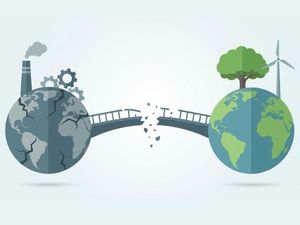
The Sylvans gathered to debate a pressing global issue regarding growth and climate change. The motion before the house was: ‘Economic growth is incompatible with solving climate change.’
This discussion brought together diverse views on economics, technology and environmental ethics. It explored whether the drive for prosperity must inevitably destroy the planet, or if innovation allows for sustainable progress. The debate highlighted the complex tension between growth and climate change.
The proposition: realism in growth and climate change
The proposer opened the debate by arguing that a functioning economy demands energy that is both plentiful and cheap. They contended that the UK currently lacks cheap energy, not because of gas prices, but due to ‘green subsidies’ hidden within costs.
A significant portion of their argument focused on the intermittency of renewable power. The proposer noted that their own solar panels provide ‘three times as much energy in the summer as they do in the winter.’ They argued that unless massive battery storage becomes viable, wind and solar remain unreliable.
Furthermore, the proposer stated that the UK produces less than 1% of global carbon emissions. They compared this to the rising emissions of India, China and the United States. Consequently, they claimed that domestic efforts to reach Net Zero are ‘destroying our economy’ while having ‘no effect at all’ on global temperatures. In their view, growth and climate change policies are currently at odds because the latter undermines the former without achieving results.
The opposition: innovation for growth and climate change
The opposer rejected the idea that we must choose between prosperity and the planet. Instead, they argued that ‘solving climate change is a part of future growth.’
They acknowledged that nuclear energy is ‘very green’ and should be expanded. However, they disputed the proposer’s dismissal of renewables. The opposer cited data showing that battery costs have dropped dramatically, moving from $450 to $60 per unit of storage. This trend suggests that intermittency problems will soon be solved by technology.
Moreover, the opposer warned that ignoring the climate crisis would destroy GDP. They referenced research suggesting significant economic costs regarding infrastructure and health if temperatures rise. They argued that extreme weather impacts agriculture, decreasing wheat and corn production. Therefore, addressing growth and climate change simultaneously is the only way to ensure future stability.
Voices from the floor on growth and climate change
The floor debate revealed a wide spectrum of opinions regarding how we define success and sustainability.
- Defining Growth: One speaker, an economics graduate, urged the room to define their terms. They argued we must focus on real GDP per capita and innovation rather than just population size. They also noted that wealthier countries are better positioned to care about the environment, describing it as a ‘Maslow’s Hierarchy of Needs type thing.’
- Challenging Capitalism: Conversely, another speaker questioned why we use GDP as a measure of success at all. They argued that current systems benefit a tiny fraction of the global population while pushing humanity towards ‘ecological ceilings.’ They suggested we need a new system, referencing Doughnut Economics.
- The Role of Innovation: A speaker used historical context to refute degrowth arguments. They compared modern pollution to the ‘horse poo’ crisis of 19th-century London, which was solved by the invention of the car. They expressed confidence that innovation, such as fusion technology, will similarly solve current issues.
- Global Inequality: The debate also touched on the Global South. One contributor asked if the room supported ‘dumping toxic waste’ or destroying the Amazon for the sake of growth. They reminded the audience that pollution causes illness and that developed nations often export their environmental damage.
- Investment Opportunities: Looking at solutions, another participant highlighted that the UK has a natural resource bounty in wind power. They argued that investment in renewables offers strong economic returns and is necessary because the country has been ‘coasting on infrastructure from Victorian Empire times.’
Closing arguments
The opposer closed by reiterating that humanity does not need to sacrifice growth for the environment. They argued that the world has grown significantly in health and quality of life over the last century. They maintained that ‘innovation is both the answer to growth and climate change.’
The proposer concluded by challenging the opposition’s faith in solutions. They asserted that we cannot simply ‘solve’ climate change but must adapt to it. They warned that a lack of economic growth leads to misery. ‘If we have no economic growth, or stable economic growth, we all get poorer,’ they stated, arguing that people strive for better lives and that requires an expanding economy.
The outcome
Following the closing speeches, the Chair put the motion to a vote. A plurality of members voted against the idea that growth and climate change solutions are incompatible: the motion was defeated.
Further reading
A detailed summary and analysis of the debate can be viewed here.
Please see summaries of earlier Sylvan debates here.
For more information about how our meetings run, see meeting info.