
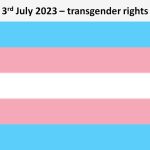
The Sylvan transgender debate considered the following motion:
This house believes transgender people should receive all of the rights afforded by biological sex.
The debate took place on Monday, 3rd July. Julian Meek proposed the motion and Vicky Griffiths opposed it.
The proposition arguing that transgender people should receive equal rights
The proposer began by stating that transgender are people – we’re all people, and we should encourage difference and diversity. Transgender has a rich history. Humanity represents the common denominator – we can’t deny human rights for any group. Specific cases don’t make general principles. We have the Equalities Act, among other laws that protect people’s rights. I won’t focus on the scientific side, since science as a human endeavour has limits.
The proposer continued
A form of transgenderism happens in every culture, including historical ones such as Rome. We can make rules with fairness and equality, including not just the mind but the heart. We can’t separate people based on an artificial leg or a pacemaker. Each deserves to have understanding and live life to the fullest capacity. Transgender people are human and deserve the rights of a civilised society, yet oppression is still alive and kicking. Companies exploit the perceived need for uniformity and globalisation. Society doesn’t yet understand transgender.
The opposition against the transgender rights debate motion
The opposer agreed that polarisation does not lead to a healthy debate on an important topic. Our proposer set out his argument in a human way. Yet it isn’t possible for transgender people to have the same rights. A colleague at work overheard a transgender female used the ladies toilet, when they could have used a gender-neutral one. A proper assessment requires considering the legal, philosophical, physiological and societal aspects of this issue. The Equalities Act includes gender as a protected characteristic, and the sexual equalities act provides a legal route to change gender. Yet we cannot apply the rights in the way we would want to.
The opposer continued
For instance, religion. Some Christians believe you cannot change gender. In Judaism, men and women must worship separately, creating a murky situation. In Islam, women must swim separately in leisure centres. Also, we must ask whether to give all rights to transgender people, and undermine the rights of some others. Who could use the loo cubicle next to a woman? There could be a risk – while the majority of transgender women are not violent, nevertheless 25% of women are assaulted and have fear. Some trans people have health issues due to fear of using the toilet. In sport, trans women have a major advantage, as male bodies have demonstrably greater strength. Biological women go through childbirth, which trans women can’t experience. To comply with fully equal rights isn’t possible.
Floor speeches from the audience of the transgender rights debate
Floor speeches ranged widely. Some trans people biologically become the other gender. We should provide full rights, if not the exact same rights. Women fought for their rights and yet now they can feel threatened in some spaces. This undermines safety in some cases – we could have unisex toilets. Most people fall in the middle of the gender and sexuality spectrum. Yet sex differences exist – you can’t identify as a penguine. We can’t afford to offer fully equal rights. Yet we could try to add dedicated trans bathrooms. A small number of speakers believed that trans women are not women, and even that some trans women are opportunists.
Floor speeches continued
However, the last census recorded 0.2% of the population identifying as trans, with many facing mental health issues and discrimination. Concerningly, children transitioning could have surgery based on a decision during a period of wildly fluctuating hormones. Popular opinion believes in two genders, and we live in a democracy – we can’t contradict the will of the people. Giving rights to trans people would infringe upon those of others. We need to look at trans women also. Some trans women look like Beyonce – then no issue. The issue comes for those who don’t pass visually as the other gender. Do trans people need to prove they don’t commit crimes to get equal rights? People should be able to self-identify and get equal rights, with practical exceptions.
The opposer’s rebuttal
In rebuttal, the opposer pointed out that the debate doesn’t centre on ideology – you are who you say you are. Plumbers will cash in on all the required toilet changes. Trans people need to be respected, and build society towards equal rights. Not about toilets. We need to respect the rights of others to practise their religions. Recall the discrimination against AIDS victims – in 2023 we have a better position, though not fully there yet on trans rights. I want to say we will get there but I can’t see it. We need to think of people as people, but not erode others’ rights. Only through debates like this can we feel safe.
The proposer’s closing speech
In closing, the proposer focused on the here and now. People have concern about their own situations – school, work et cetera. We have a fundamentally unequal society, and we need to challenge that and believe we can gain equality. This means we must accept differences, diversity. Politicians need to solve this issue. We can reach our full potential. The last census had 250,000 trans people, with more transitioning to female than vice versa. Do we want to create a fair, equitable, human society?
Result: the transgender rights debate motion did not carry
In the final vote, the Sylvans concluded through the transgender rights debate that transgender people should not receive fully equal rights due to practical challenges.
See information on other Sylvan debates here.