
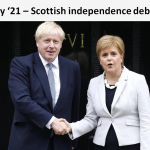
The Sylvan Scottish independence debate considered the following motion:
This house believes that UK politicians can hold the union together, despite support for Scottish independence.
The debate took place on Monday, 10th May. Gwyn Redgers proposed the motion and Vaughan Evans opposed it.
The proposition supporting the view that politicians can hold the UK together
The proposer clearly framed the debate as not about whether you support Scottish independence, but whether Scotland will go. Scots do not like being ruled by Westminster, though the two nations share many strong institutions. Devolution has taken place, and the 2014 ‘once in a generation’ referendum did not lead to independence. The SNP’s dominance of Scottish politics indicates majority support for independence now. Preventing this would require either avoiding the vote, presumably via the courts, or winning it. Key factors in a vote would include under-16s having the vote, whether Scotland could re-join the EU and how much the government includes and caters to Scots and Scotland. For instance, Scottish cabinet ministers and holding cabinet meetings north of the border.
The opposition against the motion
The opposer discussed pooled sovereignty and the impact of Brexit on the independence movement. Scots were wary of leaving, but voted remain and did not like being dragged out of Europe by Boris and his Brexiteer cabinet. The economic viability of an independent Scotland is critical to the success of an independence vote. Can Scotland join the EU? What would their currency be? He posited three things for Unionists to focus on:
- Are the English taking the Scots for a ride again? Oil and gas have declined and England can generate wind power itself. The UK would lose further global prestige post the disintegration of the empire.
- Why should the Scots believe the English will treat them favourably, given consistent Tory majorities across England?
- If Denmark, why not Scotland? Denmark has a similar size and has close ties with neighbours like Scotland, yet thrives in the EU. There is no reason Scotland can’t follow the Danish model.
Floor speeches from the audience of the Scottish independence debate
Floor speakers agreed that the focus of the motion centres on whether Westminster can hold on to Scotland. This extended to consider the potential for Welsh independence, the reunification of Ireland and even the potential fragmentation of England. However, many professed support for the union from south of the border. Scotland has a weak budgetary position and favourable funding due to the Barnett formula. The government can spend money to support the union, while a Scottish pound could devalue significantly.
The emotional pleas of nationalist / populist politicians will have a large impact on the outcome – not unlike what has happened in the US with Trump. Nicola Sturgeon will cleverly play Westminster stonewalling into more local support. Perhaps Westminster trying to push Scotland away would have the opposite effect?
The Scottish pragmatic streak could reduce the desire for independence. The option of a fully federal union could also blunt demand for secession. Several speakers discussed whether Boris and the Tories really want to keep Scotland. A loss would reduce the UK’s global stature, but nearly guarantee Tory dominance of the remainder of the country.
The opposer’s rebuttal in the Scottish independence debate
In rebuttal, the opposer argued that Scotland and even Wales could thrive outside of the UK. However, English fragmentation won’t happen. Emotions will be a key driver of the outcome. Boris will hog the limelight and wins either way. However, the hypocrisy of supporting Brexit but not Scottish independence won’t work. There are few Scots in Tory Westminster, and Michael Gove leading the unionist campaign wouldn’t have a strong following.
The proposer’s closing speech
In closing, the proposer came back to the outcome of Scottish independence resting with the politicians. It will come down to whether the Scots are allowed to have a referendum, whether the courts will support that right and the timing. How will the case for the union be put by the English, and will they offer a federal state? The Tory government has powers they can bring to bear to change minds. Boris will try to stop independence, and Scotland would face many challenges as separate country.
Result: in a razor-thin final vote, the Scottish independence debate motion did not carry
The Sylvans concluded through the Scottish independence debate that UK politicians will not be able to hold the union together.
See information on other Sylvan debates here.