
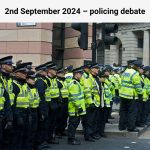
The Sylvan policing debate considered the following motion:
We have confidence in our police.
The debate took place on Monday 2nd September. Michael Carton proposed the motion and Chris Brydon opposed it.
The proposition arguing that we have confidence in our police
The proposer began by setting out some facts about the police. London’s Metropolitan force has 46,000 officers, nearly one third of the country’s total of over 150,000. From 2016 to 2021, the Met had only charged 14 per year with a serious offence, only about 0.03% per year. While we’ve had some horrific cases such as Wayne Cousins, do we risk tarring all with the same brush? The opposition will focus on high-profile cases, and four have been convicted and sent to jail. I will not ignore the isolated racism and sexism, which unfortunately all organisations suffer from. Yet the police regularly act with bravery and brilliance, all while running towards the danger. Officers face abuse and violence, such as the hitting and spitting they suffered at the Notting Hill Carnival last week. The 7,000 officers who attended face complaints due to the murders that occurred.
The proposer continued
99% of officers work diligently, in ways that the people in this room couldn’t cope with. Unfortunately, bad news seems to get more attention, and particularly with the police. We do have tools to keep the police on the right side, including some of the most rigorous training in the world, which includes legal training. Our police use advance crime reduction techniques such as CCTV to address burglary and vehicle theft. In addition, body cameras usually record what they do. Other countries model their police on the UK, based on the rule of law here.
The Independent Office of Police Conduct faces criticism yet retains its independent structure. However, the public and media scrutiny hits the front pages due to mobile phones and social media, and this can help build trust. The police still have institutional racism, but they are working to improve it. They need to focus more on domestic violence and make vetting procedures more stringent. Overall, 99% do a great job in difficult circumstances. When they get it wrong, mechanisms kick in. We can have confidence, it’s only 0.03% who go wrong.
The opposition against the policing debate motion
The opposer related the three key elements of the police force’s mission: upholding the law, preventing crime and antisocial behaviour and bringing criminals to justice. Yet they aren’t doing what they should be doing. He cited crime statistics which have increased from 2014 to 2024:
- Knife crimes: 27,000 to 50,000
- Robberies: less than 10,000 to 80,000
- Sexual assault: 1.5% of women affected to 2.6%
The rape conviction rate stands at 1%, and notwithstanding some false accusations, the vast majority of accusations were likely true. And the time for those cases to get to court averaged three years – appalling. We now have a lack of confidence in the police as a profession, whereas criminals used to have a healthy fear of them.
The opposer continued
During the recent riots in Southport, police went in with riot shields and dogs, correctly. However in the following weeks, the counter protests had roving gangs with weapons, with no police presence even though they were hurting people. The police in Birmingham said they spoke with ‘community leaders’ who said protests would be peaceful, and then they didn’t police. An online incitement of burning down a hotel lead to a jailing, yet a protester walking through Golders Green shouting ‘rape Jewish women’ on a megaphone did not face arrest. They should uphold the law fairly, but how? They can’t. Asking permission to police, this isn’t right.
The police do things they shouldn’t do, such as scouring social media for incitement. They should go stop the stabbings and rapes. They arrested a woman for silently praying in her own head outside an abortion clinic. The police have got their priorities completely wrong. They do not focus on the right things and do not apply the law evenhandedly.
Floor speeches from the audience of the policing debate
In the 1960s, the police had respect. A new term is ‘two tier’ policing. There has to be a good reason why they didn’t police the riots, and there were 9,000 police at Carnival. Yet look at Glastonbury, there has been a murder, rapes and loads of drugs there. The arrest rate of 3.1% at Glasto versus 3.76% at Carnival – not very different. Historically we’ve had policing by consent, with a priority on prevention. Few crimes would mean few arrests, but the people need to stay on side and inform the police. Using force should only be a last resort. Yet all this has gone badly wrong. Carnival had eight stabbings, one death and 50 officers injured. We have victims giving up, with 73% not confident to report a crime.
Technically, we are still a country occupied by the Normans, and Robert Peale’s ‘Bobbies’ represent a paramilitary to uphold the law. Yet they won’t let a parking ticket go! The abortion clinic woman was praying in a buffer zone, and had got funding from an American Christian organisation. In Leeds, the protests happened the first night and the police didn’t know, yet most were arrested. I see no evidence of bias towards right wing protesters or a two-tier policing approach – most of the time they get arrested. The police treated the riots mostly lightly. Did the police take the Black Lives Matter protesters lightly, no they committed violence against them. We had a violent police response at Manchester airport. Rape cases have increased – they take place in closed spaces, yet the police should prevent them.
Floor speeches continued
However, the police are closely managed and don’t have confidence in themselves. They take an oath of allegiance to the crown, making them pawns of the establishment. We have not succeeded in getting the right people into the police, and we need the public’s support, the police on their own can’t do it. We need to get together otherwise the weakest link will undermine society. School bullies often head into the police, we need a higher calibre of officers. Every profession has bad apples. We do need to focus on the arrest of criminals, the purview of the police, not conviction rates, which the courts drive.
As an institution, the police are sexist, racist and classist – though that doesn’t mean I don’t have confidence in their ability to tackle crime. The issue goes beyond bad apples – institutional failures let Wayne Cousins get away with murdering Sarah Everard. Officers did not get proper training and missed red flags. The institution needs to vet candidates properly and has responsibility for her death. The police have diversified themselves, yet now avoid controversy to avoid seeming racist. The Sarah Everard protest led to a harsh police response. The police are tools of the politicians and have a two-tier approach.
The opposer’s rebuttal
The opposer pointed out that it is too early to assess the police response to the riots. What could the police do to prevent rape? They could secure a higher conviction rate. The police did not have advance notice of the situation in Stockport, yet they did for Birmingham. We don’t have Bobbies on the beat to prevent crime anymore. PCSOs have hardly more power than an ordinary citizen. So many anecdotes show how the police simply don’t care about even weapons attacks, assaults on women, etc. Last year 3.3% of police left the force – reflecting their beleaguered, overwhelmed, indifferent, frustrated and outgunned position.
The proposer’s closing speech
The arguments from earlier still stand. Increased crimes being reported is a good thing, and suggests they do have confidence. On arrest rates, police do not have the resources they need, the fault of the government. They don’t have responsibility for the conviction rate, we need to take care in who gets blamed. 14 per year dismissed for serious offences out of 46,000 Met officers. The majority would view that as a small number. The police face pressure day in and day out, and the people don’t support them, some prefer anarchy. And if we want better police, we need to pay more. People need to respect police officers, yet some youngsters don’t give a monkey’s. Fundamentally we do have confidence in what they can actually control.
Result: the policing debate motion did not carry
In the final vote, the Sylvans concluded through the debate that we do not have confidence in our police.
Please see summaries of earlier Sylvan debates here.