
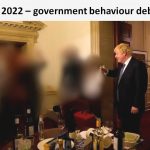
The Sylvan government behaviour debate considered the following motion:
This house believes the government’s behaviour threatens our democracy.
The debate took place on Monday, 4th July. Ewan McGaughey proposed the motion and Apeike Umolo opposed it.
The proposition supporting the view that democracy is under threat
The proposer centred his argument on the principles of democracy and situations where the government has undermined it. Philosophically, the UK should stick with those principles. They include the rule of law, sovereignty of Parliament, one person one vote (with each having equal value) and no person above the law. Our legislature makes laws and all must follow them, including the executive. We form part of the international community and subscribe to the universal declaration of human rights. The divine right of kings ended after the English Civil War and Glorious Revolution, and we must hold every government’s actions to account.
There are numerous examples of this government breaking those principles. Partygate – did you follow the rules during Christmas 2020? The government passed the lockdown rules and broke them on 20 occasions that we know of. And Boris Johnson lied to Parliament about it. He broke the ministerial code multiple times, for instance refurbishing his flat, and lied repeatedly. He prorogued Parliament illegally. Brexit itself restricted our rights to vote on EU matters, and he plans to break the Northern Ireland Protocol. Deporting migrants to Rwanda and breaking strikes. What causes all this? Boris has no principles and believes he can rule the world. The whole establishment is anti-democratic.
The opposition against the government behaviour debate motion
The opposer pointed out that if the debate revolves around Boris, she’s already lost, but it doesn’t. We’re here tonight because we hold onto democratic principles. The language we’ve heard is undemocratic – ‘we shouldn’t allow the government to propose changes’, ‘we shouldn’t’ this or that. We can actually make changes, unlike the US gun with laws. Our constitution gives us flexibility, but we have to be vigilant. Nothing the government has done stops us from removing the government. Conservatism represents a legitimate and core ideology of this country. The government has a majority and has the right to govern – one government’s problems can’t undermine the whole system.
We need democracy, not fluffy ideals, and some countries don’t even have it. Majority rules, regular elections, representative government (the public don’t vote on every issue), adversarial government with opposition. In this debate ‘threatens’ means something designed to undermine or actually undermining democracy. Dominic Cummings attacked the PM and Sue Gray said he was nearly corrupt, but both are ‘still alive’. Boris won a recent confidence vote. Immigration policy, Brexit and the NI Protocol formed part of government policy. Rich people are not evil. We shouldn’t focus on emotions; our institutions remain strong – we need to improve and fix them.
Floor speeches from the audience of the government behaviour debate
Floor speakers covered a wide range of aspects related to the topic. Several focused on corruption in the government. Much of politics stays within the Overton Window of uncontroversial topics, though the establishment shifts it over time. The government has put the courts and other institutions under attack. Several mechanisms exist to remove the PM, including the 1922 committee. Johnson has interfered with the Civil Service, resulting in civil servants scared to say their real beliefs, a true threat. One speaker pointed out that both sides perpetuated a myth that we live in a democracy! We have had only minority-vote governments since 1945.
Several argued that the government’s actions do not go far enough to threaten democracy seriously. Others reiterated the corrosion of our institutions and the UK’s reputation internationally. Recent by-elections have allowed the people to have their say. The Conservatives will throw Boris out – ruthless if electability threatened. The voter ID policy threatens to disenfranchise many minorities, who have a much lower rate of ID holding. First past the post voting does not provide proportional representation.
The opposer’s rebuttal in the government behaviour debate
In rebuttal, the opposer pointed out that the proposer must prove a lack of opposition, unconstitutional disenfranchisement and a serious threat to democracy. These type of policies and actions have happened before, and yet democracy continues. The ideal democracy doesn’t exist. We have an adversarial government where the majority wins – some will not like it. This debate does not centre on whether you like our system of government. The minority can debate what to do, but if you don’t like it, tough!
The proposer’s closing speech
In closing, the proposer focused on the conduct and behaviour of this government, and not whether they’ve murdered anyone. They have seriously undermined democracy. How bad does it need to get: egregious erosion before there is a threat? That isn’t the motion. Sue Gray remains alive. Henry VIII was the first Brexiteer and his behaviour wasn’t democratic. Well before a shot in the head, our precious democracy can come under threat. The attack on the judiciary and the Civil Service, leaving the European Convention on Human Rights – real threats. Modi and Trump have autocratic tendencies, and it’s not too long before it will be too close for comfort.
Result: in the final vote, the government behaviour debate motion carried
The Sylvans concluded through the government behaviour debate in a close vote that the UK government’s actions threaten our democracy.
See information on other Sylvan debates here.