
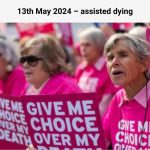
The Sylvan assisted dying debate considered the following motion:
This house would legalise assisted dying.
The debate took place on Monday 13th April. Norah Grogan proposed the motion and Russell O’Brien opposed it.
The proposition arguing that we should legalise assisted dying
The proposer opened by referencing the 2014 assisted dying bill, which failed. Dame Rantzen has reignited the debate, via a petition that has gathered 207,000 signatures. Assisted dying means specific assistance to end one’s own life – yet the Suicide Act of 1961 criminalises this in England and Wales. Similar laws apply in Northern Ireland and Scotland. Assisted dying, assisted suicide or euthanasia – they all aim to eliminate suffering. A competent adult should be autonomous and decide about the timing of their own death. Today, those who can afford to can go to Switzerland to have it done. The ECHR’s article 8 stipulates autonomy and the respect for private life.
We should have the right to die without humiliation and with dignity, e.g. in the face of incontinence or total reliance on others. It would reduce suffering, for instance chronic pain. Keir Starmer committed personally to have a vote. We should also have universal coverage of palliative or end-of-life care. 150 million people worldwide have access to physician assisted dying, with rigorous regulation, comprehensive palliative care and monitoring. If we put these in place, we should not hesitate to legalise it.
The opposition against the assisted dying debate motion
The opposer put forth four main points against the motion. First, life is sacred, the killing of others in all forms is wrong. The absence of life removes all joy, happiness and love. Life has meaning, even with hardship, and our search for happiness provides that meaning. Assisted dying replaces the goodness of life with death, and degrades the value of human life. Some say that there are lives not worth living, yet even the terminally ill can find happiness. Second, there is no free choice to consent to dying. We fight for people, we help them in the pursuit of happiness. If we help them to die, we say their life is worth less. This places responsibility on those most vulnerable people. It puts the burden on them, as in they should do it – pressure for the convenience of others.
Third, a slippery slope. Which lives should we offer this to? Assisted dying can apply to chronic illnesses or physical ailments that last a lifetime. This can put pressure on the vulnerable. Fourth, there is a better alternative. We can fully fund and support palliative care. This would stop the slippery slope, and assist people to live in their final days. We need to research how to treat and care for terminal illnesses. We can’t offer this alongside assisted dying, all life is sacred.
Floor speeches from the audience of the assisted dying debate
Floor speakers ranged widely across the topic. As we get older, time goes faster, and post 60 years, the risk of death increases to 90. We have a natural maximum lifespan of circa 90 years. More things go wrong as we get closer to that point, so why not a short cut? The Catholic church deems euthanasia morally unacceptable. Yet the Catholic church holds responsibility for the deaths of millions and the rape of huge numbers of children. Starmer said he would enact assisted dying if he has cross party support, we can’t place hope on Labour acting. Who defined life as sacred? That’s someone else’s idea, we shouldn’t put our morality onto others. Inevitably it will come, already rather popular.
Floor speeches continued
Assisted dying brings a conflict between individual liberty and our social context. The government sanctions other types of death such as abortion, military action and medical errors in the NHS. Some religious ministers support it, and from a humanist perspective why not have the right to choose? We put down animals to avoid suffering – we are animals too. Yet Christians believe in life after death, not a void. The majority believe it’s a sin. I don’t trust any government to make this call. We can’t even sort care homes out. Children have a conflict of interest when it comes to inheritance. Humans have greater capabilities than animals. Yet if we could capture memory digitally, we could redefine death.
More floor speeches
One speaker’s dad tried to kill himself, he has many health issues. Can we say no to people with constant degenerative diseases? The devil will be in the details of the laws, should we say yes or no to the concept in general? In 1969 the Sylvans debated the same topic. Death: the only thing we can call our own. We must legalise assisted dying, don’t prosecute the act. People could fake signatures, would children even know their parent planned to do it? How will doctors deal with it, is there enough care in general to support it? People do it anyway, and the wealthy can – much better to have a law in place.
The opposer’s rebuttal
In rebuttal, the opposer argued that we shouldn’t kill people, even if they deserve it. Life is sacred, and the inevitability of war is self defence to protect life. This choice differs from that of choosing to donate a liver to a 50 year old versus a 40 year old. Animals are not humans, we choose human life over animals. We are mortal, yet we shouldn’t speed it up, and suffering forms part of life. We can’t have autonomy, the option to get support means there is pressure to end life. What if the patient changes their mind later on? Helping someone provides a source of love and joy.
The proposer’s closing speech
In closing, the proposer posed the question of who decides whether life is sacred, and that means we can’t say there’s no autonomy. We can do research on the legislation, on an on-going basis. People can decide on assisted dying in their will. Better to have legislation, we don’t want murder. Some pain can be managed, some cannot, whereas unbearable pain is misery, not happiness. Other countries have paved the way, which makes it easier for us. We need comprehensive palliative care and tracking.
Result: the assisted dying debate motion carried
In the final vote, the Sylvans concluded through the debate that we should legalise assisted dying.
Please see summaries of earlier Sylvan debates here.