
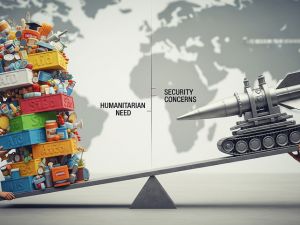
A lively debate on aid vs defence unfolded based on the motion “Investing in international aid will drive better returns than defence,” exploring soft power versus hard power, dependency versus deterrence, and what “return on investment” really means in a world of shifting geopolitics.
The proposition: soft power as sustainable return in aid vs defence
The case for international aid framed soft power as a strategic investment that compounds over time. Within the aid vs defence framing, a proposing speaker argued that heavy defence spend risks dependence on foreign suppliers, noting that some alliances pressure members to target high GDP shares for military outlays and that key systems rely on external support. In that frame, diverting large slices of GDP into hard power may enrich overseas arms manufacturers while deepening dependence.
By contrast, they contended that international aid builds trust, spreads the rule of law and international norms, and opens future markets. Before the invasion of Ukraine, some Russians were said to have trusted UK courts and media more than their own—an example of how soft power can strengthen a country’s standing. In this lens, aid grows resilience, fosters reliable relationships, and advances prosperity more sustainably than hard power. The Marshall Plan was cited later as proof that well-designed aid can catalyse rapid rebuilding and long-term growth.
The opposition: defence as the prerequisite for everything else in aid vs defence
The opposing view treated defence as the foundation on which all soft power rests. In the aid vs defence calculus, aid, they argued, often breeds long-term dependency and blurs the line between charity and investment. What concrete returns does aid generate that trade wouldn’t deliver anyway?
Deterrence, they maintained, is a return in itself. Nuclear and conventional capabilities prevent invasion; without sovereignty and security, soft power cannot operate. Recent Russian aggression, historical anxiety in border states, and threats to NATO were invoked as reminders that freedom comes first. As one closing line put it verbatim: “Defence returns freedom—the ability to meet here, discuss and act.”
From floor speakers: nuance, real-world examples and hard questions
Across floor speeches, the room wrestled with definitions, models of aid, and the realities of geopolitics.
On language and assumptions: Several backed replacing “developed/underdeveloped” with “higher-income/lower-income,” noting current threats often come from higher-income states. Aid was likened—verbatim—to medicine: “Aid is like medicine for a disease—not a cure, but it helps.”
Aid as influence versus dependency: Some argued aid creates leverage—if a nation owes billions, that creditor has sway—while insisting countries must not be judged against a single Western model. Others warned that aid is frequently politicised, with strings attached that limit sovereignty. The Ethiopia cotton example and US agricultural subsidies were used to show how global policies can undercut local industries. There were critiques that some NGOs operate like businesses, privileging their own continuity over empowerment.
Defence industrial policy and self-reliance: One speaker suggested that dependence on US weaponry is not inevitable and that investing in domestic military technology—such as advanced submarine systems—could build exportable capability and jobs, though this view cut against the proposition’s caution about a “war economy.”
China, Belt and Road and the realism–liberalism split: Several contributions highlighted China’s infrastructure investments in Latin America and Africa, describing how ports, roads and financing can translate into votes at international bodies and political leverage. A story traced US hard power in the Dominican Republic a century ago to later Chinese “friendship” statues and billions in projects, presenting soft power as a long game of presence and persuasion. That fed a broader question: is the world an arena of brutal competition (realism) or a web of cooperation (liberalism)? Many concluded it’s both: defence for security, aid for influence.
Floor speeches continued
What “return” really means: Some argued defence spending brings clear domestic returns—jobs, supply chains, technology—while aid money risks leakages through corruption. Others countered that corruption is hardly unique to aid recipients, citing corporate welfare and tax avoidance in high-income countries. Cutting aid, one speaker warned, increases preventable deaths and cedes influence to non-democratic rivals.
Modern aid models: A useful distinction emerged between legacy, government-to-government aid (vulnerable to capture) and modern approaches using direct digital transfers and identity systems to bypass middlemen. India’s biometric bank account infrastructure was highlighted as a way to send money directly to citizens. Practical design details matter: cash versus in-kind goods (chickens) can produce very different outcomes.
Education, migration and stability: If aid builds education and livelihoods, it may reduce distress migration by stabilising home countries. Several contended aid should aim at independence, not indefinite support.
Security reality checks: Historical reminders returned again and again. Military presence is what kept the Soviet bloc out of Western Europe. Many noted that wars are up, displacement is massive, and deterrence still matters. Yet others insisted that without fairness, opportunity and trust, no amount of hard power delivers lasting peace.
Closing views of the main speakers
In their final remarks, the opposition drew on Cold War history, NATO deterrence and Belt and Road debt dynamics to argue that defence produces the highest-value return—freedom and agency—against which other returns pale.
The proposition closed by anchoring the ROI lens on long-run prosperity, interdependence and modern aid that avoids old inefficiencies. They pointed to the Marshall Plan, warned against funneling national wealth to external arms suppliers, and argued that soft power investments in relationships, norms and markets outperform a war-economy model over time.
Result: the motion carried.
Key takeaways for the aid vs defence debate
– Defence secures the space for soft power, but it can entrench dependence on foreign suppliers.
– Aid’s ROI is real but hinges on design: direct transfers, accountability and alignment with local priorities.
– Geopolitical influence flows through both guns and grants; rivals are mastering infrastructure diplomacy.
– The best portfolio may blend credible deterrence with evidence-based aid that builds resilient partners and future markets.
See summaries of earlier Sylvan debates here.
For more information about how our meetings run, see meeting info.