
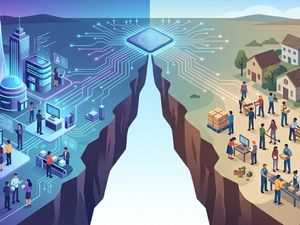
The Sylvans recently hosted a fascinating short debate evening on AI inequality. The audience voted to tackle a highly relevant and divisive topic. They chose to debate whether AI will widen inequality more than it increases productivity. This question sparks intense opinions across all industries. Does artificial intelligence democratise skills, or does it exclusively reward the tech-savvy? Let us dive straight into the arguments.
The proposer: AI inequality is rapidly approaching
The proposer opened the debate with a stark warning. They argued that severe AI inequality is coming because people drastically underestimate the technology. The pace of change is staggering. Early adopters already use these tools to complete massive projects. For example, one person built a fully functional to-do application over a weekend using Claude without any coding experience. Furthermore, users can now run complex financial models better than a CFO.
The proposer highlighted a profound workplace shift. Their own startup refuses to hire anyone who does not actively use artificial intelligence. Consequently, individuals who ignore this technology will face severe disadvantages. Unprepared workers risk losing their jobs entirely. Why hire a junior software engineer or an accountant when software can do the job instantly? Ultimately, the proposer believes that AI inequality will explode as tech adopters leave hesitant workers far behind.
The opposer: balancing productivity and AI inequality
The opposer immediately challenged this pessimistic view. They agreed that the technology fundamentally changes daily tasks. However, they firmly denied that this guarantees a negative outcome. The opposer compared the current landscape to the internet boom in the 1990s. Early computer adopters gained initial advantages, but the internet ultimately democratised global access to information.
Similarly, artificial intelligence democratises the tech industry. Now, ordinary people can execute complex projects easily. The opposer also dismissed fears regarding capital concentration. Competition naturally arises, just as DeepSeek recently challenged established giants like Nvidia. Furthermore, the opposer noted a looming demographic crisis. Our economy currently features fewer workers supporting a much larger pensioned population. Consequently, we desperately need the massive productivity boosts that this innovation provides.
Floor speeches: perspectives from the audience
- One speaker urged the room to look globally. They suggested that the technology might actually reduce global inequality by empowering the global South, much like smartphones previously did.
- Another speaker highlighted a modern crisis in academia. They noted that students use artificial intelligence to generate massive literature reviews instantly. This deceives the academic world and leaves professors feeling entirely stuck.
- Meanwhile, a legal professional shared a mixed experience. The software brilliantly reformatted massive documents for them, saving hours of tedious work. However, lawyers using ChatGPT to prepare cases have accidentally submitted fake legal precedents. This clogs the underfunded court system and severely hurts overall productivity.
- A theatre worker offered a very different perspective. They argued that algorithms cannot easily replace physical manual labour, like cleaning or checking tickets. Therefore, manual workers might enjoy sudden job security while academic jobs vanish.
- Another attendee emphasised the absolute necessity of innovation. They pointed out that Western economies barely grow right now. Without innovation, living standards stagnate. Therefore, society must embrace the productivity that these tools promise.
- Finally, a healthcare expert highlighted massive medical benefits. The technology accelerates drug discovery and promises personalised medicine. By investing these productivity gains into public services like the NHS, society can actively reduce inequality.
The opposer’s closing arguments
Taking the stage again, the opposer delivered their closing summary. They reiterated that humans must learn to use these programs as tools. Even when the software makes errors, finding and fixing those errors remains a vital human job. Historically, humanity has successfully managed the disruptive effects of new technologies. When spreadsheet software arrived, people thought accounting would disappear. Instead, the profession bloomed because analysis became cheaper and better. Ultimately, the opposer argued that bad governance causes inequality, not the technology itself. With the right policies, the incredible value generated by artificial intelligence can easily solve our current economic crises.
The proposer’s closing arguments
The proposer secured the final word of the evening. They acknowledged the brilliant medical and personal benefits mentioned by the audience. However, they doubled down on their core warning. Artificial intelligence can now write end-to-end software. This directly threatens countless white-collar jobs. Furthermore, the proposer doubted that the wealthy would willingly share their new tech-generated fortunes. The wealthy often threaten to leave the country when faced with higher taxes. Consequently, massive job losses will inevitably create unprecedented AI inequality. Society remains entirely unprepared for this rapid transition.
The verdict on AI inequality
After a thrilling discussion, the chairperson called for a room vote. The audience raised their hands to declare their final stance. A passionate group chose to abstain entirely. However, between the two distinct sides, the proposition won the vote. The room ultimately concluded that AI inequality will indeed worsen faster than productivity improves. This debate proved that the future of work remains a highly contested frontier.
Further reading
A detailed summary and analysis of the debate can be viewed here.
Please see summaries of earlier Sylvan debates here.
For more information about how our meetings run, see meeting info.